


Listen to the article
Foreign Minister Under Fire for “Insulting” North Macedonian Albanians
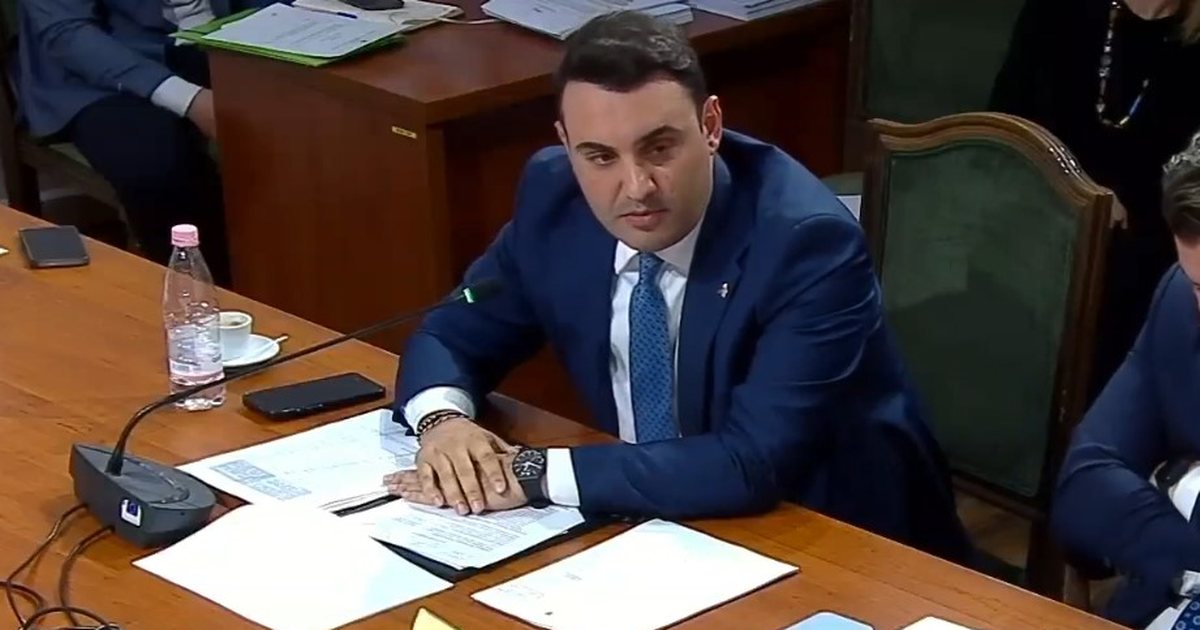
Albanian opposition MP Belind Këlliçi has launched a scathing critique of Foreign Minister Ferit Hoxha following the minister’s recent appearance before a parliamentary committee, accusing him of engaging in propaganda rather than meaningful public discourse.
The Democratic Party representative took to social media to express his frustration after Hoxha’s testimony, which centered around a controversial incident involving disparaging remarks about Albanians living in North Macedonia.
At the heart of the controversy is a message Hoxha allegedly sent in an official communication group with ambassadors, in which he referred to ethnic Albanians in North Macedonia as “idiots.” The message, which was leaked to the public, has sparked outrage among opposition figures and raised questions about diplomatic relations between the two neighboring Balkan nations.
“The Foreign Minister’s report today to the parliamentary committee served neither transparency nor accountability,” Këlliçi stated. “It was a propaganda narrative that does not help our foreign policy or the progress of the integration process at all.”
According to Këlliçi, Hoxha attempted to downplay the incident by suggesting that since the comment was made in a private capacity, it should not be considered reflective of official government policy. The minister reportedly argued that only positions expressed through official channels should be considered relevant.
“Today in the Commission, the Minister said that only the official positions that he holds through official channels are important. So, he again admitted that he made the labeling, he insulted the Albanians of North Macedonia, but privately,” Këlliçi explained, while pointing out that the group where the message was sent was titled “Ambassadors,” suggesting an official rather than personal context.
The incident highlights ongoing tensions in the region, where ethnic Albanian communities constitute significant minorities in several neighboring countries, including North Macedonia. Relations between Albania and ethnic Albanian communities across borders have historically been a delicate aspect of regional diplomacy.
Këlliçi asserted that in other countries, such behavior would have resulted in immediate consequences: “In every country where Mr. Hoxha served as an Albanian official, after this incident, if the minister had not resigned, he would have been dismissed. And he would not have had a chance to show up for work the next day.”
The opposition MP also criticized Prime Minister Edi Rama’s administration for what he perceives as a lack of accountability, stating, “But with Edi Rama and his associates, these standards do not apply.”
Beyond the inflammatory remarks about North Macedonian Albanians, Këlliçi also expressed concern about another matter raised during the committee session. He claimed the minister failed to address questions regarding how protecting Deputy Prime Minister Belinda Balluku from prosecution might affect Albania’s European Union integration process.
Balluku has reportedly been accused of involvement in procedural abuses worth approximately 1.2 billion euros. Këlliçi noted that the head of the Foreign Affairs Committee in the European Parliament had previously indicated this case would be “a critical test for Albania” in its EU accession journey.
The parliamentary proceedings ended abruptly, preventing opposition members from fully questioning the minister – a move Këlliçi characterized as an attempt “not to disturb Mr. Hoxha.”
This controversy occurs against the backdrop of Albania’s ongoing efforts to advance its EU membership bid, a process where governance standards, diplomatic conduct, and regional relations all factor into the European Commission’s assessment of the country’s readiness for further integration.
Fact Checker
Verify the accuracy of this article using The Disinformation Commission analysis and real-time sources.

4 Comments
The leaked message is regrettable and risks damaging relations between the two countries. However, the opposition’s ‘propaganda’ claims also seem aimed at scoring political points rather than finding a solution. Impartial mediation may be needed to defuse tensions.
Disputes over language and ethnic identity can be highly charged, but diplomatic representatives must exercise restraint. I hope the governments can find a way to address this incident through open and respectful communication, rather than inflammatory rhetoric.
While the Foreign Minister’s comments were clearly inappropriate, accusations of ‘propaganda’ are also concerning. This situation calls for a measured, fact-based approach from all sides to resolve the tensions and move the integration process forward constructively.
This is a sensitive diplomatic issue that requires careful handling. The Foreign Minister’s remarks, if accurately reported, were unwise and counterproductive. Constructive dialogue and mutual understanding are needed to improve relations between Albania and North Macedonia.