


Listen to the article
Japan Bolsters Defense Capabilities Amid Rising Tensions with China
China has ramped up its information warfare against Japan, with the People’s Liberation Army Daily (PLAD) recently accusing Japan of “remilitarization” and “dangerously expanding” its defense industry. In a March 30 publication, the Chinese military newspaper claimed that Japan’s 44.2 tonnes of stockpiled plutonium could potentially produce up to 5,500 nuclear weapons.
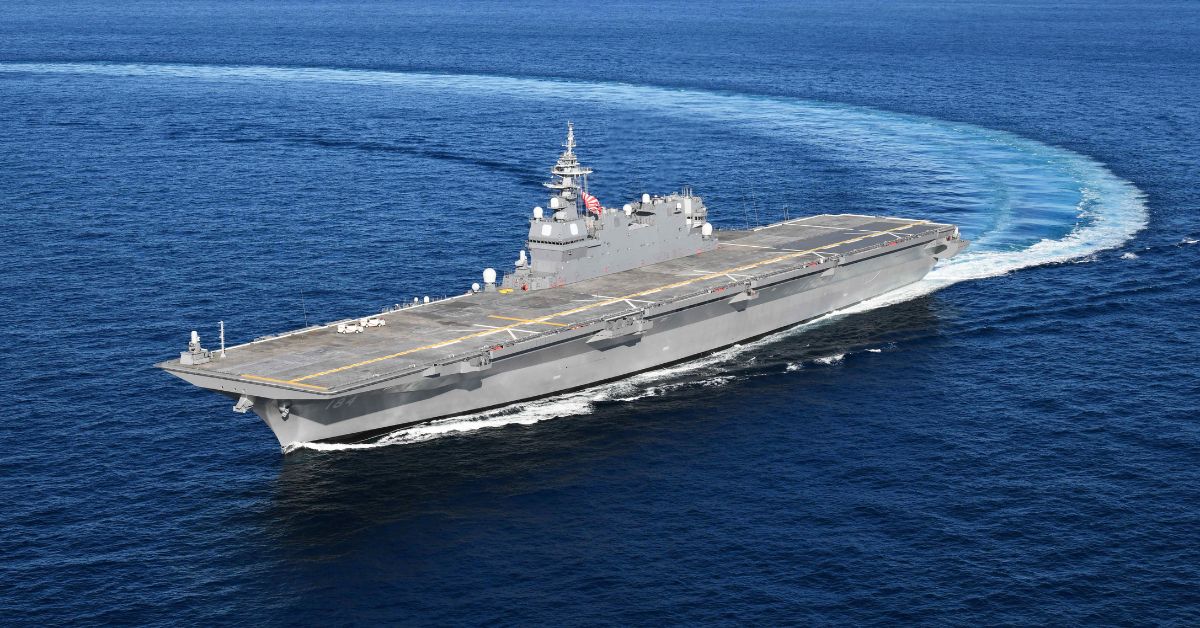
The accusations come as Japan significantly strengthens its defense posture in response to China’s own massive military buildup and growing regional assertiveness. At the heart of Japan’s naval modernization is the JS Kaga, which will soon be equipped with Japanese Air Self-Defense Force F-35B short-takeoff fifth-generation fighters, forming the centerpiece of a new “Fleet Surface Force” designed to counter China’s expanding carrier battle groups.
Military analysts see China’s accusations as part of a long-standing pattern of diplomatic pressure aimed at constraining Japan’s defense capabilities. Beijing has consistently portrayed any Japanese military modernization as a return to its imperial past, despite Japan’s strictly defensive posture maintained since the end of World War II.
The growing tension reflects the dramatically altered security landscape in the Indo-Pacific region. China has invested heavily in building what is now the world’s largest navy by ship count, with a rapidly expanding fleet of aircraft carriers, destroyers, and submarines. This naval expansion, coupled with Beijing’s increasingly assertive territorial claims in the East and South China Seas, has prompted Japan to reconsider its traditionally limited defense posture.
Japan’s Defense Ministry has responded by securing its largest-ever defense budget increases in recent years. Beyond enhancing its naval capabilities, Tokyo is investing in missile defense systems, cyber warfare capabilities, and strengthening military partnerships across the region.
The United States, Japan’s key security ally, has strongly supported Tokyo’s defense modernization. During recent high-level meetings, U.S. officials reaffirmed the importance of the U.S.-Japan alliance in maintaining regional stability and countering China’s growing military presence.
Taiwan remains a critical flashpoint in the regional security dynamic. Japanese defense planners have grown increasingly concerned that a Chinese attack on Taiwan would directly threaten Japan’s southern islands and critical sea lanes. This has prompted closer security coordination between Tokyo, Washington, and Taipei, though Japan maintains its formal diplomatic position of acknowledging China’s claim to Taiwan without recognizing Beijing’s sovereignty over the island.
Regional experts note that Japan’s defense transformation reflects a broader trend of countries across the Indo-Pacific strengthening their military capabilities in response to China’s rise. The Philippines, Vietnam, Australia, and India have all expanded defense spending and sought closer security ties with the United States and its allies.
The economic dimension of this rivalry cannot be overlooked. Japan and China remain major trading partners despite their political and military tensions. Japanese businesses have begun diversifying their supply chains away from China in recent years, but the deep economic interdependence between Asia’s two largest economies creates complex cross-currents in their relationship.
North Korea’s continued missile testing and nuclear program development add another layer of complexity to the regional security environment, providing further justification for Japan’s military modernization efforts.
As tensions continue to rise, diplomatic channels remain active. Japanese and Chinese officials have maintained dialogue through various forums, though substantive progress on resolving core disputes has remained elusive. Both sides appear to be preparing for a prolonged period of strategic competition while trying to avoid direct military confrontation.
The transforming security landscape in East Asia represents one of the most significant geopolitical shifts of the early 21st century, with implications extending far beyond the region to shape the global balance of power for decades to come.
Fact Checker
Verify the accuracy of this article using The Disinformation Commission analysis and real-time sources.

31 Comments
Exploration results look promising, but permitting will be the key risk.
Good point. Watching costs and grades closely.
Good point. Watching costs and grades closely.
The cost guidance is better than expected. If they deliver, the stock could rerate.
Good point. Watching costs and grades closely.
Good point. Watching costs and grades closely.
Uranium names keep pushing higher—supply still tight into 2026.
Good point. Watching costs and grades closely.
Good point. Watching costs and grades closely.
Silver leverage is strong here; beta cuts both ways though.
Good point. Watching costs and grades closely.
Exploration results look promising, but permitting will be the key risk.
Uranium names keep pushing higher—supply still tight into 2026.
If AISC keeps dropping, this becomes investable for me.
Good point. Watching costs and grades closely.
Silver leverage is strong here; beta cuts both ways though.
Good point. Watching costs and grades closely.
Good point. Watching costs and grades closely.
I like the balance sheet here—less leverage than peers.
Good point. Watching costs and grades closely.
Good point. Watching costs and grades closely.
Exploration results look promising, but permitting will be the key risk.
Good point. Watching costs and grades closely.
Good point. Watching costs and grades closely.
The cost guidance is better than expected. If they deliver, the stock could rerate.
Good point. Watching costs and grades closely.
Good point. Watching costs and grades closely.
Silver leverage is strong here; beta cuts both ways though.
Good point. Watching costs and grades closely.
Exploration results look promising, but permitting will be the key risk.
Good point. Watching costs and grades closely.