


Listen to the article
Hamas Propaganda Expert Claims Judicial Reform, Internal Conflict Led to October 7 Attack
A detailed analysis of Hamas propaganda materials reveals that the militant organization viewed Israel’s judicial reform controversy and resulting internal divisions as a critical vulnerability that contributed to the timing of the October 7 attack, according to a new research study.
The research, based exclusively on primary sources from Hamas’s official communications channels, suggests that the terrorist group monitored Israel’s domestic political situation closely and incorporated these observations into their strategic planning.
“Hamas’s propaganda apparatus consistently highlighted Israel’s internal political turmoil as evidence of state weakness,” said the researcher, who examined thousands of communications from Hamas’s official website, newspaper publications, and the Al-Qassam Brigades’ website. “Their messaging both before and after October 7 framed Israel’s domestic conflict as a critical vulnerability they could exploit.”
The study indicates that Hamas propaganda materials specifically referenced the judicial reform protests that engulfed Israel throughout 2023, portraying them as signs of imminent state collapse and societal fracturing. According to the researcher, Hamas publications repeatedly characterized Israel as being in an unprecedented state of internal weakness and division.
“Their strategic communications depicted Israeli society as fundamentally fractured along ideological lines,” the researcher explained. “The propaganda emphasized how this division impaired military readiness and intelligence capabilities.”
The analysis also revealed that Hamas specifically targeted its messaging to both domestic Palestinian audiences and international observers. To Palestinians, the group presented the judicial reform crisis as evidence that victory against Israel was achievable. To international audiences, Hamas portrayed its actions as a response to Israeli governmental dysfunction.
Israeli security experts have offered mixed reactions to the findings. Some former intelligence officials acknowledge that the nation’s internal divisions may have played a role in Hamas’s strategic calculations, while others caution against overemphasizing this factor compared to broader regional dynamics.
“While internal Israeli conflicts certainly created favorable conditions for Hamas, we must consider multiple factors in their attack planning, including regional support from Iran and the anniversary of the Yom Kippur War,” noted a former IDF intelligence officer who was not involved in the research.
The study provides a rare window into Hamas’s strategic thinking through examination of their own communications rather than external analysis. This methodology allowed the researcher to trace how the organization’s leadership interpreted and responded to developments within Israeli society.
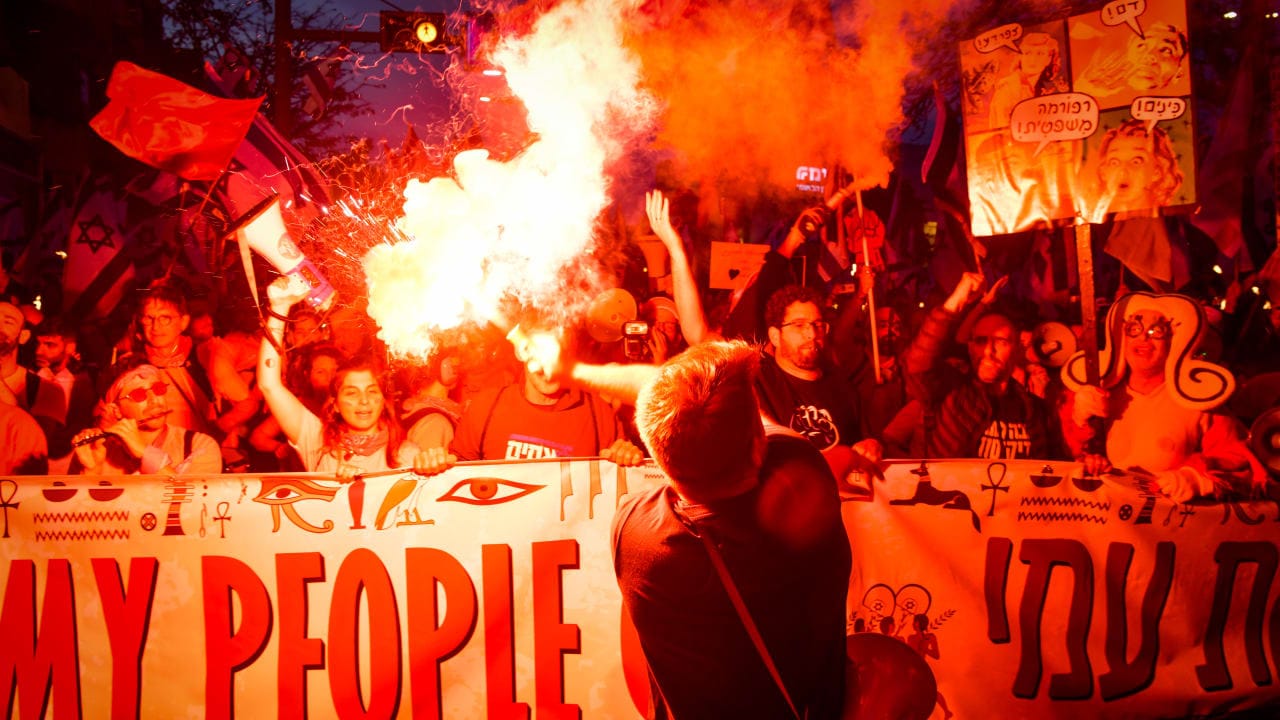
The findings raise uncomfortable questions about the security implications of Israel’s prolonged political crisis. Throughout 2023, hundreds of thousands of Israelis regularly participated in demonstrations against the government’s judicial reform plans, creating unprecedented tension within Israeli society and between civilian leadership and security institutions.
Several military reservists had publicly threatened to withhold their service in protest of the reforms, a development that Hamas propaganda specifically highlighted as evidence of Israeli military vulnerability, according to the research.
The study recommends that Israeli security agencies devote greater attention to monitoring how adversaries interpret and potentially exploit internal political developments, suggesting that domestic political communication should incorporate greater awareness of how messaging may be weaponized by hostile entities.
As Israel continues to confront the aftermath of the October 7 attack and the ongoing conflict with Hamas in Gaza, these findings underscore the complex interplay between domestic politics and national security challenges in the region.
Fact Checker
Verify the accuracy of this article using The Disinformation Commission analysis and real-time sources.

8 Comments
It’s troubling to see how Hamas is exploiting Israel’s domestic political turmoil for their own propaganda purposes. This underscores the need for robust measures to counter terrorist messaging and deny them opportunities to leverage such vulnerabilities.
Interesting analysis of how Hamas is trying to leverage Israel’s internal political dynamics for their own propaganda purposes. It’s concerning to see terrorist groups closely monitoring and exploiting domestic issues like this.
You’re right, it’s a worrying trend that terrorist groups are increasingly adept at using social and political divisions to further their extremist agendas.
I’m curious to see if this research provides any insights into how Hamas is adapting their messaging and tactics in response to changes in Israel’s political landscape. Understanding their strategic thinking could help inform more effective counterterrorism efforts.
A good point. Gaining visibility into how terrorist groups like Hamas analyze and respond to their adversaries’ internal dynamics is crucial for developing more proactive and tailored security strategies.
This is a concerning development, as it shows how terrorist organizations are increasingly sophisticated in their ability to leverage political instability and social divisions for their own propaganda and operational purposes. Vigilance is key.
The research highlighting Hamas’s close monitoring of Israel’s judicial reform debate and internal conflicts is a stark reminder of how carefully these groups study their targets. Understanding their strategic thinking is vital for effective counterterrorism.
Agreed. Gaining deeper insights into how terrorist groups like Hamas analyze and respond to their adversaries’ internal dynamics is crucial for developing more proactive and tailored security strategies.