


Listen to the article
In a year marked by contentious media coverage of the Israel-Gaza conflict, Canadian news outlets have faced mounting criticism for their reporting practices and alleged bias. Media watchdogs and advocacy groups point to systematic issues in how the ongoing Middle East conflict is being portrayed to Canadian audiences.
Throughout 2025, several persistent narratives dominated coverage across various Canadian news platforms, from campus newspapers to the national public broadcaster CBC. Critics argue these narratives often lacked proper context, verification, or balanced perspectives.
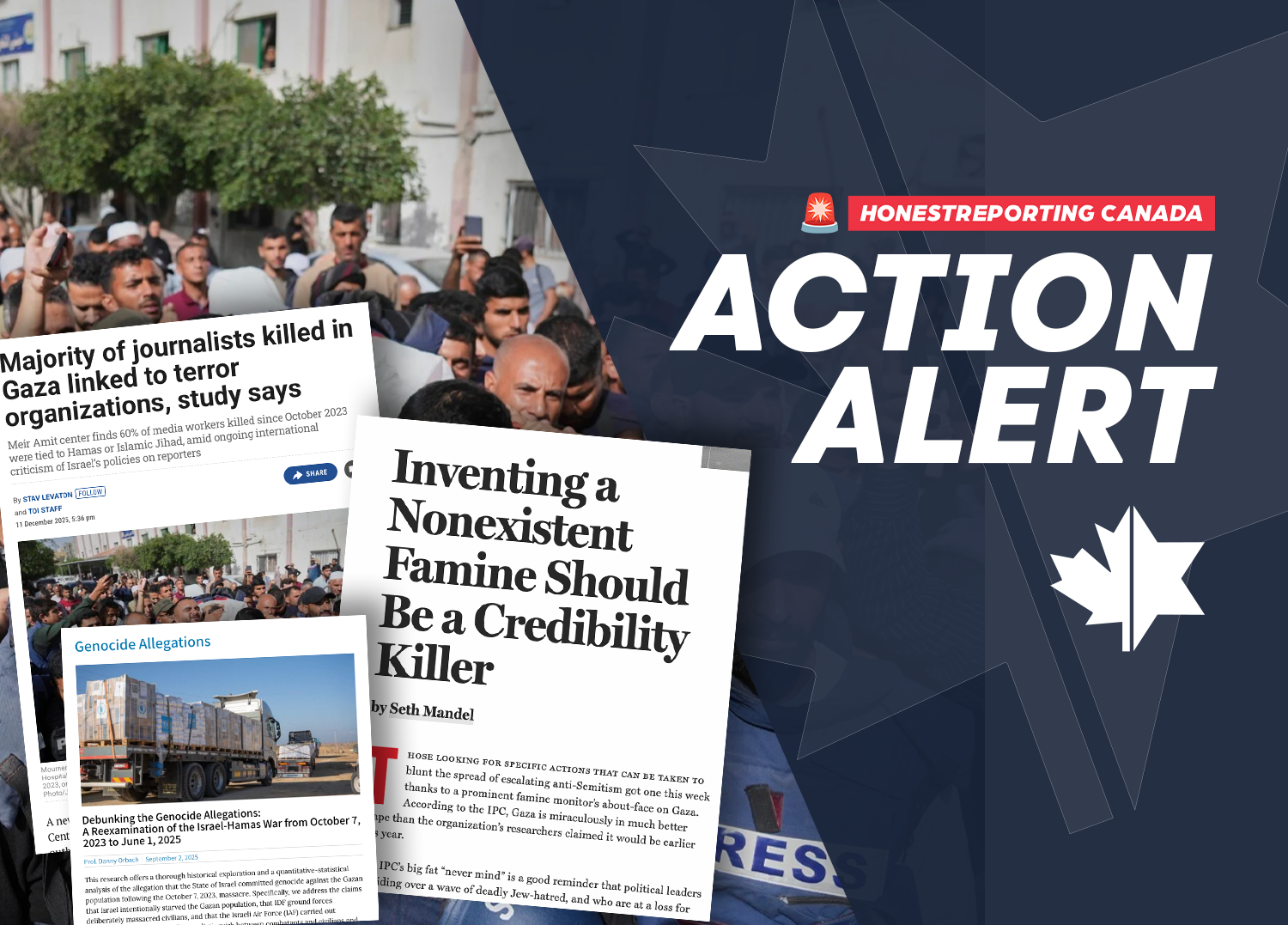
Claims of famine in Gaza received extensive media attention throughout the year. However, when the Integrated Food Security Phase Classification (IPC), which had initially raised alarms about potential famine, later acknowledged that famine had been “averted,” many news outlets that had prominently featured the initial warnings failed to provide similar coverage to this update.
The genocide allegation against Israel has become perhaps the most contentious claim in Canadian media coverage. While accusations from activist groups received substantial airtime and column space, contradicting assessments from scholars and military experts specializing in urban warfare have received comparatively little attention, according to media monitors.
A notable trend identified by critics is the treatment of certain international organizations as neutral experts rather than as stakeholders with defined positions. Groups like Amnesty International, Save the Children, Doctors Without Borders/MSF, and Oxfam have been regularly cited as authoritative sources on the situation in Gaza, often without acknowledgment of their political stances or examination of their methodologies.
The reporting on journalist casualties in Gaza has similarly drawn scrutiny. The Committee to Protect Journalists’ figures on media worker deaths have been widely circulated, but investigations suggesting that a significant number of these individuals had ties to Palestinian militant groups have received minimal coverage in mainstream Canadian outlets.
Media critics also point to a pattern of selective reporting on human rights investigations. Reports alleging Israeli violations typically generate substantial coverage, while those documenting Hamas actions or questioning casualty statistics provided by Gaza authorities receive considerably less attention.
Immigration policy coverage has shown similar disparities. Multiple news stories have featured advocates calling for expedited and less rigorous security screening for Gazans seeking entry to Canada, while security experts warning about potential risks have been largely absent from these reports.
The portrayal of anti-Israel protests has also drawn criticism. Media watchdogs claim that extremist rhetoric, including calls for “intifada” or celebrations of the October 7, 2023 attacks, are frequently downplayed or omitted entirely from coverage of these demonstrations. The Palestinian Youth Movement, which has organized events characterized by critics as glorifying violence, has rarely been scrutinized in mainstream reporting.
As the conflict has evolved, so too have media narratives. Following ceasefire periods, increased attention has turned to “settler violence” in the West Bank, with critics claiming these stories often lack crucial context about the complex security dynamics in the region.
Individual figures with controversial histories have received platforms across multiple media outlets. Critics cite examples like Ottawa physician Yipeng Ge and Vancouver restaurant Tamam, which have been featured in Canadian media without examination of their past statements regarding the conflict.
Media outlets have also been criticized for amplifying complaints from anti-Israel groups while giving less attention to other perspectives. For instance, calls to revoke charitable status from Jewish organizations received extensive coverage, while similar concerns about certain Islamic charities with alleged extremist ties were largely overlooked.
The pattern of reporting has raised questions about journalistic standards in covering complex geopolitical conflicts and the responsibility of Canadian media to provide balanced information to the public. As the Middle East situation continues to evolve, the debate over fair and comprehensive reporting remains a significant concern for media observers across the political spectrum.
Fact Checker
Verify the accuracy of this article using The Disinformation Commission analysis and real-time sources.

15 Comments
The media controversies around the reporting on the Israel-Gaza conflict highlight the challenges of covering complex geopolitical issues. I hope the news outlets involved can learn from this experience and strengthen their commitment to fact-based, impartial journalism.
The media’s role in shaping public understanding of the Israel-Gaza conflict is a significant responsibility. I hope the outlets involved can demonstrate a renewed commitment to factual, impartial coverage that avoids sensationalism or unsubstantiated claims.
These media controversies highlight the need for rigorous journalistic standards and a commitment to presenting multiple perspectives, even on sensitive topics. Oversight and accountability are important to uphold public trust.
Well said. Maintaining journalistic integrity is crucial, even when covering contentious issues that may attract accusations of bias.
The allegations of biased or incomplete coverage of the Israel-Gaza conflict are concerning. News outlets must strive to provide balanced, well-researched reporting that avoids fueling further polarization on this sensitive issue.
Agreed. Upholding journalistic integrity and presenting multiple perspectives, even on contentious topics, is crucial for maintaining public trust.
The allegations of biased and unbalanced coverage on the Israel-Gaza conflict are concerning. I hope the news outlets involved can thoroughly review their practices and make improvements to ensure fairness and accuracy.
Interesting issues raised around media coverage bias and lack of balance on the Israel-Gaza conflict. It’s important for news outlets to strive for objectivity and provide full context, even when updates contradict earlier narratives.
The claims of famine in Gaza and the ‘genocide’ allegations against Israel seem like highly contentious and politicized issues. I hope news outlets can investigate thoroughly and report responsibly, without sensationalism or unverified claims.
Agreed. Balanced, fact-based reporting is crucial, especially on such a complex and polarizing geopolitical topic.
It’s troubling to hear about persistent narratives lacking proper context or verification in the coverage of this conflict. Responsible journalism requires diligent fact-checking and a commitment to presenting balanced perspectives.
These media controversies underscore the need for greater transparency and accountability in news reporting, especially on complex, politically charged topics. Responsible journalism is essential for an informed public discourse.
The complexities of the Israel-Gaza conflict are clearly reflected in the media controversies described. Nuanced, well-researched reporting is essential to inform the public without fueling further polarization.
Absolutely. Navigating such a sensitive geopolitical issue requires great care and journalistic integrity from news outlets.
These media controversies are a reminder of the importance of responsible, balanced reporting, especially on sensitive topics like the Israel-Gaza conflict. News outlets must strive to present a range of perspectives and verified information to inform the public effectively.