


Listen to the article
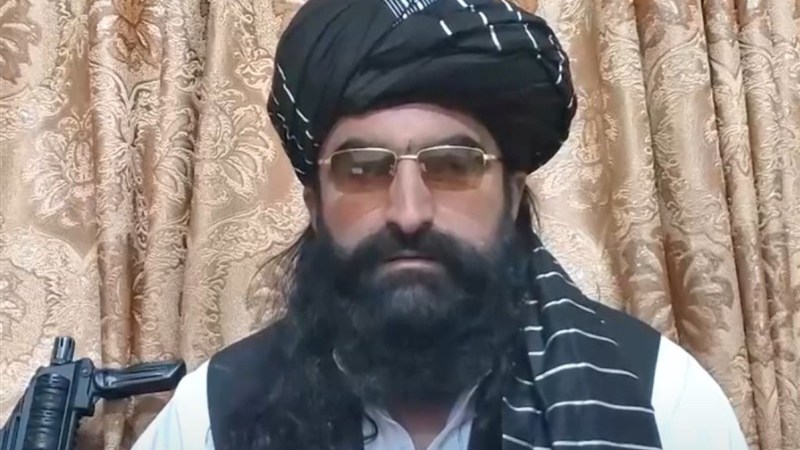
In a recent audio message that has drawn widespread condemnation, Tehrik-e-Taliban Pakistan (TTP) leader Noor Wali Mehsud attempted to justify his organization’s brutal campaign of violence by framing it as legitimate jihad. Mehsud’s claim that the TTP only targets security forces while sparing civilians has been denounced as a blatant falsehood that misrepresents Islamic teachings and threatens Pakistan’s sovereignty.
Islamic scholars point out that Mehsud’s rhetoric fundamentally contradicts core Islamic principles. The Quran explicitly states in Surah Al-Ma’idah that killing an innocent person is equivalent to killing all of humanity, highlighting Islam’s reverence for human life. Prophet Muhammad (PBUH) specifically prohibited harming non-combatants during conflict, establishing clear boundaries that the TTP routinely transgresses in its attacks on mosques, schools, women, children, and the elderly.
Security analysts note that Mehsud’s attempt to draw parallels between TTP’s campaign and the Afghan jihad of the 1980s is equally misleading. This comparison has been invalidated by Afghan Taliban leader Mullah Hibatullah Akhundzada himself, who has declared the Afghan jihad concluded. Experts suggest Mehsud’s false narrative aims to recruit supporters by exploiting lingering sentiments of resistance in the region.
“The TTP’s indiscriminate violence bears no resemblance to the principles of jihad,” said a senior security official speaking on condition of anonymity. “Their attacks on places of worship, educational institutions, and civilians of all ages demonstrate their complete disregard for Islamic teachings and human life.”
The militant group’s ideology has faced unanimous rejection from Pakistan’s religious leadership. Scholars across all schools of Islamic thought have issued a fatwa explicitly stating that armed attacks against the state are forbidden in Islam. Prominent Islamic scholar Mufti Taqi Usmani has been particularly vocal in exposing the TTP’s false narrative.
Islamic doctrine maintains that Muslims must respect the sovereignty of their state, and rebellion constitutes a violation of religious principles. As Pakistan is constitutionally an Islamic republic, assaults on its institutions or citizens directly contradict Islamic values.
The TTP threat extends beyond Pakistan’s borders, representing a complex geopolitical challenge. The group maintains operational bases in neighboring Afghanistan, providing access to resources, training facilities, and logistical support. Recent increases in cross-border terrorism and the TTP’s connections to international terrorist networks have amplified concerns among regional security experts.
“This isn’t just Pakistan’s problem,” said a regional security analyst. “The international community needs to recognize that countering the TTP requires coordinated effort across borders.”
Pakistan’s military and law enforcement agencies have made significant progress in their counter-terrorism operations, particularly in North Waziristan and Bannu regions, where they have eliminated several high-ranking TTP commanders. These operations have substantially diminished the group’s operational capabilities, though security challenges persist.
Security experts believe Mehsud’s recent propaganda efforts reflect the TTP’s growing desperation following battlefield losses. His attempts to reframe terrorism as jihad and create sectarian divisions appear designed to appeal to potential sympathizers and distract from the group’s weakening position.
The conflict against extremism in Pakistan involves not only military action but also an ideological battle against the distortion of religious concepts. Pakistani officials emphasize that countering Mehsud’s false narrative is crucial to preventing radicalization.
The Pakistani nation remains united against this threat, with civil society leaders, religious scholars, and government officials working together to counter extremist ideology. Public sentiment has overwhelmingly rejected the TTP’s campaign of violence, with most citizens supporting government efforts to eliminate terrorist networks.
As Pakistan continues its counter-terrorism efforts, security analysts stress the importance of addressing both the military and ideological dimensions of the conflict. The country’s commitment to peace and justice, they argue, will ultimately prevail against the TTP’s campaign of terror and misrepresentation of Islamic principles.
Fact Checker
Verify the accuracy of this article using The Disinformation Commission analysis and real-time sources.

21 Comments
I like the balance sheet here—less leverage than peers.
I like the balance sheet here—less leverage than peers.
Good point. Watching costs and grades closely.
Nice to see insider buying—usually a good signal in this space.
Good point. Watching costs and grades closely.
The cost guidance is better than expected. If they deliver, the stock could rerate.
Silver leverage is strong here; beta cuts both ways though.
Good point. Watching costs and grades closely.
Good point. Watching costs and grades closely.
The cost guidance is better than expected. If they deliver, the stock could rerate.
Nice to see insider buying—usually a good signal in this space.
Good point. Watching costs and grades closely.
Interesting update on Islamic Teachings Misrepresented, Analysis Shows. Curious how the grades will trend next quarter.
Good point. Watching costs and grades closely.
If AISC keeps dropping, this becomes investable for me.
Good point. Watching costs and grades closely.
Good point. Watching costs and grades closely.
Nice to see insider buying—usually a good signal in this space.
Good point. Watching costs and grades closely.
Interesting update on Islamic Teachings Misrepresented, Analysis Shows. Curious how the grades will trend next quarter.
I like the balance sheet here—less leverage than peers.