


Listen to the article
Islamic State Khorasan Remains Unproscribed in UK Despite Growing European Threat
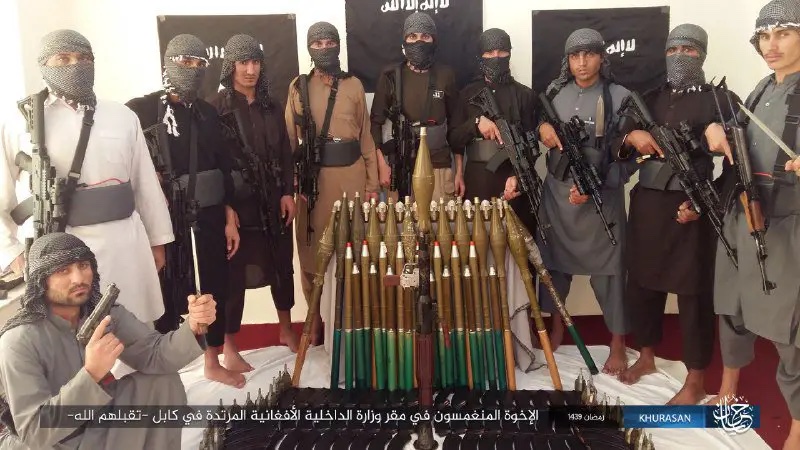
While the United Kingdom has yet to designate the Islamic State Khorasan Province (ISKP) as a terrorist organization, the group continues to produce propaganda in multiple languages targeting European audiences. This omission stands in stark contrast to allies including the United States, Australia, Canada, and the United Nations, all of which formally recognized ISKP as a terrorist entity years ago.
ISKP, established in eastern Afghanistan in 2015, emerged from fighters who defected from the Afghan and Pakistani Taliban, al-Qaeda, and other jihadist groups. After initially losing ground in the late 2010s, the group experienced a resurgence under the leadership of Sanaullah Ghafari, also known as Shabab al-Muhajir, who has shifted the organization’s focus beyond its traditional territories toward Central Asia, Russia, and Europe.
The group gained international notoriety after claiming responsibility for the 2021 Abbey Gate suicide bombing at Kabul airport during the U.S. withdrawal from Afghanistan. That attack killed 182 people, including thirteen American service members, two British dual nationals, and a child of a British citizen.
Security experts now consider ISKP the most aggressive Islamic State affiliate globally. Its operational footprint includes mass-casualty bombings across Afghanistan and Pakistan, attacks on Shiite places of worship, assassinations of Taliban officials, cross-border operations in Iran and Russia, and numerous thwarted plots in Europe, India, and the United States.
“This is not a parochial insurgency. It is a movement with reach, discipline and a clearly articulated global mission,” according to terrorism analysts familiar with the group’s evolution.
European security agencies have identified ISKP as the jihadist organization most likely to attempt mass-casualty attacks on the continent. A 2025 report by the Danish Institute for International Studies documented seven ISKP terrorist plots across Europe, including in Germany, France, Austria, Sweden, and Belgium.
The UK has not been immune to ISKP’s appeal. British authorities have intercepted multiple attempts by UK residents seeking to join ISKP in Afghanistan, including two Birmingham brothers, Muhammad Abdul Haleem Heyder Khan and Muhammad Hamzah Heyder Khan, and Farishta Jami from Stratford-upon-Avon. These cases demonstrate the group’s successful recruitment efforts targeting British citizens despite strong monitoring by intelligence services.
Online channels affiliated with ISKP regularly celebrate terrorist attacks on Western soil, encourage new operations against the UK, and glorify past IS atrocities. The group’s propaganda magazine, “Voice of Khurasan,” is published in several languages including English to appeal to vulnerable individuals in Western countries.
Security experts question why Britain has failed to designate ISKP as a terrorist organization despite meeting all criteria under the Terrorism Act 2000, which allows the Home Secretary to proscribe any organization “concerned in terrorism.”
Some analysts suggest diplomatic considerations may be at play, including reluctance to inadvertently strengthen the Taliban’s position as a counterterrorism partner by formally recognizing their enemy. However, counterterrorism specialists argue this represents a dangerous miscalculation that leaves Britain with significant legal and security vulnerabilities.
Proscription provides more than symbolic condemnation. It criminalizes membership, funding, and propaganda activities related to the organization. It enables law enforcement to restrict online networks, arrest suspects before plots develop, prevent travel for terrorist training, and prosecute facilitators, recruiters, and financiers with the full range of terrorism offenses.
Without formal designation, authorities face significant barriers in addressing ISKP-related activities, leaving operational gaps that could be exploited by the group’s supporters.
The situation echoes Europe’s slow response to the rise of Islamic State before its 2014 declaration of a caliphate. By the time Western nations fully recognized the threat, IS had already developed extensive networks capable of orchestrating attacks in Paris, Brussels, London, and Manchester.
While ISKP may not yet match the Islamic State at its peak, experts warn it operates with greater global reach, refined ideology, and less geographic constraint. It thrives in Afghanistan and Pakistan, regions where international attention has waned and no state exercises full control.
Counterterrorism coordination depends heavily on shared designations and aligned legal frameworks. The UK’s outlier status complicates intelligence sharing and enforcement efforts with international partners who have already taken formal action against ISKP.
Security analysts urge the Home Office to act without delay, arguing that formal proscription would align Britain with international partners, provide security agencies with necessary legal tools, and demonstrate a proactive approach to a recognized international threat.
Fact Checker
Verify the accuracy of this article using The Disinformation Commission analysis and real-time sources.

10 Comments
While the Abbey Gate attack in Kabul was a terrible tragedy, it’s concerning that ISKP has been able to sustain and even grow its operations since then. The UK’s reluctance to designate them as terrorists is puzzling and potentially risky.
I agree, the UK’s stance is perplexing. ISKP’s resurgence and expanding geographic focus should be setting off alarm bells. Designating them as a terrorist group, in line with allies, seems like a prudent and necessary step to counter this growing threat.
Concerning news about the growing threat of ISIS-Khorasan in Europe. It’s troubling that the UK hasn’t designated them as a terrorist group like many allies have. This omission seems short-sighted given their increased focus on Europe.
You’re right, the UK’s inaction is puzzling. Perhaps they’re hoping to avoid further escalating tensions, but that approach seems risky given ISKP’s recent resurgence and expanded ambitions.
The Abbey Gate attack in Kabul that killed 182 people, including Brits, was a horrific tragedy. ISKP’s continued ability to carry out such devastating operations is very concerning, especially with their broadening reach across Central Asia and Europe.
Absolutely. The UK needs to take this threat more seriously and act quickly to designate ISKP as a terrorist group, in line with its allies. Delaying this move puts European citizens at needless risk.
The UK’s reluctance to proscribe ISKP is curious, especially given the group’s increased focus on Europe. Are there political considerations at play here that are preventing a more robust response? Seems like a concerning oversight.
That’s a good question. There may be diplomatic or strategic reasons behind the UK’s hesitation, but the potential risks of inaction seem to far outweigh any perceived benefits. Stronger, coordinated action across Europe is clearly needed.
It’s alarming that ISKP is ramping up propaganda efforts targeting European audiences, while the UK drags its feet on formally recognizing them as terrorists. This seems like a dangerous blind spot that could have grave consequences.
I agree, the UK’s inaction is perplexing and potentially very risky. They need to reevaluate their stance and take decisive action to counter ISKP’s growing threat to Europe before it’s too late.