


Listen to the article
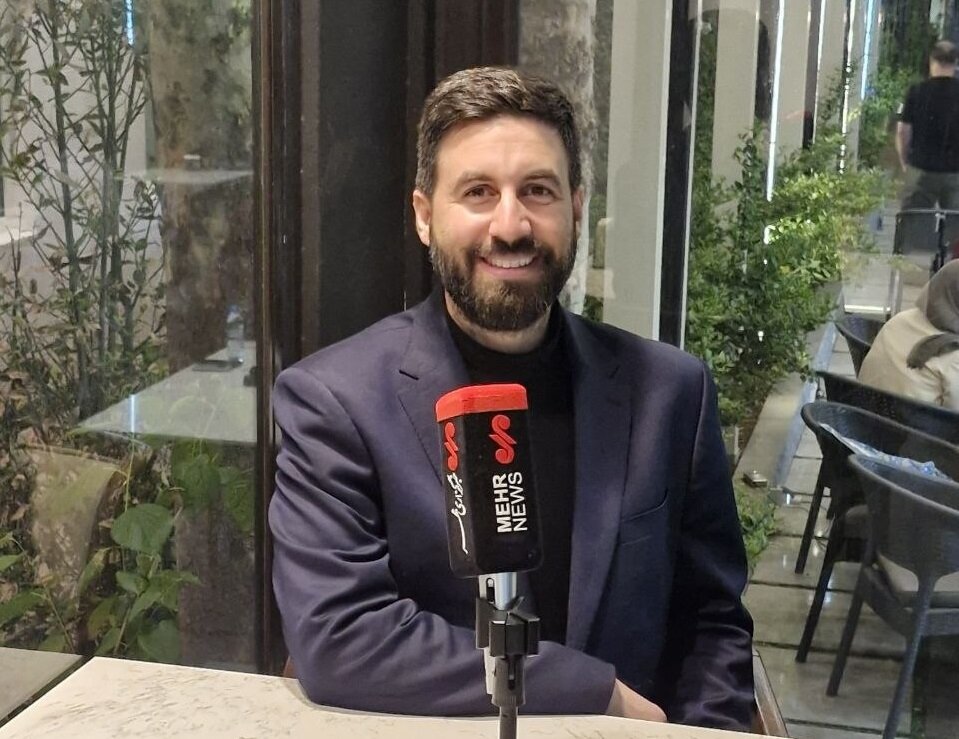
In a rare moment of cross-cultural insight, Iranian-American analyst Christopher Helali has provided a firsthand account of Iran during one of the nation’s most turbulent periods. Speaking with Mehr News Agency in Tehran, Helali offered perspectives on Iranian resilience, Western media portrayals, and the ongoing regional conflict.
Helali, who traveled to Iran as a journalist for DD Geopolitics, a media company with nearly one million subscribers across platforms, described being drawn to the country partly due to his heritage. “I’m Iranian by blood, so this is my homeland,” he explained, noting that his father participated in the Islamic Revolution and served in the early Revolutionary Guard.
Throughout his extensive journey across Iran—from Tabriz to Tehran, Isfahan, and coastal Bandar Abbas—Helali was struck by what he calls “the resilience of the Iranian people, the dignity of the Iranian people, that in the midst of tens of thousands of bombardments, they continue on.”
This observation directly contradicts Western media narratives, he argues. “Unlike what the Western media says—that Iranian society is on the brink of collapse, the government is on the brink of collapse—the proof is the opposite: Iranian society has proven far more resilient than they could ever have imagined.”
Helali emphasized Iran’s diversity as a strength, describing visits to Jewish synagogues, Armenian Christian churches, and Sunni mosques. “Iran, as a civilized state, cannot be contained or easily put in a monolith,” he noted, calling the country’s cultural landscape “a mosaic” drawing energy from various communities.
His unique perspective comes from a complex background—an Iranian revolutionary father and a Greek communist mother—that has shaped his understanding of global politics. “This upbringing was a profound source of knowledge, inspiration, and ethical and moral values that framed my understanding of the world,” Helali said.
The analyst was particularly critical of Western media representations of Iran, which he believes are filtered through what he terms “Orientalism.” “Western media tries to portray Iran as if it’s Afghanistan millennia ago or under the Taliban, that somehow everyone is repressed,” he said, challenging these perceptions with his observations of modern Iranian society.
The infrastructure and development he witnessed surprised even his audience. “People would not believe that this is Tehran, that this is Iran. They assume it’s mud huts,” he said, noting that when he shared video clips on social media, viewers questioned their authenticity, unable to reconcile the modern cityscape with their preconceptions.
Regarding the ongoing conflict, Helali characterized the current situation as a “cold war” that could escalate at any moment. He pointed to the U.S.-imposed blockade as “an act of war” under international law, creating what he described as a diplomatic standoff. “We are in a situation where it could escalate at any moment… the question is, who’s going to blink first?”
He connected Iran’s security concerns to broader regional issues, particularly Israel’s operations in Lebanon, which he considers part of a “Greater Israel project” that poses “a direct threat against Iran” and other countries in the region.
In his message to the American public, Helali questioned U.S. foreign policy priorities. “Is this how you want your tax dollars spent? Killing children in schools, destroying hospitals, destroying universities, destroying infrastructure?” he asked, contrasting military spending with domestic economic challenges.
Helali concluded by calling for greater accountability for U.S. officials, suggesting that American interests are not being served by current policies. “This is not America First. This is Israel First. And it is not in America’s interest,” he stated, referencing what he sees as failed nation-building efforts across the Middle East.
Fact Checker
Verify the accuracy of this article using The Disinformation Commission analysis and real-time sources.
