


Listen to the article
In a dramatic show of information control, the Iranian government recently implemented a near-nationwide internet and phone service blackout coinciding with widespread demonstrations in Tehran, Isfahan, Shiraz, and other major cities. As connectivity disappeared across the country, state media and Islamic Revolutionary Guard Corps (IRGC) channels worked to control the narrative, claiming streets were calm and protests had failed.
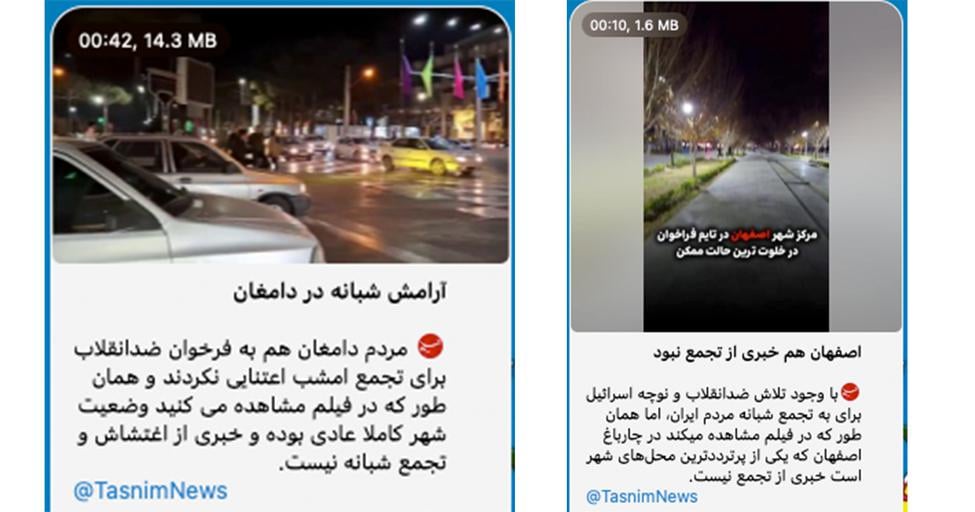
Government-aligned outlets including Tasnim and Fars News Agency circulated footage of quiet neighborhoods in cities like Isfahan and Damghan, presenting these images as evidence that civil resistance had subsided. One IRGC-affiliated Telegram channel even suggested that crowds visible in Tehran’s Shahrak-e Gharb district and along Valiasr Street were simply residents going about their daily routines rather than demonstrators.
Independent sources, however, painted a starkly different picture of events unfolding inside Iran on January 8-9, 2026. International news agencies including the Associated Press and Reuters reported severe disruptions to connectivity as protests expanded across urban centers. Internet monitoring group NetBlocks confirmed sharp drops in access across multiple service providers, with some regions experiencing near-total outages precisely when demonstrations reached their peak.
The communications shutdown appears strategically designed to limit information flow about the demonstrations, which began as economic protests before evolving into broader calls for political accountability and systemic change. Digital monitoring services documented significant nationwide declines in internet traffic, with many areas effectively cut off from outside communication.
This information management strategy aligns with Iran’s established approach to controlling dissent. The country maintains one of the world’s most restrictive internet censorship systems, routinely blocking platforms like YouTube, X (formerly Twitter), Facebook, and Telegram. Similar communications shutdowns were employed during previous periods of unrest, including the November 2019 protests and demonstrations following Mahsa Amini’s death.
“By portraying cities as peaceful and citizens as unconcerned, the regime seeks to undermine protesters’ morale and suggest opposition calls have been ineffective,” explained a Middle East analyst who requested anonymity. “The information vacuum creates space for the government to shape public perception both domestically and internationally.”
While the blackout significantly hampered real-time reporting, it failed to completely silence communication. Footage and reports continued to emerge through activist networks, diaspora media outlets, and independent watchdogs, documenting large crowds, anti-government chants, merchant strikes, and confrontations with security forces.
The situation has also highlighted Iran’s growing digital divide. In recent years, authorities have established parallel systems allowing selected individuals – typically those with government connections – access to largely uncensored internet services through “white SIM cards.” Meanwhile, ordinary citizens must rely on illegal VPNs and circumvention tools to access blocked platforms, creating unequal information access based on political and institutional privilege.
Economic grievances appear to be the primary catalyst for the current wave of demonstrations. Iran’s economy has struggled under the weight of international sanctions and domestic mismanagement, with inflation reaching record levels and the national currency continuing to lose value. These economic hardships have intensified public frustration with the government.
Human rights organizations have expressed concern about the information blackout, noting that such measures often precede intensified crackdowns on protesters. Previous internet shutdowns in Iran have coincided with increased use of force by security personnel, with limited documentation due to communication restrictions.
The competing narratives around these events reflect not only the challenges of accurate reporting under authoritarian constraints but also the ongoing struggle of Iranian citizens to communicate, organize, and be heard during a period of sustained political upheaval. As the government works to present an image of stability and control, independent sources continue working to document the reality of this latest chapter in Iran’s complex political landscape.
Fact Checker
Verify the accuracy of this article using The Disinformation Commission analysis and real-time sources.

9 Comments
It’s troubling to see the Iranian government going to such lengths to manipulate the narrative and conceal the reality of the protests. This reflects a profound lack of respect for press freedom and human rights.
This is a complex and rapidly evolving situation. It’s important that we continue to seek out reliable, fact-based information from a variety of sources to understand the true nature of events in Iran.
This situation underscores the need for robust, independent journalism that can shed light on the true events happening on the ground, even in the face of government censorship.
The use of internet blackouts to quell protests is a concerning trend we’ve seen in other authoritarian regimes. It’s critical that the international community condemns these efforts to restrict the free flow of information.
I’m curious to see how the international community will respond to these efforts to restrict information flow and suppress dissent. Strong diplomatic pressure may be needed to hold the Iranian government accountable.
The use of internet shutdowns to suppress information and isolate citizens is a troubling tactic. It’s important that the international community remains vigilant and continues to report on the true situation on the ground.
This underscores the importance of having diverse, uncensored sources of information, especially during times of civil unrest. Relying solely on state media can lead to a distorted understanding of events.
It’s concerning how the Iranian government is using internet blackouts and state media to control the narrative around these protests. Independent reports paint a very different picture than the official propaganda.
I’m curious to learn more about the specific tactics the government is using to control the flow of information. Are they jamming signals, throttling bandwidth, or completely shutting down access?