


Listen to the article
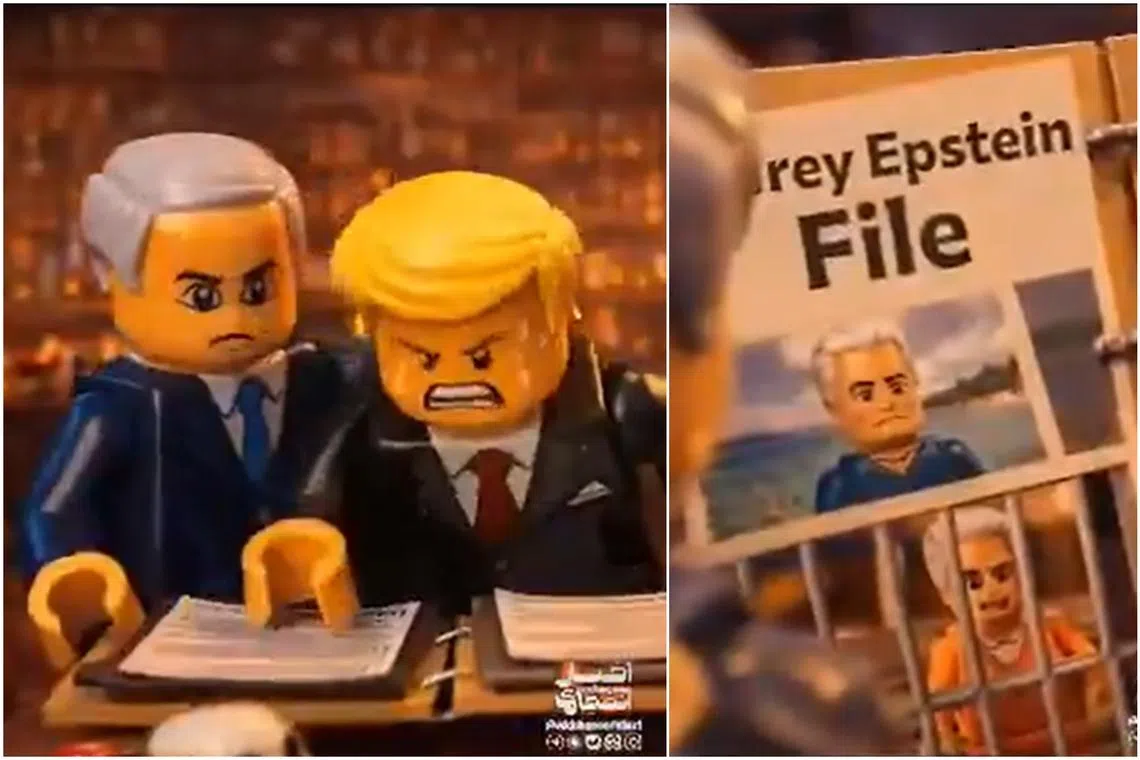
In a bold departure from traditional wartime propaganda, Iran has deployed a creative new weapon in its ongoing conflict with the United States and Israel: a Lego-style animated video that depicts the escalating Middle East tensions through colorful toy-like characters.
The two-minute animation, released by Iran’s state-run Revayat-e Fath institute on state television, has rapidly spread across social media platforms including Meta-owned sites and X, accumulating tens of thousands of likes and shares since its debut following the February 28 attacks that reportedly killed Ayatollah Ali Khamenei.
Notably devoid of dialogue, the video appears strategically designed to transcend language barriers and reach international audiences at a time when the conflict has sent shockwaves through global energy markets and polarized public opinion worldwide.
The animation opens with Lego-style representations of U.S. President Donald Trump and Israeli President Benjamin Netanyahu, accompanied by a devil figure, examining what the video labels as an “Epstein file.” In a dramatic escalation, Trump’s character furiously presses a red button, launching a missile that strikes what appears to be a classroom filled with toy representations of young girls wearing pink headscarves attentively listening to their teacher.
The classroom scene shows the teacher writing “My homeland is my life” on a blackboard before the screen goes dark. The aftermath depicts a harrowing image: a pink backpack and pair of pink shoes amid rubble, discovered by a weeping Iranian officer whose grief visibly transforms into rage.
This sequence appears to reference Iran’s allegations that U.S. and Israeli forces conducted a deadly strike on a school in Minab, located in southern Iran, during the initial day of hostilities. However, these claims remain unverified, as independent journalists have been unable to access the site or confirm casualty reports.
As a nationalist soundtrack builds in the background, the video’s narrative shifts to show Iran’s Revolutionary Guards retaliating with attacks against U.S. interests and Israeli targets throughout the region. The animation concludes with a solemn message dedicated to the students allegedly killed in the strike, describing them as “martyred at the hands of Zionist and American terrorists.”
The production represents a sophisticated evolution in wartime propaganda techniques, using globally recognizable toy imagery to create an emotionally charged narrative accessible to viewers regardless of language or cultural background. The simplicity of the Lego-inspired format belies the complex geopolitical messaging contained within.
Media analysts note this approach allows Iran to present its perspective on the conflict to international audiences who might otherwise be unreceptive to traditional state messaging. By utilizing a familiar and seemingly innocent medium like toy animation, the video packages serious allegations and nationalist sentiment in a format that can potentially bypass viewers’ usual skepticism toward state propaganda.
The video emerges against the backdrop of escalating tensions in the region, with Iran increasingly using missiles and drones to counter what it characterizes as American and Israeli aggression. This multimedia approach suggests Tehran is fighting on multiple fronts – not only militarily but also in the realm of international public opinion.
While Iran continues to assert its narrative about the school strike, international organizations have called for independent investigations into all civilian casualty claims from all sides in the widening conflict. The animation’s viral spread across social platforms demonstrates the evolving nature of information warfare in modern conflicts, where simplified visual storytelling can sometimes prove as impactful as traditional military operations in shaping global perceptions.
Fact Checker
Verify the accuracy of this article using The Disinformation Commission analysis and real-time sources.

8 Comments
Portraying Trump, Netanyahu, and the Epstein controversy through a Lego-esque lens is a bold choice. It likely aims to make the message more approachable, especially for younger audiences. However, the effectiveness of this approach in a geopolitical conflict remains to be seen.
The animation’s lack of dialogue and reliance on visual symbolism is a strategic choice to make the messaging more universally accessible. It’s a unique departure from typical wartime propaganda tactics. I wonder how this video and future animated content will be received globally.
This is an intriguing use of animation in an information campaign. It will be interesting to analyze how Iran’s state media is leveraging this creative format to reach international audiences and potentially sway opinions on the ongoing tensions with the US and Israel.
While the animation’s creative style is noteworthy, it’s important to critically analyze the substance and messaging behind this Iranian propaganda effort. The geopolitical implications of such information campaigns warrant close scrutiny.
This is certainly an intriguing propaganda tactic from Iran. Using a Lego-style animation to depict the geopolitical tensions with the US and Israel is quite creative and accessible. I wonder if it will be effective in swaying international public opinion on these complex issues.
This is certainly a unique and visually striking approach to information warfare. However, the underlying motivations and potential impacts of Iran’s animated propaganda should be examined carefully, given the complex and high-stakes nature of the conflict.
The use of Lego-inspired animation is an intriguing artistic choice, but the true purpose of this Iranian campaign is to shape global narratives and perspectives on a sensitive geopolitical issue. It will be insightful to monitor how this content is received and shared internationally.
The animation seems designed to be visually striking and easy to share on social media. It’s an unusual approach compared to more traditional wartime propaganda videos. I’m curious to see how this campaign evolves and if it manages to gain traction globally.