


Listen to the article
Iranian Propaganda Finds New Beat: AI Lego Rap Videos Target American Audiences
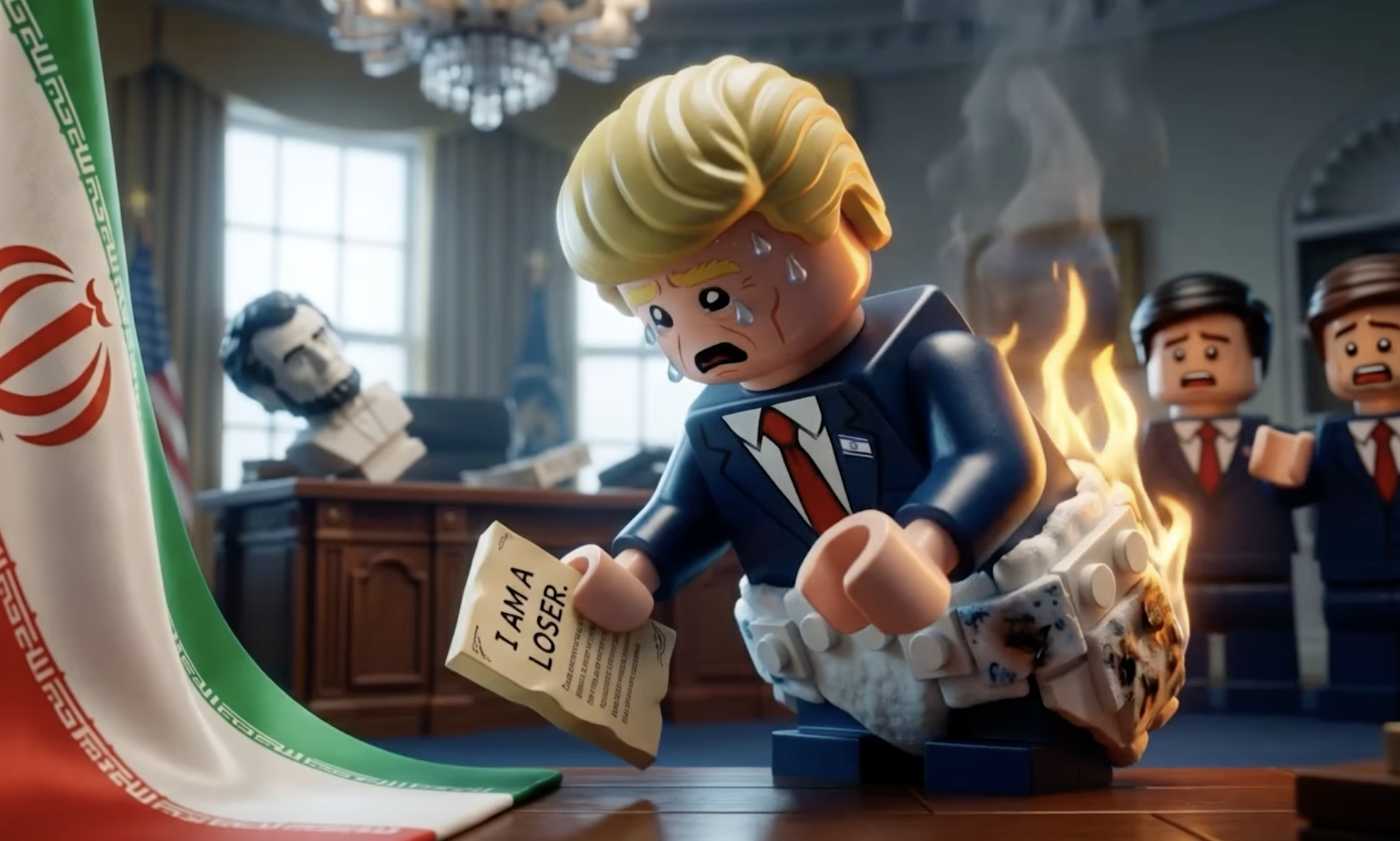
The real-world tensions between the United States and Iran have taken a bizarre turn online, where a series of AI-generated Lego rap videos mocking former President Donald Trump have gone viral across social media platforms. Behind the colorful bricks and catchy beats lies what experts identify as sophisticated propaganda aimed at exploiting American anxieties during a time of heightened global tensions.
These videos blend hip-hop culture, memes, and anti-Trump humor to connect with American audiences already worn down by inflation fears, political division, and the specter of another Middle East conflict. The animated clips feature Lego characters, trap beats, and cartoon explosions that package political messaging in an easily digestible and shareable format.
Intelligence reports have linked the videos to “Explosive News,” a propaganda network with direct ties to the Iranian government. Though a representative told The New Yorker they are simply a “student-led media team with a background in social activism” operating independently of government influence, cybersecurity experts remain skeptical about these claims.
Simon Howard, assistant professor of psychology at the University of Miami, notes the strategic choice of hip-hop as the vehicle for these messages. “Rap and hip-hop are a global language of resistance and identity that have served as the soundtrack to revolutions worldwide,” Howard explains. “Based on what these individuals from Iran are doing, they are vocalizing their frustration with the U.S.”
The videos have resonated strongly with certain online communities. Social media users openly express their appreciation for the content, even while acknowledging its propagandistic nature. One Threads user wrote, “I was kind of losing my faith in hip-hop lately… but these things are so on point I just love it so much.” Another commented on “the Donny Boy smackdown” while adding a fire emoji.
The appeal of these videos stems partly from their timing. With inflation continuing to impact working-class Americans, fears of broader Middle East conflict growing, and political polarization at extreme levels, the audience is primed for content that expresses frustration with the status quo.
Dr. A.D. Carson, associate professor of hip hop in the global south at the University of Virginia, describes the videos as operating like a “funhouse mirror,” portraying Trump and other political figures as cartoonish villains. “It feels as if they have their fingers on the pulse of something rhetorically significant,” Carson observes. “Using Legos and hip-hop as a way to cut through the noise around political discourse is something to admire.”
However, Carson also urges caution: “We should be vigilant about any media we are engaging with—even if it is something we see as entertaining or funny. The stakes are incredibly high.”
The videos initially focused on the U.S.-Iran tensions but have expanded to cover other political topics, including Trump’s alleged sleeping during press conferences and the shooting at the White House Correspondents’ dinner. Their reach demonstrates how effectively foreign actors can leverage American cultural touchstones to spread messages that align with their geopolitical interests.
The Hip Hop Caucus, an organization that mobilizes communities of color for social justice causes, has expressed concern that these AI-generated videos risk diluting an art form deeply rooted in Black American experiences. Brittany Bell Surratt, the Caucus’s senior director of storytelling, argues that authentic hip-hop emerges from lived experiences of navigating systemic inequality.
“When AI tools replicate the sound and aesthetic of hip-hop without that lived context, it extracts from the culture,” Surratt explains. “What we’re seeing is both a testament to hip-hop’s universal appeal and a warning about how easily culture can be extracted and repurposed without accountability.”
Media literacy experts emphasize that these videos highlight the growing need for critical thinking skills in the digital age. As artificial intelligence makes creating convincing content easier, distinguishing between authentic expression and strategic propaganda becomes increasingly challenging—particularly when the message resonates with viewers’ existing beliefs.
As one conflicted user noted, “This is a Lego AI video allegedly from Iran, laying out everything our government tries to hide…and it shouldn’t be this catchy. What a time to be alive.”
Fact Checker
Verify the accuracy of this article using The Disinformation Commission analysis and real-time sources.

8 Comments
While the videos may seem harmless on the surface, it’s troubling to see how Iran is leveraging modern media tactics to spread disinformation. We should be wary of the potential geopolitical implications.
The fusion of hip-hop, memes, and anti-Trump humor is a shrewd way to connect with American audiences. However, the underlying agenda of these videos is clearly to sow discord and manipulate public opinion.
Agreed. Propaganda often disguises itself as entertainment or humor. It’s crucial to maintain a critical eye and not be swayed by the flashy production values.
This is a concerning example of how authoritarian regimes are adapting their propaganda tactics to the digital age. The use of AI-generated content and popular culture references is particularly insidious.
Interesting to see how Iran is leveraging popular music and memes to spread propaganda. While the videos may be catchy, it’s important to be skeptical of the true source and intent behind them.
Agreed. These kinds of tactics can be very effective at influencing public opinion, especially among younger audiences. Critical thinking is crucial when consuming online content.
The use of AI-generated Lego characters and trap beats is a clever way to make the propaganda more engaging and shareable. However, it’s concerning to see authoritarian regimes exploiting cultural trends for political aims.
Absolutely. Blending entertainment and political messaging is a well-known propaganda technique. It’s important to stay vigilant and fact-check the sources behind this kind of content.