


Listen to the article
Iranian state media has entered uncharted territory with its first Hebrew-language documentary aimed directly at Israeli audiences, offering a provocative perspective on the recent conflict between the two regional adversaries.
The Islamic Revolutionary Guard Corps-affiliated Tasnim News Agency released “Missiles Over Bazan,” a documentary chronicling Iran’s missile attacks against Israel during the brief but intense 12-day war in June. This unprecedented media approach marks a strategic shift in Iran’s propaganda efforts, creating content specifically designed to reach Hebrew speakers.
According to Tasnim’s official statement, the documentary seeks to “speak directly to the Israeli public from a position of strength and reality,” with the ambitious goal of unveiling “a picture that has remained hidden for years from Hebrew-speaking viewers.”
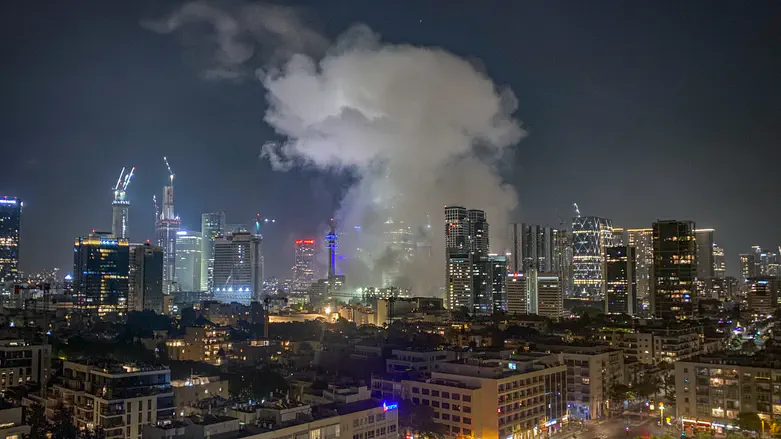
The film’s narrative centers on Iran’s missile strike targeting Haifa’s oil refineries, a critical piece of Israeli infrastructure. The producers claim this attack represented a pivotal moment that “succeeded in changing the course of the war and shifting the balance of power in the region.”
To build its case, the documentary reportedly employs “professional interviews, intelligence information, and visual reenactments” designed to present what Tasnim describes as “the truth of the battlefield” – explicitly positioning itself as a counterweight to narratives from Western and Israeli media sources.
This media initiative comes amid rising tensions in the Middle East, where Iran and Israel have engaged in increasingly direct confrontations. What once played out primarily through proxy groups has evolved into more overt military exchanges, with both nations trading missile attacks.
Media and propaganda experts note that this approach represents a sophisticated evolution in Iran’s information warfare strategy. Dr. Sarah Montgomery, a Middle East media specialist at Georgetown University, told this publication that the documentary signals “a new phase in Iran’s attempt to influence public opinion beyond its borders.”
“By creating Hebrew-language content, Iran is attempting to bypass Israeli government and media filters, speaking directly to citizens in their native language,” Montgomery explained. “This approach acknowledges the importance of public opinion in democratic societies as a potential pressure point.”
The targeting of Haifa’s refineries in the documentary is particularly significant. The Bazan Group oil refineries represent critical energy infrastructure for Israel, processing approximately 9.8 million tons of crude oil annually and providing roughly 40 percent of the country’s refined petroleum products.
Israeli security analysts have long identified the northern refineries as strategic assets vulnerable to attack. A successful strike could potentially disrupt fuel supplies and create environmental hazards in Haifa Bay, home to approximately 300,000 residents.
This media offensive comes as Iran continues to advance its missile capabilities. The Islamic Republic maintains the largest and most diverse missile arsenal in the Middle East, according to the U.S. Defense Intelligence Agency, with many systems capable of striking targets throughout Israel.
Israeli officials have not formally responded to the documentary’s release. However, the Israel Defense Forces have previously dismissed Iranian claims about the effectiveness of their missile attacks, stating that air defense systems intercepted the majority of incoming projectiles during the June conflict.
Media watchers remain skeptical about the documentary’s potential impact on Israeli public opinion. “While innovative in approach, the documentary will likely face significant credibility challenges with Israeli viewers who are well-versed in identifying state propaganda,” said Dr. Eli Karmon, a senior researcher at the International Institute for Counter-Terrorism in Herzliya.
The documentary’s release highlights the evolving nature of modern conflict, where information operations and perception management have become as crucial as kinetic military actions. As regional tensions persist, both Iran and Israel appear poised to continue their battle not only with missiles but also with media narratives designed to shape domestic and international perceptions of their ongoing rivalry.
Fact Checker
Verify the accuracy of this article using The Disinformation Commission analysis and real-time sources.

13 Comments
This move by Iran to produce a Hebrew-language documentary is a bold one, but it remains to be seen whether it will have the desired impact. Propaganda often backfires, and Israelis may be quick to dismiss this as just another attempt to sway public opinion.
The battle for the narrative between Iran and Israel is intensifying, and this documentary seems to be Iran’s latest salvo. It will be interesting to see if it manages to reach its target audience and influence their perceptions.
The use of Hebrew in this documentary is a clear attempt by Iran to connect with Israeli audiences. However, the credibility of the claims made will be key in determining whether this tactic succeeds or not.
I’m curious to see how this documentary is received in Israel. While Iran may believe it is presenting an alternative narrative, Israelis may view it as nothing more than a propaganda piece aimed at justifying their actions.
While I appreciate Iran’s efforts to directly engage with the Israeli public, the timing and content of this documentary suggest it is more about propaganda than genuine dialogue. It will be crucial to approach this with a critical eye.
This is a bold move by Iran, but the success of this documentary will depend on how it is perceived by the Israeli public. If it is seen as a genuine attempt to engage and provide an alternative perspective, it could potentially have an impact. However, if it is dismissed as pure propaganda, it may backfire and further entrench existing divisions.
This is an interesting development in the information war between Iran and Israel. It will be worth monitoring how this documentary is received and whether it has any impact on public perceptions in either country.
This is a fascinating development in the ongoing information war between Iran and Israel. While the documentary may be seen as propaganda by some, it could also open up new avenues for dialogue and understanding between the two countries.
I’m curious to see how this documentary is received in Israel. While Iran may believe it is presenting an alternative narrative, Israelis may view it as nothing more than a propaganda piece aimed at justifying their actions. It will be interesting to see how the discourse unfolds.
Producing content in the target audience’s language is a shrewd tactic, but it doesn’t necessarily make the message more credible. Iran will need to back up its claims with solid evidence if it wants to have any chance of swaying Israeli public opinion.
Iran’s decision to produce a Hebrew-language documentary is a strategic move, but it remains to be seen whether it will achieve the desired effect. The credibility of the claims made and the reaction from the Israeli public will be key factors in determining the impact of this effort.
This documentary seems like a clear propaganda effort by Iran to sway Israeli public opinion. While they may claim to be presenting an alternate viewpoint, the underlying agenda is likely to justify and glorify Iran’s actions.
I’m curious to see how Israelis will react to this documentary. Will it resonate with them or will it be dismissed as crude propaganda? The battle for the narrative is intensifying between these long-time adversaries.