


Listen to the article
Rising oil prices stemming from the Iran conflict are poised to increase costs across the American economy, with experts warning of widespread impacts that will hit low-income households hardest.
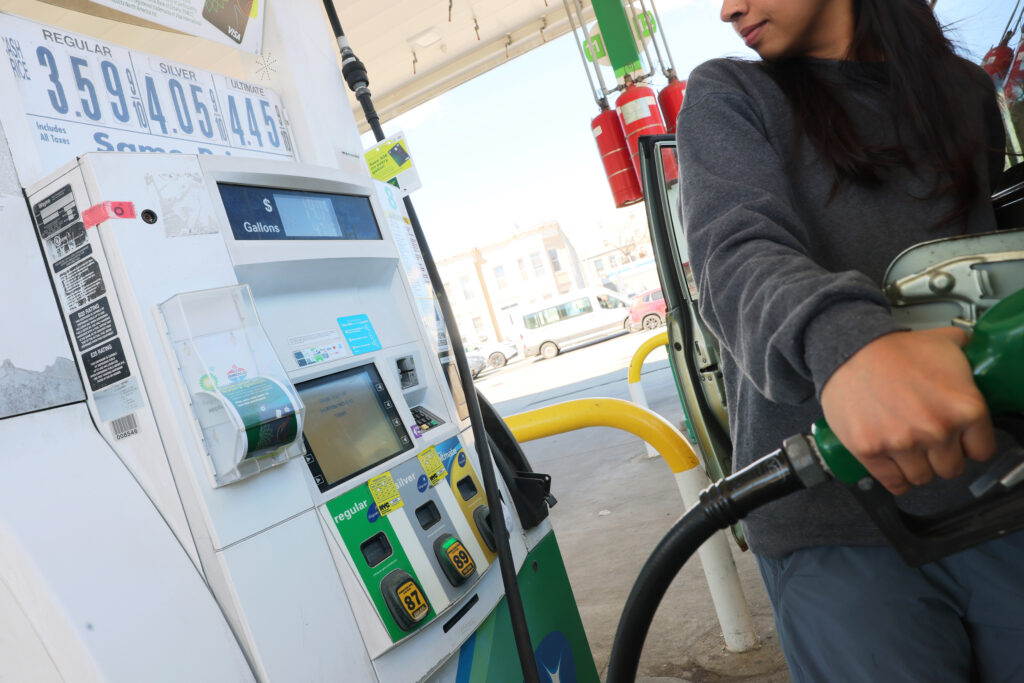
Crude oil prices approached and, in the case of Brent crude, exceeded $100 per barrel by Friday, while national gas prices averaged $3.91 according to AAA. These increases are already sending ripples throughout various economic sectors.
“Oil shocks have historically had an outsized economic impact—one that Americans are already starting to see,” said Heather Boushey, a professor at the University of Pennsylvania’s Kleinman Center for Energy Policy.
Boushey emphasized that the crisis is far-reaching, with the effective closure of the Strait of Hormuz near Iran affecting everything from nitrogen fertilizer prices that influence food costs to shipping expenses that drive up prices for all consumer goods. The longer the situation persists, the more consumers will feel the financial strain.
Historically, fuel price spikes have prompted consumers, businesses, and governments to reconsider investments in renewable energy. “This tends to be a trend when gas prices are going up, that tends to drive more interest in purchasing or leasing electric,” explained Alex Jacquez, chief of policy and advocacy at Groundwork Collaborative, a progressive think tank.
Early signs of this pattern are emerging internationally, with EV dealership visits increasing in Asia, where price shocks from the Iran war are more pronounced than in the United States.
Senator Sheldon Whitehouse (D-R.I.), ranking member of the Senate Environment and Public Works Committee, suggested fossil fuel misinformation may be hampering a renewable energy surge in America. “There is a massive and very concerted campaign in which the Trump administration is a major participant to falsely convince the public that electric vehicles, clean energy are all more expensive,” Whitehouse told Inside Climate News.
He characterized suggestions that fossil fuels are cheaper than renewables as propaganda designed to protect the interests of major donors to the Trump administration.
The White House, meanwhile, defended its energy policies in a statement claiming without evidence that green energy sources are “too unreliable and unaffordable” for America’s energy infrastructure, while touting the administration’s “energy dominance agenda” focused on conventional fuels.
The Trump administration has implemented policies that financially support fossil fuel companies, including a subsidy for metallurgical coal in the One Big Big Beautiful Bill Act that provides a 2.5 percent tax credit for production costs. An analysis by Inside Climate News suggested this provision could deliver annual tax benefits of $200-300 million to the coal industry.
Whitehouse argued that countering misinformation requires ensuring the federal government provides scientifically accurate information about energy costs and environmental impacts. He suggested that a Democratic victory in November would prevent the government from being “controlled by the worst elements of the fossil fuel industry through their massive corruption.”
Federal messaging around renewables and electric vehicles has varied widely between administrations. Despite the Trump administration’s fossil fuel focus, the EPA website still contained Biden-era information debunking EV myths as recently as March, including addressing concerns about charging infrastructure by noting there are over 77,000 stations and 219,000 charging ports available across the country.
Experts emphasize that beyond messaging, policy decisions around renewable energy and EV adoption are critical. The elimination of EV tax credits and increased fossil fuel subsidies under the current administration create barriers to a more efficient, less costly energy grid.
“What the Trump administration has done with regard to the Inflation Reduction Act—and it’s both a policy and rhetorical war on electric vehicles in particular, have done tremendous damage to consumers,” Jacquez said.
He added that encouraging EV and renewable energy adoption isn’t just about protecting consumers from oil price fluctuations, but also ensuring American manufacturers can compete with foreign companies like Chinese EV producer BYD. “Because right now, they’re eating our lunch,” Jacquez warned.
Michael Staley, president of the Alabama Clean Fuels Coalition, recently argued that increased gas prices should serve as a wake-up call. “America cannot control global oil shocks, but can reduce its exposure to them,” he wrote. “EVs give families a way to escape the volatility of the pump while saving money over time.”
Fact Checker
Verify the accuracy of this article using The Disinformation Commission analysis and real-time sources.

11 Comments
The article raises valid concerns about the fossil fuel industry’s influence on policy decisions. Policymakers need to take a more balanced, evidence-based approach that prioritizes the public good over industry interests.
This article highlights the significant influence the fossil fuel industry wields, even in times of global instability. It’s crucial that policymakers prioritize energy security and work to reduce our dependence on oil and gas.
Absolutely. The push for renewable energy development needs to be accelerated to build resilience and mitigate the impacts of volatile fossil fuel markets.
The impact of the Iran conflict on energy markets is certainly concerning. Higher fuel costs will put strain on businesses and households, especially the most vulnerable. It’s a reminder of the need to reduce our reliance on fossil fuels and transition to more sustainable energy sources.
Agreed. Diversifying our energy mix and investing in renewables could help insulate the economy from these types of geopolitical shocks in the future.
While the short-term impacts of higher fuel prices are concerning, the long-term benefits of transitioning to clean energy outweigh the costs. This crisis should spur greater investment and innovation in renewable technologies.
Absolutely. The sooner we can reduce our dependence on fossil fuels, the better prepared we’ll be to weather future energy market volatility.
This crisis highlights the fragility of our current energy system and the need for a more diversified, resilient approach. Developing domestic renewable energy resources could help insulate the economy from global supply chain disruptions.
While the current situation is concerning, it also presents an opportunity to accelerate the transition to clean energy. Investing in renewable technologies and infrastructure could help shield the economy from future energy price shocks.
The article raises important questions about the fossil fuel industry’s influence on geopolitics and policy decisions. Transparent and accountable governance is key to ensuring the public interest is prioritized over industry interests.
Agreed. Greater oversight and regulation of the fossil fuel industry’s lobbying activities and political influence is needed to safeguard the public good.