


Listen to the article
Virtual Warfare: US and Iran Engage in Digital Propaganda as Real Conflict Rages
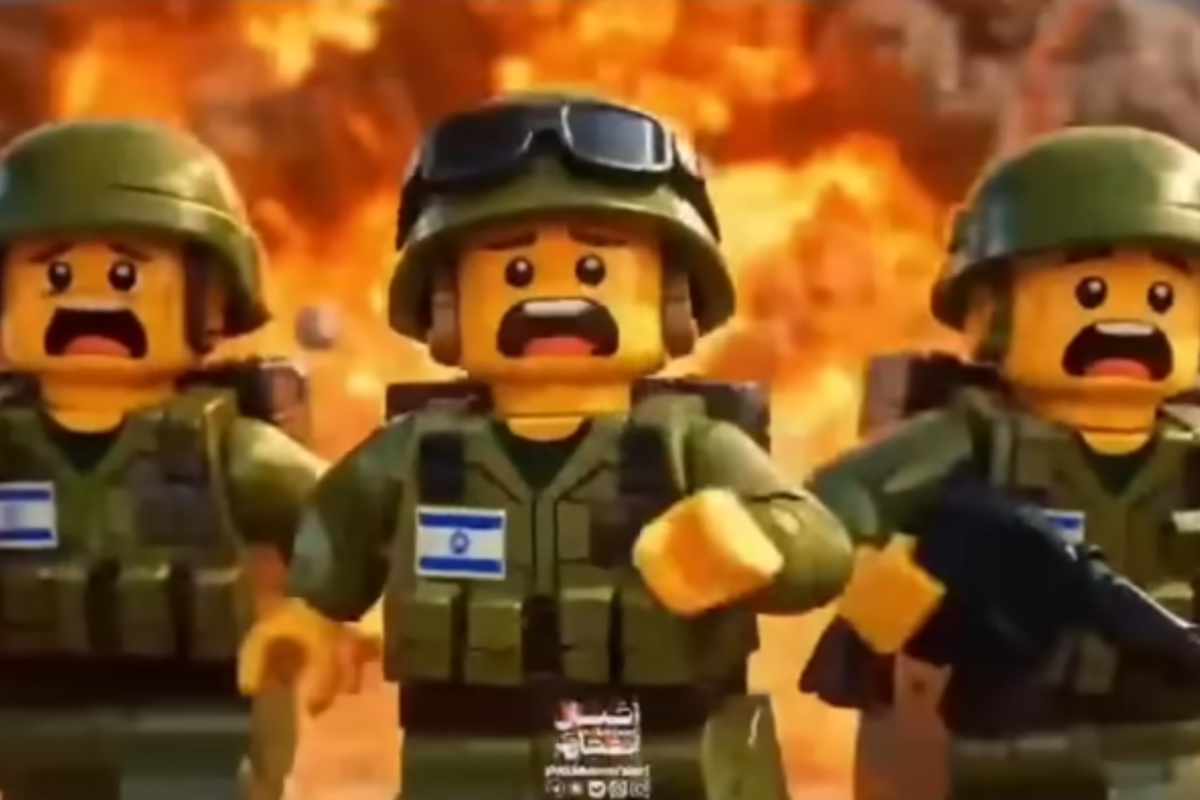
As missiles fly and casualties mount in the ongoing military conflict between the United States, Israel, and Iran, both sides have launched another battle—one fought with Lego figures, Call of Duty footage, and Grand Theft Auto memes.
This digital propaganda war, which experts describe as a deliberate blurring of entertainment and deadly reality, has emerged as hundreds of lives have been lost since the United States and Israel began military strikes against Iran last month.
Among the most striking examples is an AI-generated video featuring Lego figures, recently published by Iranian state media. The disturbing clip depicts cartoon versions of US President Donald Trump and Israeli Prime Minister Benjamin Netanyahu alongside a devil figure examining what the video labels as the “Epstein file.” The Trump character then launches an American-flagged missile at a Muslim girls’ school.
After the explosion, only a pink bag and shoes remain in the rubble—an apparent reference to the bombing of the Shajareh Tayyebeh girls’ elementary school in Iran during the early days of the conflict. Iran claims at least 175 people died in that strike, which UNESCO condemned as a “grave violation of humanitarian law” and which remains under US investigation.
In the same video, Lego Iranian officials are shown retaliating with missiles and jets that destroy a British military base in Cyprus and the American Embassy in Saudi Arabia—both locations that were actually targeted by Iranian drones in the real-world conflict.
The White House has been equally controversial in its social media approach. One official clip shows a character from the Call of Duty video game series ordering an airstrike via tablet, followed by actual footage of US fighter jets taking off from carriers in the Middle East and bombing Iranian targets, all set to a Childish Gambino track.
Another White House video splices real strike footage with a Grand Theft Auto character saying, “Ah s***, here we go again.” After each strike, the word “wasted” appears on screen—mimicking what GTA players see when their character dies in the game.
The US administration has also incorporated scenes from Halo, Braveheart, and Tropic Thunder into its war montages, prompting backlash from some of the original creators. Actor Ben Stiller publicly demanded the White House remove Tropic Thunder clips, writing on X: “We never gave you permission and have no interest in being a part of your propaganda machine. War is not a movie.”
Dr. Iain Overton, director of Action on Armed Violence, told The Independent, “Visual language borrowed from gaming, memes, etc., reframes violence as spectacle. I find something philosophically unsettling about AI-generated propaganda in particular. Traditional propaganda still bore some trace of human intention and of craft. But AI allows states to produce imagery that feels both hyper-real and—in equal regard—detached from reality.”
Technology consultant Dr. Lukasz Olejnik, a visiting senior research fellow at King’s College London’s Department of War Studies, explained that combining military strikes with computer game imagery changes how our brains process the information.
“The moment you put a Call of Duty kill animation over real strike footage, maybe you destroy that distance,” Olejnik said. He warned against dismissing these techniques as merely “childish” or “unserious.”
“This is a very serious technique,” he emphasized. “That is where attention lives. And attention is now the primary resource in any conflict, including wars.”
Olejnik pointed to Russia’s aggressive propaganda actions against its neighbors and Western Europe as evidence of how these approaches can be integrated into broader military strategy, involving “the entire State and information operators, including bots on social networks.”
The expert also highlighted how AI disinformation can have tangible diplomatic consequences, citing the Trump administration’s recent campaign to claim Greenland. AI-generated content portraying the Danish territory as American created “a genuine crisis of interpretation” in European capitals.
“Was this a real territorial threat? A negotiating tactic? Domestic performance for American audiences?” Olejnik asked. “European governments genuinely could not tell. That uncertainty had real policy consequences.”
As the physical conflict continues with no clear end in sight, this parallel propaganda war using popular media suggests a fundamental shift in how modern nations conduct information warfare—targeting attention spans rather than simply conveying messages through traditional channels.
Fact Checker
Verify the accuracy of this article using The Disinformation Commission analysis and real-time sources.

12 Comments
It’s troubling to see how both the US and Iran are leveraging pop culture and entertainment to wage a digital propaganda war, rather than focusing on diplomacy and de-escalation. This trend highlights the need for greater media literacy and critical thinking among the public.
I hope that as this conflict continues, both sides will recognize the harm caused by this type of propaganda and find more constructive ways to communicate and work towards a resolution.
The Iranian video depicting the bombing of a girls’ school is a chilling example of how propaganda can trivialize and exploit real human suffering. This type of content is deeply disturbing and undermines efforts for peace.
I’m curious to see if this propaganda war will continue to escalate, or if cooler heads will prevail and both sides will return to more fact-based, responsible communication.
This escalating propaganda battle highlights how modern technology can be exploited to distort the truth and manipulate emotions. The use of AI-generated content is particularly worrying, as it becomes harder to distinguish fact from fiction.
I hope both sides exercise more restraint and responsibility in their messaging, and focus on de-escalating the real-world conflict, rather than inflaming tensions through digital means.
The use of Lego figures, video game footage, and memes to convey serious military conflict and loss of life is deeply inappropriate and disrespectful. This type of content trivializes real human suffering and tragedy.
I’m concerned that this propaganda battle will only serve to further inflame tensions and make a peaceful resolution more difficult to achieve.
While I understand the desire to influence public opinion, using pop culture and entertainment as a vehicle for propaganda is a worrying tactic. It blurs the lines between reality and fiction in a way that can be psychologically manipulative.
I hope that as this conflict continues, both sides will focus more on diplomacy and de-escalation, rather than ramping up this digital propaganda war.
The weaponization of pop culture for propaganda purposes is a concerning trend. Both the US and Iran seem to be engaging in digital warfare to sway public opinion, blurring the line between entertainment and reality.
It’s a dangerous game they’re playing, using memes and video game footage to shape narratives around real-world conflicts and tragedies.