


Listen to the article
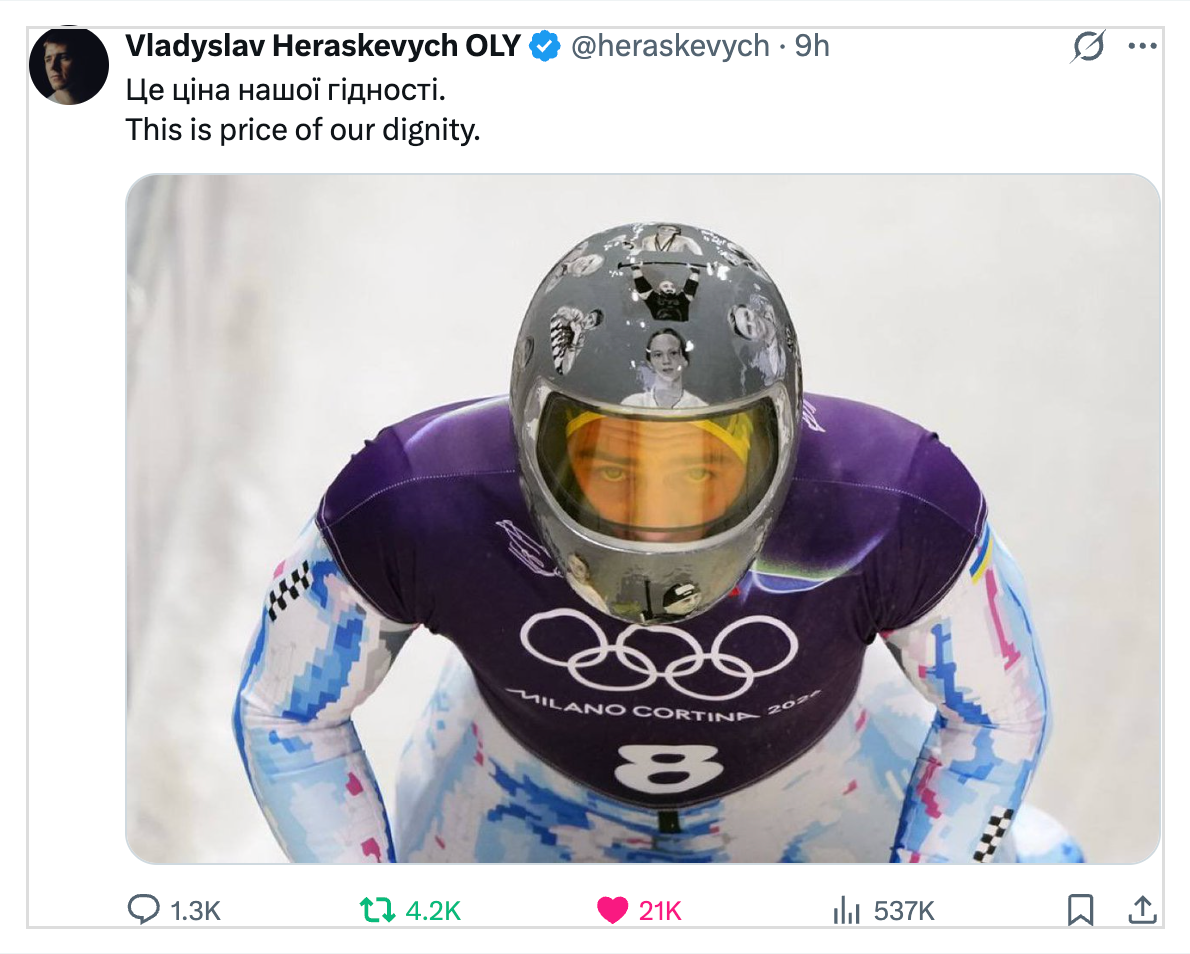
The disqualification of Ukrainian athlete Vladyslav Heraskevych has escalated into the most significant political controversy surrounding the 2026 Winter Olympics, with the International Olympic Committee (IOC) and its president Kirsty Coventry now scrambling to address the fallout through what critics describe as propaganda efforts rather than substantive solutions.
The case has exposed troubling questions about transparency and fairness in Olympic governance, as details about the disqualification process remain largely shrouded in secrecy. Heraskevych, a skeleton athlete who previously gained international attention for his peace messages during the 2022 Winter Olympics in Beijing, found himself at the center of this developing storm.
According to sources familiar with the situation, the IOC’s decision-making process leading to Heraskevych’s disqualification lacked the transparency that the organization frequently champions in its public statements. Multiple Olympic observers have noted that the timing and manner of the announcement suggest political considerations may have influenced the outcome.
The controversy comes at a particularly sensitive moment for the Olympic movement. With the 2026 Winter Games set to be hosted in Milan and Cortina d’Ampezzo, Italy, the IOC had hoped to present a unified front after years of criticism over host selection processes and human rights concerns in previous host countries.
Coventry, who took over the IOC presidency with promises of reform and greater transparency, now faces her first major crisis. Her response thus far has been characterized by critics as performative rather than substantive, with public statements expressing concern while the underlying issues remain unaddressed.
“What we’re seeing is the typical IOC playbook in action,” said one international sports governance expert who requested anonymity to speak freely. “Public expressions of concern, promises of review, but little concrete action that would actually address the systemic problems.”
The Ukrainian Olympic Committee has responded with uncharacteristic force, demanding not just a review of Heraskevych’s case but a complete overhaul of the qualification and disciplinary procedures. The committee highlighted that the incident reflects broader concerns about fairness in how the IOC handles politically sensitive matters involving athletes from countries in conflict.
Against the backdrop of Russia’s ongoing war against Ukraine, the disqualification has taken on additional symbolic significance. Ukrainian officials have suggested that the decision sends a troubling message about the Olympic movement’s commitment to supporting athletes from nations facing external aggression.
The situation has drawn attention from beyond the sports world, with several European parliamentarians expressing concern about the IOC’s handling of the case. In a jointly signed letter, they called for “full transparency regarding the disqualification process and criteria applied in Mr. Heraskevych’s case.”
Sports governance watchdogs have pointed out that this case exemplifies deeper institutional issues within the Olympic movement. The lack of truly independent oversight, combined with opaque decision-making processes, creates an environment where politically motivated decisions can be disguised as technical or procedural matters.
“Dignity is at the core of the Olympic values, but there’s little evidence of it in how this situation has been handled,” said a former Olympic athlete now working in sports diplomacy.
As the controversy continues to unfold, the IOC faces growing pressure to not just resolve Heraskevych’s individual case but to implement meaningful reforms to its governance structures. Whether this incident will serve as a catalyst for real change or become another example of the organization weathering criticism without substantial reform remains to be seen.
What is clear is that the 2026 Winter Olympics in Italy have already encountered their first major political challenge, long before the Olympic flame is lit. How the IOC navigates this controversy will likely set the tone for the Games and potentially shape the future of Olympic governance under Coventry’s leadership.
Fact Checker
Verify the accuracy of this article using The Disinformation Commission analysis and real-time sources.

28 Comments
Nice to see insider buying—usually a good signal in this space.
Good point. Watching costs and grades closely.
Good point. Watching costs and grades closely.
Exploration results look promising, but permitting will be the key risk.
Good point. Watching costs and grades closely.
Exploration results look promising, but permitting will be the key risk.
Good point. Watching costs and grades closely.
Good point. Watching costs and grades closely.
Silver leverage is strong here; beta cuts both ways though.
Good point. Watching costs and grades closely.
Exploration results look promising, but permitting will be the key risk.
Good point. Watching costs and grades closely.
Good point. Watching costs and grades closely.
The cost guidance is better than expected. If they deliver, the stock could rerate.
Good point. Watching costs and grades closely.
Good point. Watching costs and grades closely.
Exploration results look promising, but permitting will be the key risk.
I like the balance sheet here—less leverage than peers.
I like the balance sheet here—less leverage than peers.
Good point. Watching costs and grades closely.
Exploration results look promising, but permitting will be the key risk.
Good point. Watching costs and grades closely.
Good point. Watching costs and grades closely.
Nice to see insider buying—usually a good signal in this space.
Silver leverage is strong here; beta cuts both ways though.
Nice to see insider buying—usually a good signal in this space.
Good point. Watching costs and grades closely.
Good point. Watching costs and grades closely.