


Listen to the article
In a major shift of tone and tactics, the Immigration and Customs Enforcement (ICE) agency has launched an aggressive social media campaign that has drawn criticism from celebrities and raised concerns about its approach to deportation messaging.
Late last year, the White House social media team began publishing a series of controversial meme-style videos showcasing ICE’s deportation operations. These videos, set to popular songs by artists like Olivia Rodrigo, Sabrina Carpenter, and SZA, depicted immigrants being detained and forced onto buses and planes.
One particularly controversial video featured Sabrina Carpenter’s “Juno” playing as ICE agents detained individuals, with the lyric “Have you ever tried this one?” repeating with each new detention. Another used the satirical “Saturday Night Live” song “Big Boys,” highlighting the phrase “It’s cuffing season” as agents handcuffed people in parking lots.
The artists have publicly condemned the use of their music in these videos. Rodrigo called the content “hateful,” Carpenter labeled it “evil,” and SZA described it as “peak dark.” When Carpenter objected, the White House responded by manipulating a video from her “SNL” appearance to make it appear she supported detaining a cast member for being “too illegal.”
According to an internal document obtained by the Washington Post, these videos are part of a $100 million “wartime recruitment” campaign aimed at hiring thousands more deportation officers. The propaganda effort portrays ICE as heroic defenders against what it characterizes as foreign threats, using contemporary digital formats to appeal to younger demographics.
The Trump administration has publicly committed to deporting one million immigrants annually during the President’s second term, regardless of criminal history or legal status. To support this initiative, Congress has significantly increased ICE’s budget through the One Big Beautiful Bill Act, allocating more than $170 billion over the next four years. This annual funding exceeds the combined budgets of all local and state law enforcement agencies nationwide.
ICE has already begun expanding its workforce, recently announcing the addition of 12,000 new officers and agents – a 120% increase in staffing. The recruitment efforts extend beyond social media to national television, streaming services, and music platforms. Pre-roll ads have appeared on Hulu, HBO Max, Snapchat, Spotify, and YouTube with messages like “Join the mission to protect America.”
Some advertisements specifically target law enforcement officers in sanctuary cities. One ad addressing Chicago police officers portrays an apocalyptic vision: “You took an oath to protect and serve, to keep your family, your city, safe. But in sanctuary cities, you’re ordered to stand down while dangerous illegals walk free.”
The agency’s recruitment strategy also includes location-based marketing like geofencing, allowing ICE to send targeted advertisements to phones at college campuses, gun shows, military bases, and NASCAR events. Additionally, the department has allocated funds for right-wing influencers to promote hiring efforts and has flooded official Department of Homeland Security social media channels with recruitment memes.
While government spending on defense advertising is not new – the Department of Defense allocated $1.1 billion for advertising in 2023 – ICE’s approach represents a significant shift. The agency is being branded as another branch of military operations, focused on domestic enforcement against what its messaging portrays as an internal threat.
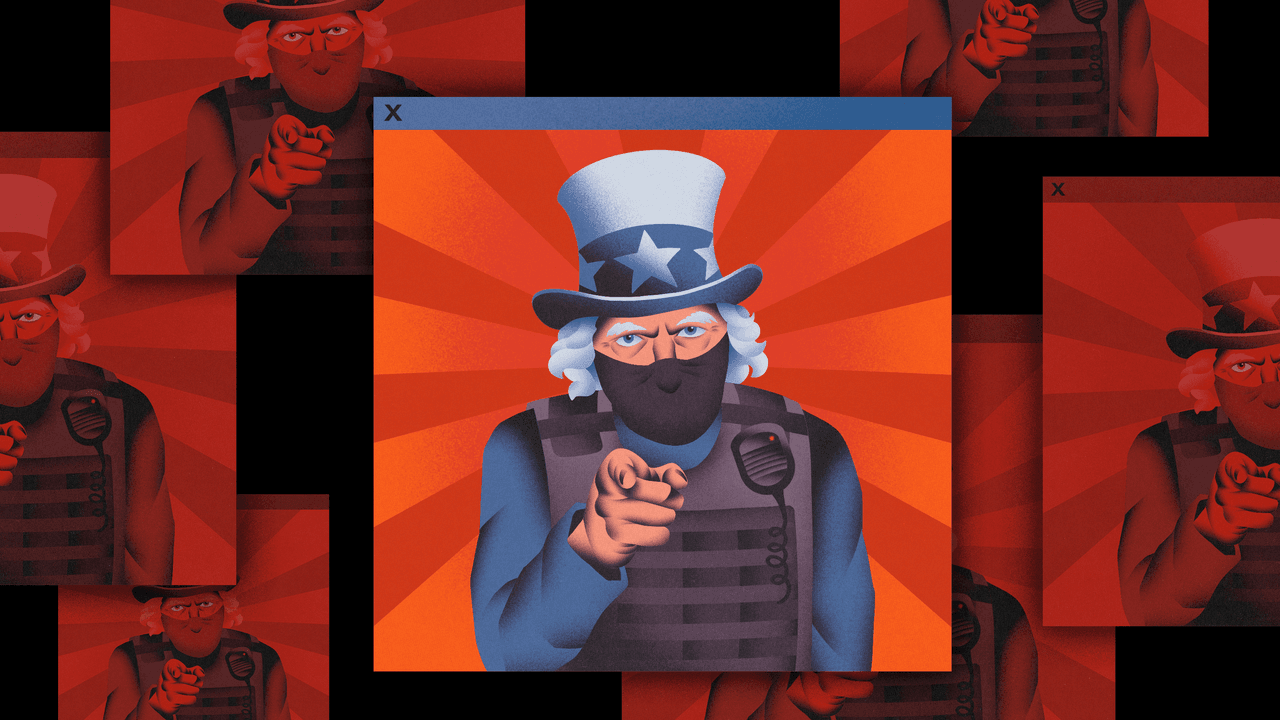
Traditional military recruitment imagery, sometimes combined with nationalist themes, appears frequently in ICE’s digital content. Images featuring Uncle Sam or nineteenth-century Manifest Destiny paintings carry captions like “A Heritage to Be Proud Of, a Homeland Worth Defending.”
Critics note that this messaging obscures the human reality of immigration, particularly for those fleeing persecution and violence, often in regions affected by past American foreign policy. As Stephen Miller, Trump’s White House deputy chief of staff, stated at a recent memorial service: “The light will defeat the dark. We will prevail over the forces of wickedness and evil. They cannot imagine what they have awakened.”
The escalation in both funding and rhetoric marks a significant intensification of U.S. immigration enforcement policy and messaging strategy under the current administration.
Fact Checker
Verify the accuracy of this article using The Disinformation Commission analysis and real-time sources.

9 Comments
While ICE may claim these tactics are meant to highlight their operations, the use of popular culture references comes across as an attempt to normalize and glamorize deportations. This raises concerns about the agency’s true motivations.
Exactly, the messaging feels more like an attempt to make deportations seem cool or justified rather than a transparent look at the agency’s work. Very problematic approach.
It’s disappointing to see government agencies leveraging social media in this way. Propaganda tactics that manipulate public opinion through pop culture references are unethical and undermine trust in institutions.
This is a concerning development in the government’s use of social media for propaganda purposes. Leveraging popular music to depict detentions and deportations raises serious ethical questions about how such tactics can manipulate public sentiment.
The artists’ strong condemnation of the ICE videos shows the backlash against this type of propaganda. Using their music without permission is a clear violation and shows the agency’s disregard for ethics and transparency.
I agree, the agency’s actions seem very heavy-handed and disrespectful to the artists. This is a troubling abuse of power that deserves scrutiny.
While ICE may claim these videos are meant to highlight their operations, the use of popular music and imagery feels more like an attempt at emotional manipulation than factual reporting. This is concerning.
These ICE videos highlight the need for greater oversight and accountability around government use of social media. Tactics that blur the line between information and manipulation require close examination.
The artists’ strong reactions show the public backlash against this type of propaganda. ICE should reconsider this approach and focus on transparent, fact-based communication about their work.