


Listen to the article
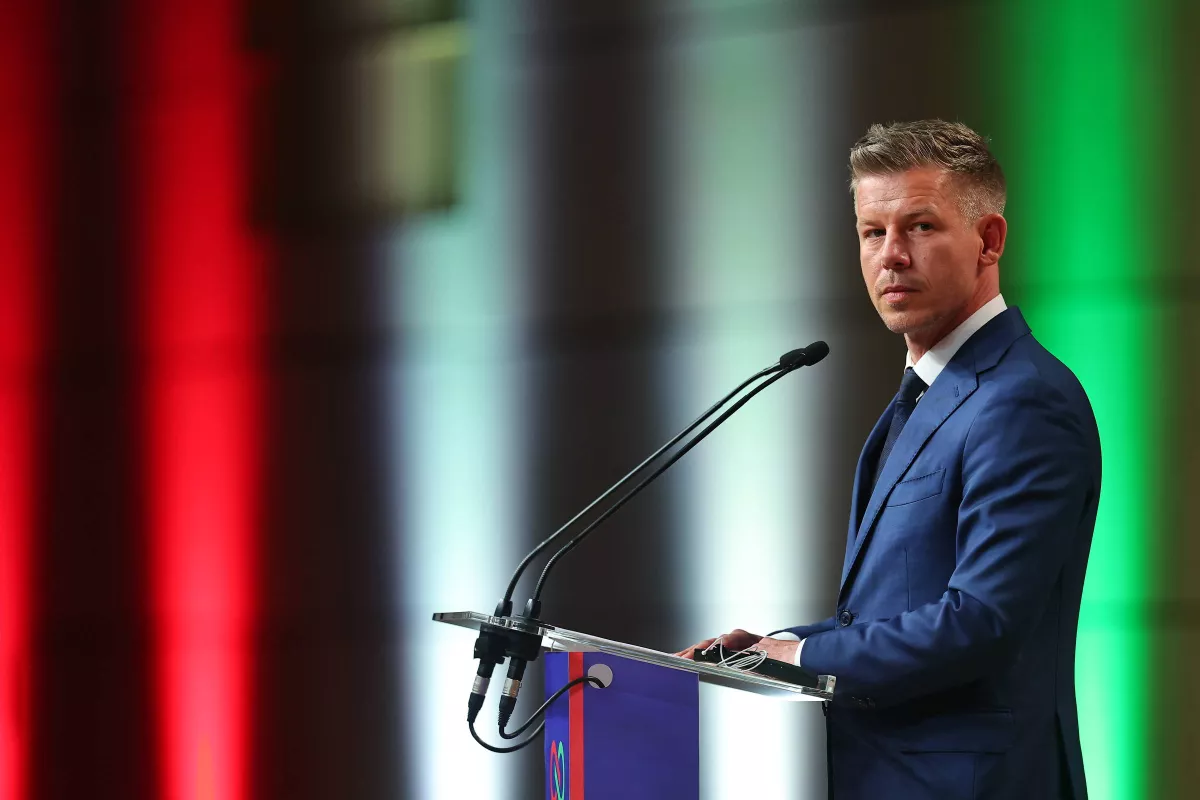
Hungarian opposition leader Péter Magyar announced plans to suspend the operations of what he characterized as a “propaganda media network” as one of his first actions upon forming a new government.
Magyar, who has emerged as a significant political challenger to Prime Minister Viktor Orbán’s long-standing administration, made these remarks in response to questions about media representation and public broadcasting independence in Hungary. According to reporting by independent news outlet Telex, Magyar claimed he has been effectively blocked from appearing on public broadcasting channels since September 2024, approximately a year and a half ago.
The opposition figure asserted that his current public visibility stems solely from his political mandate and growing voter support rather than fair media coverage. Hungary’s media landscape has faced increasing scrutiny from European Union institutions and press freedom organizations, with concerns about government influence over public broadcasting repeatedly raised in recent years.
Magyar dismissed recent modifications to Hungary’s public broadcasting structure as merely cosmetic changes designed to create an illusion of editorial independence without meaningful reform. “This is not about me, but about ensuring that citizens deserve public broadcasting that reflects reality,” he stated, emphasizing that his position is based on principle rather than personal grievance.
The announcement comes amid growing political tension in Hungary, where Magyar’s relatively new political movement has gained significant traction against Orbán’s Fidesz party, which has governed the country since 2010. Critics of the current administration have long alleged that public media resources have been transformed into government communication channels rather than independent news sources.
Hungary’s media landscape has undergone significant consolidation over the past decade, with numerous outlets falling under the control of business figures aligned with the government. The Central European Press and Media Foundation (KESMA), established in 2018, brought together over 470 media outlets under a structure widely seen as loyal to the ruling party.
Media experts note that Magyar’s proposal to suspend news operations represents one of the most direct challenges to Hungary’s current media structure in recent years. The European Commission has previously expressed concerns about media pluralism in Hungary, making it a focal point in ongoing discussions about rule of law and democratic values within the European Union.
The timing of Magyar’s announcement is particularly significant as it comes during a period of heightened political mobilization. His movement has drawn surprisingly large crowds to demonstrations in recent months, suggesting growing dissatisfaction with aspects of the current government’s policies.
Public broadcasting reform has been a persistent demand from opposition figures in Hungary, who argue that the current system fails to provide balanced coverage of political events and limits critical voices. International press freedom organizations, including Reporters Without Borders, have consistently ranked Hungary lower in their annual assessments of media independence over the past decade.
Magyar clarified that his proposed suspension of news operations would be temporary and part of a broader reform effort rather than a permanent shutdown. The goal, according to his statements, would be to restructure public broadcasting to ensure editorial independence and balanced reporting.
The proposal has already generated divided reactions, with government supporters characterizing it as an attack on press freedom, while Magyar’s supporters view it as necessary to restore media independence. Media analysts suggest that any such move would likely face significant legal and political challenges if implemented.
As Hungary approaches its next electoral cycle, the question of media reform and public broadcasting independence appears poised to become a central campaign issue, highlighting the ongoing tensions between competing visions for Hungary’s democratic institutions and press freedom.
Fact Checker
Verify the accuracy of this article using The Disinformation Commission analysis and real-time sources.

12 Comments
This is a significant development, as the lack of media pluralism has been a major impediment to democracy in Hungary. I hope Magyar’s actions lead to lasting changes that empower citizens with access to diverse and independent information.
Absolutely. A free and vibrant press is essential for holding leaders accountable and enabling informed public discourse. Let’s see if this move signals a genuine shift towards that goal.
This is a sensitive issue, as media control is often used to sway public opinion. I hope Magyar can deliver on his promise and pave the way for a more independent and pluralistic media environment in Hungary.
Absolutely. An open and vibrant media landscape is essential for citizens to make informed decisions. I’m hopeful this move signals a positive shift in that direction.
The Hungarian media landscape has been a major concern for some time. I’m cautiously optimistic that Magyar’s pledge could mark a turning point, but a lot will depend on the follow-through and whether real reforms are enacted.
Agreed. Dismantling entrenched propaganda networks is no easy task, but it’s a necessary step for Hungary to strengthen its democratic institutions and governance.
Interesting development in Hungary’s media landscape. It’s important for the public to have access to a diversity of views, not just government propaganda. Let’s see if Magyar follows through on his pledge to suspend this ‘media network’.
Agree, transparency and media independence are crucial for a healthy democracy. Curious to see how this plays out and if it leads to more balanced coverage.
While I’m skeptical of grand promises in the political arena, I’m cautiously optimistic about Magyar’s pledge to suspend the ‘propaganda media network’. Restoring media independence is crucial for Hungarian democracy, so I’ll be closely watching the implementation.
Fair point. Rhetoric is easy, but real reform requires political will and follow-through. I share your cautious optimism, but the true test will be whether this translates into tangible changes on the ground.
Kudos to Magyar for taking this bold step. Suspending state propaganda outlets is an important step towards restoring media freedom. However, the proof will be in the implementation and ensuring genuine editorial independence.
Well said. The devil is in the details, and we’ll need to closely monitor how this unfolds to ensure it’s not just a cosmetic change.