


Listen to the article
Nazi Germany’s Lost Propaganda Film Resurfaces: The Film Hitler Tried to Erase
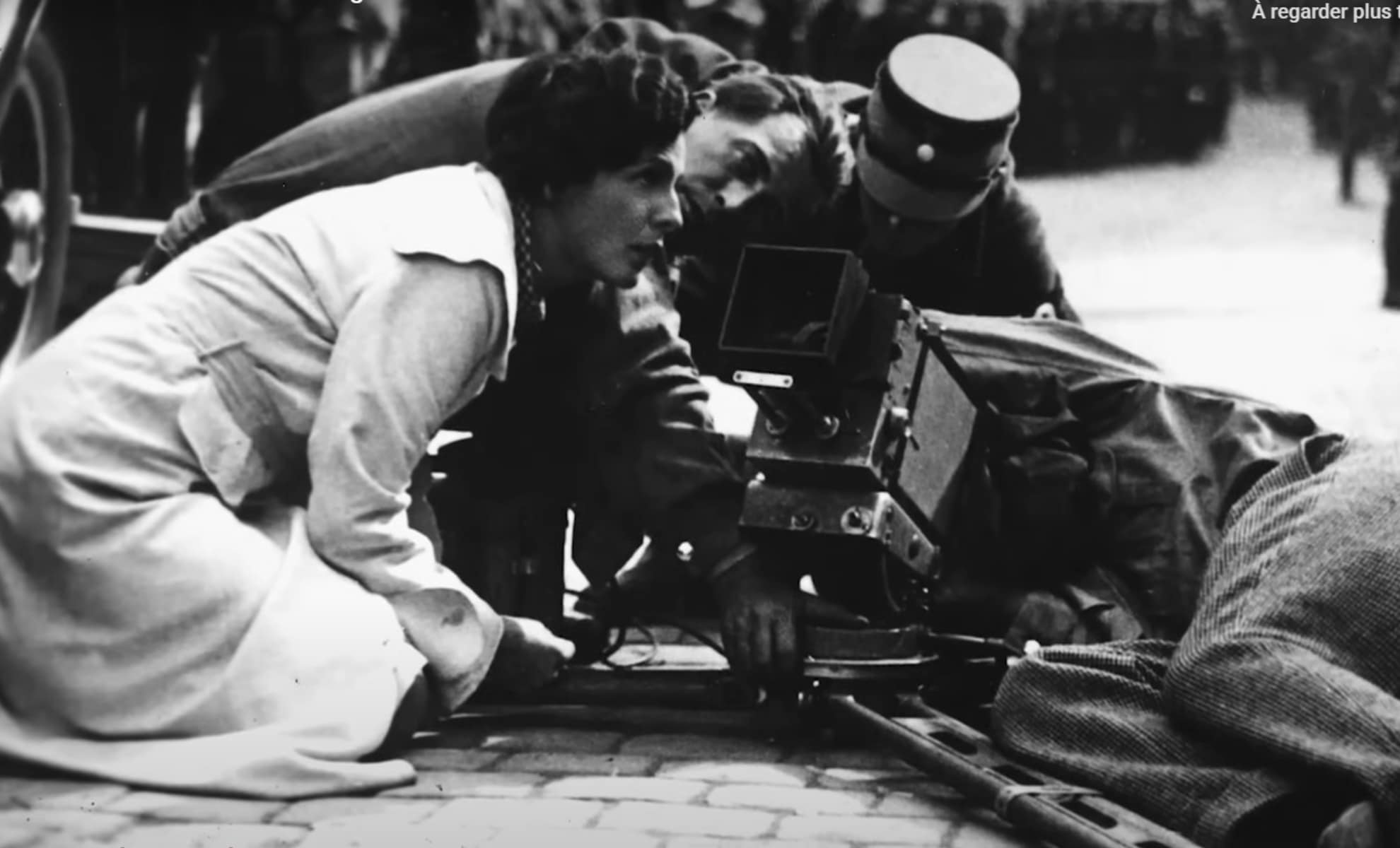
Before becoming infamous for “Triumph of the Will,” filmmaker Leni Riefenstahl created an earlier, lesser-known Nazi propaganda documentary that nearly vanished from history. “The Victory of Faith,” shot in 1933 at Nuremberg, captured the Nazi Party’s rise to power but was later ordered destroyed for a striking political reason—one of its prominently featured figures would fall victim to Hitler’s ruthless consolidation of power.
The film, hastily produced over just a few days, contains rare footage of Nazi leadership in both formal ceremonies and casual moments. Heinrich Himmler, Joseph Goebbels, and Hermann Göring all appear in scenes that reveal the fragile alliances and power dynamics within the early Nazi regime.
Adolf Hitler personally selected Riefenstahl, then a 31-year-old Berlin artist and former dancer, to document the 1933 Nazi Party Congress at Nuremberg’s Zeppelin Field. Despite not being a party member herself, Hitler favored her artistic vision over objections from the Propaganda Ministry. The project was instead funded directly by the National Socialist German Workers’ Party (NSDAP).
Working with cameraman Walter Frentz, who had been introduced to her by Albert Speer, Riefenstahl created a one-hour silent film with music by composer Herbert Windt. The documentary showcased Nazi officials arriving by train and plane, speeches, military parades featuring both the Sturmabteilung (SA) and Schutzstaffel (SS) troops, and various party ceremonies.
What sealed the film’s fate was the prominent role given to Ernst Röhm, head of the SA paramilitary force. Röhm had been one of Hitler’s earliest supporters and built the SA into a powerful organization with over three million members. However, his growing influence, combined with his open homosexuality and political ambitions, made him increasingly problematic for Hitler’s leadership.
Just one year after the film’s release, during the Night of the Long Knives in June 1934, Hitler ordered Röhm’s execution along with hundreds of other SA leaders. This bloody purge effectively neutered the SA’s power and elevated the SS under Heinrich Himmler as the regime’s primary paramilitary force.
In the aftermath, “The Victory of Faith” suddenly became politically unacceptable. All known copies were ordered destroyed as part of a broader campaign to erase Röhm from official Nazi history—a modern version of the ancient Roman practice of “damnatio memoriae,” the systematic removal of a disgraced person from records and monuments.
What saved the film from complete destruction was a stroke of luck. In April 1934, before Röhm’s execution, Riefenstahl had taken a copy to Great Britain while lecturing on propaganda filmmaking. This version was quietly archived and forgotten until its rediscovery in the 1990s, providing historians with an invaluable record of Nazi Germany during its formative period.
The recovered film offers a unique window into the Nazi regime before the SS consolidated control. It captures fleeting moments of a political structure Hitler would soon violently reshape, making it historically significant beyond its original propaganda purpose.
Following the suppression of “The Victory of Faith,” Hitler again approached Riefenstahl to direct a new documentary of the 1934 Nuremberg Rally. Despite initial reluctance, she agreed and was given vastly more resources, time, and creative control. The result was “Triumph of the Will,” widely regarded as one of the most effective—and infamous—propaganda films ever made.
This second film recycled elements from its predecessor, including structural components and portions of Windt’s musical score. However, “Triumph of the Will” represented a significant evolution in technique and messaging. Riefenstahl’s team shot over sixty hours of footage, which was meticulously edited into 114 minutes of cinematic propaganda featuring elaborate tracking shots, aerial views, and carefully choreographed mass gatherings.
While Riefenstahl maintained throughout her life that her work was artistic rather than political, her second Nazi film effectively replaced the first—both aesthetically and ideologically. The rediscovery of “The Victory of Faith” provides a crucial historical document that Hitler never intended to survive: a record of Nazi Germany’s internal power struggles before the regime consolidated its control through violence.
Fact Checker
Verify the accuracy of this article using The Disinformation Commission analysis and real-time sources.

12 Comments
Production mix shifting toward Propaganda might help margins if metals stay firm.
Good point. Watching costs and grades closely.
Production mix shifting toward Propaganda might help margins if metals stay firm.
I like the balance sheet here—less leverage than peers.
Good point. Watching costs and grades closely.
Good point. Watching costs and grades closely.
I like the balance sheet here—less leverage than peers.
Exploration results look promising, but permitting will be the key risk.
The cost guidance is better than expected. If they deliver, the stock could rerate.
Good point. Watching costs and grades closely.
Nice to see insider buying—usually a good signal in this space.
Nice to see insider buying—usually a good signal in this space.