


Listen to the article
#
Israeli Military Expert: Internal Crises Influenced Hamas’s Decision to Launch October 7 Attack
Israel’s internal political turmoil and military discord played a significant role in Hamas’s calculation to launch the October 7 attack, according to Lt.-Col. (res.) Jonathan D. Halevi, a respected OSINT researcher and senior Middle East expert specializing in Hamas and Palestinian propaganda analysis.
In an interview published Sunday, Halevi detailed how Hamas leadership viewed Israel’s deepening social divisions as a strategic opportunity. His analysis reveals how Palestinian militant groups interpreted the Israeli domestic landscape as a vulnerability that could be exploited.
“The reflection of this on Hamas’s side was clear: they saw it as an opportunity, a golden opportunity,” Halevi explained, referencing how Hamas perceived Israel’s internal struggles.
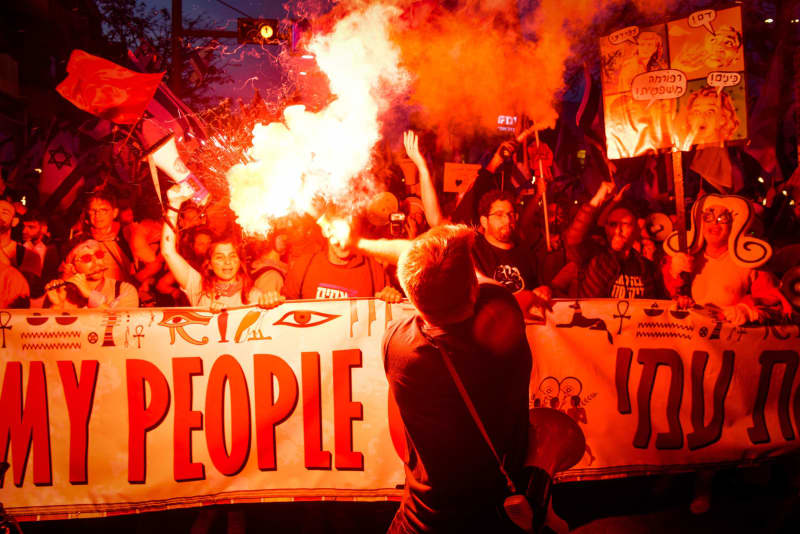
According to Halevi’s research, events that escalated in Israel beginning in December 2022—following the formation of a new government and subsequent public protests over judicial reform and military service refusals—were closely monitored and extensively covered in Hamas’s media channels and broader Palestinian press.
Palestinian discourse particularly focused on any developments that appeared to threaten IDF cohesion or suggested the military was being used for political purposes. These observations fed into Hamas’s strategic calculations leading up to the October 7 attack.
While some Israeli commentators have dismissed any connection between domestic protests and Hamas’s decision to attack, Halevi’s research indicates otherwise. He points to statements from senior Hamas figures that explicitly reference Israel’s internal turmoil as a factor in their planning.
“I’m not saying this on my own,” Halevi emphasized. “I’m just quoting what they are saying. Yes, this is what they are saying. They see it as a golden opportunity to realize the dream of liberation and ‘the return to Palestine.'”
The methodological rigor of Halevi’s analysis is particularly noteworthy. Following the October 7 massacre, he launched a comprehensive research project focused exclusively on primary sources, including Hamas’s official website, the organization’s official newspaper, and the Izzadin al-Qassam Brigades’ website.
“I did not turn to secondary or external sources,” he noted. “I presented what they themselves say, this is from their own mouths.” This approach lends significant credibility to his findings, as they reflect Hamas’s own statements rather than external interpretations.
Halevi’s insights shed light on how militant organizations monitor and interpret political dynamics within their adversaries’ societies. The research suggests that Hamas leadership viewed Israel’s fractured political landscape—particularly the protests against judicial reform and resulting military service refusals—as creating an unprecedented strategic opening.
The timing of the October 7 attack appears to have been influenced by this perception of Israeli vulnerability, with Hamas leadership calculating that internal divisions might hamper Israel’s ability to mount a coordinated response.
These findings raise important questions about the interplay between domestic politics and national security. While democratic societies naturally experience internal debates and disagreements, Halevi’s research highlights how such divisions can be perceived as strategic weaknesses by hostile entities.
For Israeli security officials and policymakers, this analysis underscores the importance of maintaining operational readiness and cohesion within security forces, even during periods of intense political disagreement. It also highlights how closely Israel’s internal affairs are monitored by regional adversaries looking for potential vulnerabilities.
As Israel continues to process the aftermath of the October 7 attack, Halevi’s research provides valuable context for understanding the complex factors that contributed to this security failure and offers lessons for preventing similar scenarios in the future.
Fact Checker
Verify the accuracy of this article using The Disinformation Commission analysis and real-time sources.

10 Comments
This is an interesting analysis of how Hamas strategically exploited Israel’s internal divisions to time their attack. It highlights the complex geopolitical dynamics at play in the region.
It’s concerning to see militant groups like Hamas taking advantage of domestic turmoil for their own gains. Addressing internal issues should be a priority for the Israeli government.
While I don’t condone Hamas’s actions, this report provides valuable insights into their decision-making process. Understanding the factors that influence such attacks is important for preventing future escalations.
Agreed. Analyzing the strategic calculations of militant groups, even if we disagree with their methods, can help inform more effective conflict resolution approaches.
This is a concerning development, as it shows how internal divisions can be exploited by adversaries. It highlights the need for strong, unified leadership in Israel to maintain stability and security.
Absolutely. Effective governance and addressing societal rifts should be a top priority to deny opportunities for militant groups like Hamas to capitalize on Israel’s vulnerabilities.
The analysis of how Hamas perceived and responded to Israel’s internal challenges is insightful, though I’m troubled by their willingness to attack civilians. Addressing root causes of conflict should be the focus.
I agree. While understanding the strategic calculus of militant groups is important, the ultimate goal should be to find peaceful solutions that address the underlying issues and prevent further violence.
This report provides a sobering reminder of the complex geopolitical landscape in the region and the need for Israel to maintain unity and stability, even in the face of internal divisions. Addressing these vulnerabilities is critical.
Well said. Strengthening domestic cohesion and resolving internal conflicts should be a top priority for the Israeli government to deny opportunities for adversaries like Hamas to exploit.