


Listen to the article
In Venezuela, a complex digital chess game is playing out between Nicolás Maduro’s government and opposition forces, with social media platform X serving as both battlefield and pawn.
Despite X (formerly Twitter) being officially censored within Venezuela, recent investigations by La Hora de Venezuela have revealed an extensive government-linked propaganda network operating freely on the platform. This network combines institutional accounts, public officials, militants, bots, and trolls to amplify government messaging while attacking opposition figures.
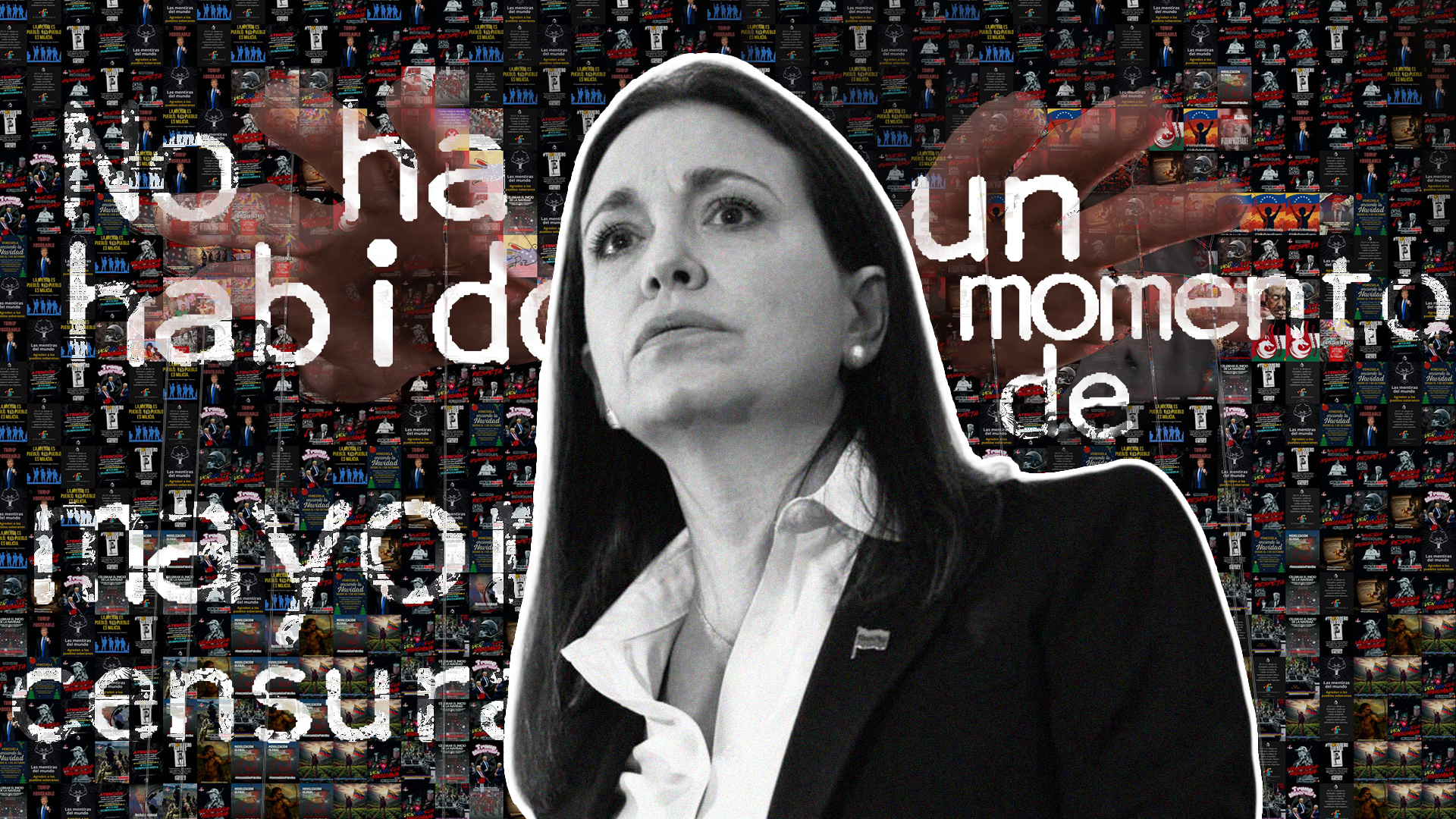
Opposition leader María Corina Machado, who was awarded the Nobel Peace Prize in 2025, has spoken out about this digital asymmetry. “There has never been a moment of greater censorship of freedom of expression and persecution of communication channels in Venezuela than the one we are living through today,” Machado said, highlighting the irony of the situation.
“They block X for people inside the country so that we cannot use it, but they still operate against me, against our cause and against our allies,” she noted.
The censorship landscape in Venezuela has intensified dramatically since the contested 2024 presidential election. According to Venezuelan NGO VE Sin Filtro, the government has blocked at least 79 websites, including fact-checking initiatives like Cazadores de Fake News and Es Paja. Additionally, X and encrypted messaging app Signal have been restricted, cutting off vital communication tools for millions of Venezuelans.
The only way most citizens can access these platforms is through virtual private networks (VPNs), which require both technical knowledge and financial resources many Venezuelans lack.
Meanwhile, research has uncovered that the Venezuelan Ministry of Communication and Information (Mippci) maintains a sophisticated digital operation on X. This operation includes the repurposing of institutional accounts and creating networks of anonymous profiles that coordinate attacks against opposition figures and international critics.
Machado herself has been a primary target. Cazadores de Fake News documented more than 80 fact-checks of disinformation campaigns aimed specifically at her during 2024 and 2025 alone—the highest number the organization has recorded against any single individual since its founding in 2019.
These digital attacks follow a consistent pattern: government-aligned media or anonymous accounts (some operated by public officials) publish content that is then amplified by coordinated networks. One prominent example was the “Dracarys” account (@UnleashDracarys), linked to Dayra Rivas, the current Director of Digital Media at Mippci.
Though X suspended the Dracarys account on November 12 for violating its authenticity policies, the operation quickly adapted. New “alpha troll” accounts emerged within days, maintaining the same patterns and content style, demonstrating the persistence of the information operation.
The government’s digital strategy extends beyond domestic opponents. The same network has launched campaigns against international figures including Donald Trump and Marco Rubio, despite maintaining a more diplomatic tone in official channels and state media like Venezolana de Televisión and Telesur.
Venezuelan NGO Espacio Público warns that these practices “attest to deliberate and intentional harm against the information ecosystem and public debate” and can “legitimize serious human rights violations, such as the initiation of criminal proceedings or arbitrary detentions.”
This dual approach—censoring platforms while simultaneously using them for propaganda—represents what experts call an attempt to control the information environment and “impose a single narrative through the abuse of state power.”
However, Machado believes the effectiveness of these campaigns is diminishing as Venezuelans become more sophisticated in identifying disinformation. “The response from citizens has been enormous: people have come out to defend the truth and to defend me,” she said.
“I feel that it has instead become a boomerang that drags the regime down and discredits it even more,” Machado concluded, suggesting that the government’s digital manipulation strategies may ultimately undermine its own credibility.
For Venezuelan journalists operating in this hostile environment, reporting on these tactics comes with significant risk. Dozens of legal instruments, including laws “against hate,” “against fascism,” and “against the blockade,” have been deployed to punish speech critical of the government, creating formidable barriers to press freedom.
Fact Checker
Verify the accuracy of this article using The Disinformation Commission analysis and real-time sources.

10 Comments
It’s disheartening to see how the Venezuelan government is leveraging social media platforms to suppress opposition voices while continuing to use them for their own gain. The level of digital censorship and asymmetric information warfare described in this article is deeply concerning and a threat to democratic freedoms.
I agree, this is a disturbing trend that we’re seeing in various parts of the world. Protecting free speech and access to information online must be a top priority for the international community.
This news about the Venezuelan government’s efforts to censor and manipulate online discourse is extremely troubling. The fact that they are able to operate their own propaganda network on a platform that is officially banned for citizens is a blatant abuse of power. Combating digital authoritarianism should be a global priority.
The level of digital censorship and asymmetric information warfare described in this article is truly alarming. It’s a sobering reminder of how authoritarian regimes can leverage technology to tighten their grip on power and silence dissent. I hope the international community takes strong action to condemn these undemocratic practices.
I share your concerns. The use of social media as a tool for propaganda and censorship is a worrying trend we’ve seen emerging in various parts of the world. Protecting free speech and access to information online must be a priority.
This is a concerning report on the state of censorship in Venezuela. It’s troubling to see the government weaponizing social media platforms to suppress opposition voices while continuing to use them for their own propaganda. The irony of blocking access to the platform for citizens while still operating accounts to attack opponents is quite striking.
You’re right, the censorship tactics seem deeply hypocritical. It’s disturbing to see governments exploiting digital platforms in this way to control the narrative and undermine democratic freedoms.
The level of digital censorship and information manipulation described in this article is deeply concerning. It’s troubling to see how the Venezuelan government is exploiting social media platforms to suppress opposition voices while continuing to use them for their own propaganda purposes. Combating such digital authoritarianism should be a global priority.
I agree, this is a worrying trend that we need to address urgently. Protecting free speech and ensuring equitable access to information online is crucial for upholding democratic principles.
This report on the state of censorship in Venezuela is truly alarming. The government’s tactics of blocking citizens’ access to social media platforms while still using them for their own propaganda purposes is a blatant abuse of power and a threat to democratic values. I hope the international community takes strong action to condemn these undemocratic practices.