


Listen to the article
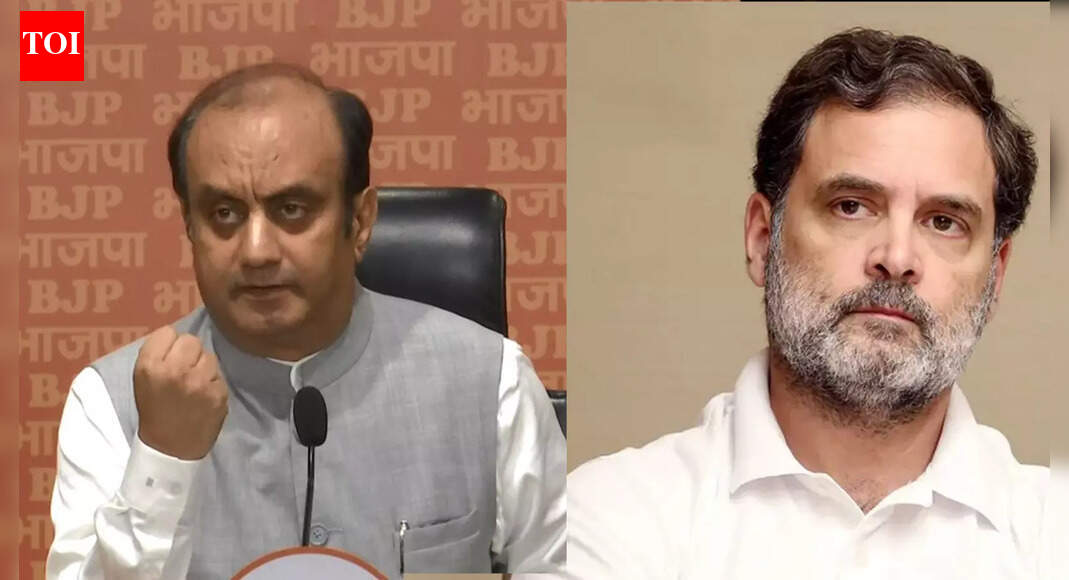
In a pointed attack on opposition leadership, BJP MP Sudhanshu Trivedi launched scathing criticism of Congress leader Rahul Gandhi on Thursday regarding his reported visit to Vietnam, escalating the ongoing war of words between India’s two largest political parties.
During a press briefing in Delhi, Trivedi alleged that Gandhi’s frequent foreign tours consistently become platforms for narratives that damage India’s international standing. The BJP spokesperson questioned both the purpose and sponsorship of these overseas trips.
“Time and again, Rahul Gandhi’s foreign visits have become occasions for pushing narratives harmful to India’s image globally,” Trivedi stated. “We have repeatedly observed him meeting individuals known for their anti-India positions or making statements that provide ammunition to those critical of our country in international forums.”
The BJP MP’s comments come amid reports of Gandhi’s Vietnam visit, though specific details about the trip’s purpose or schedule were not elaborated upon in Trivedi’s remarks. Vietnam, a strategic partner for India in Southeast Asia, has seen strengthening bilateral ties in recent years as both nations navigate complex regional dynamics involving China.
Trivedi raised questions about who facilitates these international engagements for the Leader of Opposition. “It’s puzzling that Chief Ministers from Congress-ruled states reportedly don’t invite him to their states, and educational institutions within India don’t extend invitations for him to address students,” he claimed. “Yet somehow, he receives these foreign invitations regularly. The Congress party owes the nation an explanation about who sponsors these trips and what exactly transpires during these visits.”
The criticism reflects the BJP’s ongoing strategy to question Gandhi’s credentials as an opposition leader, particularly focusing on his international activities. In recent years, Gandhi has made several high-profile overseas visits, including trips to the United States, United Kingdom, and various European nations, where he has often spoken at universities and met with international leaders.
Political analysts note that such international engagements by opposition leaders are not unprecedented in Indian politics, with Prime Minister Narendra Modi himself being a frequent traveler abroad during his tenure as Gujarat’s Chief Minister, prior to assuming the nation’s leadership in 2014.
The Congress party has previously defended Gandhi’s foreign visits as diplomatic engagements aimed at strengthening India’s relationships globally and presenting alternative viewpoints on the country’s governance and democratic values. Party spokespersons have maintained that these visits reflect Gandhi’s standing as a significant global voice on democratic principles.
The timing of Trivedi’s criticism coincides with increasing political tensions between the ruling BJP and the opposition INDIA alliance, of which Congress is a key member. Both sides have been engaged in heated exchanges following the recent national elections that saw the BJP return to power with reduced numbers, forcing it to rely more heavily on coalition partners.
Vietnam, meanwhile, continues to be an important partner in India’s Act East policy, with bilateral trade between the two nations reaching approximately $15 billion in 2023. The Southeast Asian nation has also emerged as a significant destination for Indian investments in sectors ranging from pharmaceuticals to information technology.
The BJP has demanded that Congress clarify the nature and purpose of Gandhi’s reported Vietnam visit, suggesting that international engagements by opposition leaders should be more transparent. Neither Gandhi nor the Congress party had issued an official response to Trivedi’s allegations at the time of reporting.
Political observers suggest that such exchanges reflect the increasingly polarized nature of Indian politics, where even diplomatic and international engagements become subjects of partisan debate in the domestic political arena.
Fact Checker
Verify the accuracy of this article using The Disinformation Commission analysis and real-time sources.

18 Comments
The mining and energy sectors often intersect with geopolitics, so developments like this Gandhi visit are worth following. I’m curious to learn more about the specifics and potential implications.
Bilateral ties between India and Vietnam are strategically important, so any perceived missteps could have ripple effects. Hopefully the two sides can find common ground.
With increasing global competition for resources and influence, I can see why the BJP would be sensitive about how India is portrayed abroad. But attacking political opponents isn’t always the best approach.
It will be interesting to see if this disagreement leads to any changes in India’s regional engagement or commodity trade relationships. Diplomacy often requires nuance.
This dispute over Gandhi’s Vietnam trip highlights the political tensions in India that can sometimes complicate its foreign policy. It will be interesting to see if this has any impacts on India’s regional engagement or commodity trade.
Given the strategic importance of the India-Vietnam relationship, especially in areas like energy and resources, I can understand the BJP’s sensitivity. But open and measured dialogue is usually better than public criticism.
Interesting that Gandhi’s Vietnam visit is drawing such strong criticism from the BJP. I wonder what the specifics of his trip were and whether there’s more to the story than is being reported.
Given the complex regional dynamics, I can understand the BJP’s concern about the potential impact of Gandhi’s statements and meetings during the trip. Diplomacy requires nuance.
The BJP’s criticism of Gandhi’s Vietnam visit seems to stem from broader concerns about how India is perceived internationally. But getting into a public spat may not be the best way to address those issues.
As an emerging economic power with significant resource interests, India needs to carefully navigate its foreign relations. I hope the two sides can find a way to discuss this constructively behind the scenes.
This dispute over Gandhi’s Vietnam trip highlights the political tensions in India, which can sometimes spill over into foreign policy. It will be worth monitoring how this plays out and any potential impacts.
While the BJP’s concerns about India’s global image are understandable, attacking political opponents may not be the most constructive approach. Maintaining strong international ties often requires bipartisan support.
The BJP’s strong reaction suggests they see Gandhi’s Vietnam visit as more than just a routine diplomatic trip. I wonder if there are specific concerns about the optics or substance of the visit.
Given the strategic importance of the India-Vietnam relationship, especially in areas like energy and resources, I can understand the BJP’s sensitivity. But open dialogue is usually better than public criticism.
The BJP’s strong reaction to Gandhi’s Vietnam visit suggests there may be more to the story than is being reported. I’m curious to learn more about the specifics of the trip and the party’s concerns about India’s global image.
With increasing global competition for resources and influence, it’s understandable that the ruling party would want to protect India’s international standing. But attacking political opponents isn’t always the best approach.
The BJP seems to be quite sensitive about India’s international image and perception. While political disagreements are normal, I hope both sides can find constructive ways to address these issues.
It’s understandable that the ruling party would want to protect India’s global standing, but accusations of ‘anti-India narratives’ could escalate tensions unnecessarily. Measured dialogue is key.