


Listen to the article
In an embarrassing turn of events at the prestigious AI Impact Summit 2026 in Delhi, Galgotias University has found itself at the center of a controversy that has cast a shadow over India’s showcase technology event.
The summit, designed to position India as a global AI leader, brought together international tech executives and local startups in what was meant to be a celebration of innovation. Instead, it became a cautionary tale of misrepresentation when Galgotias University was caught presenting commercially available products as their own creations.
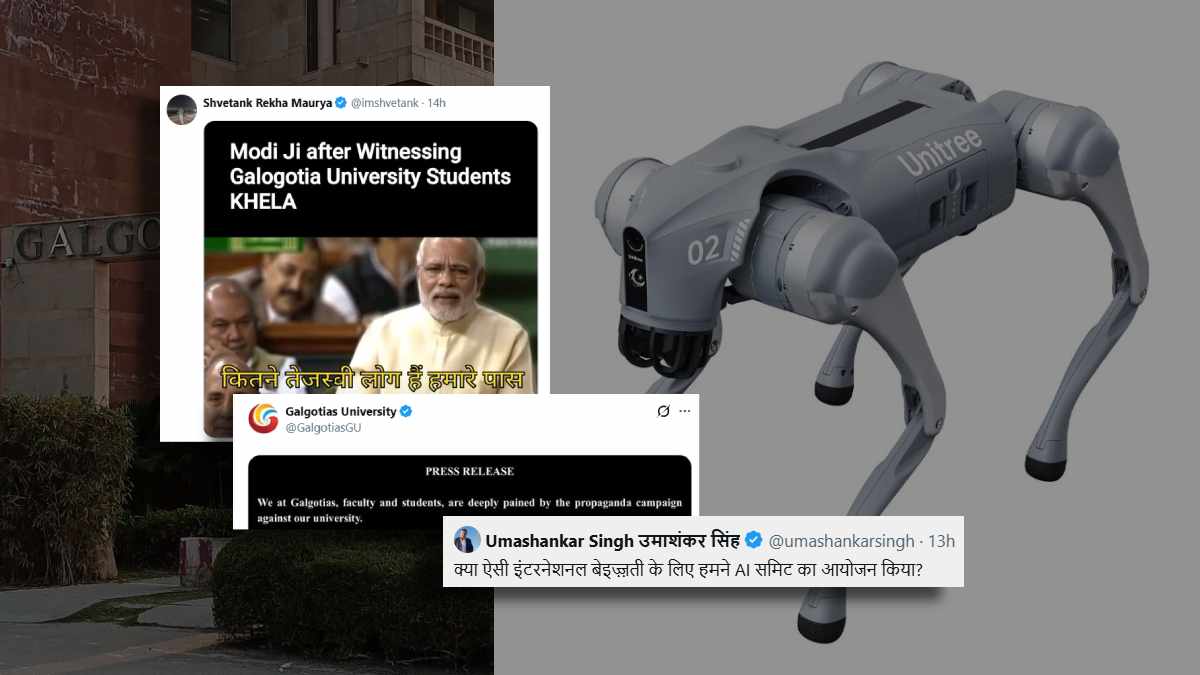
The controversy erupted when university representatives displayed a robotic dog named “ORION” (Operational Robotic Intelligence Node) during an interview with state broadcaster Doordarshan, claiming it was developed in-house. The university also released a statement boasting of a “Rs 350+ crore AI ecosystem,” positioning itself “amongst the largest AI investors in India’s private education space.”
The claims quickly unraveled when social media users identified “ORION” as a Unitree Go2, a Chinese-manufactured robotic dog available commercially for approximately 4-5 lakhs. Chinese media outlets were among the first to flag the misrepresentation, triggering widespread criticism online.
As evidence mounted, including video footage shared by IT Minister Ashwini Vaishnaw that inadvertently captured the robot, the university attempted damage control. In subsequent social media statements, Galgotias backtracked on their initial claims, labeling reports of misrepresentation as “propaganda” while quietly adjusting their narrative about the robot’s origins.
Further investigation revealed that the robodog wasn’t the university’s only questionable display. They also presented a commercially available Striker V3 ARF drone, typically priced between Rs 20,000-30,000, as another product of their innovation center.
The incident has sparked widespread mockery across social media platforms, with users creating memes comparing the university’s approach to innovation with children presenting store-bought projects at school science fairs. One viral tweet referenced a previous controversy involving the university, noting: “Galgotias is the SAME University that published a research paper in 2020 claiming ‘THALI’ sounds kill coronavirus.”
The fallout was swift and severe. According to Press Trust of India, government officials have asked Galgotias University to vacate its exhibition space immediately, effectively ejecting the institution from the summit.
This incident highlights growing concerns about academic integrity and the pressure institutions face to demonstrate technological advancement. It also raises questions about due diligence in vetting participants for high-profile government events that aim to showcase India’s innovation capabilities on the global stage.
The controversy comes at a particularly sensitive time as India seeks to establish itself as a legitimate AI powerhouse amid fierce global competition. Events like the AI Impact Summit are designed specifically to attract investment and forge international partnerships in emerging technologies.
Industry observers note that such misrepresentations could potentially undermine credibility in India’s education and research sectors if not addressed with transparency and accountability. The immediate action by government officials to remove the university from the summit suggests an attempt to maintain the event’s integrity.
As the summit continues, attention has now shifted to ensuring other showcased innovations are genuinely homegrown, with many calling for stricter verification processes for future technology exhibitions. Meanwhile, Galgotias University faces an uphill battle to restore its reputation in academic and technology circles.
Fact Checker
Verify the accuracy of this article using The Disinformation Commission analysis and real-time sources.

5 Comments
Wow, this is quite the scandal! Claiming a Chinese-made robot dog as their own creation – that’s pretty bold. I wonder how they thought they could get away with that at a major tech summit. Seems like a clear case of misrepresentation.
You’re right, this is a pretty embarrassing situation for the university. Trying to pass off commercially available tech as an original creation is a big no-no, especially at a high-profile event.
I’m curious to know more about the implications of this incident. Does it reflect broader issues with India’s tech ecosystem and the pressure to showcase innovation? Or is this an isolated case of academic dishonesty?
That’s a good point. This could point to larger challenges in India’s AI and tech landscape, where universities or startups may feel compelled to exaggerate their capabilities. Maintaining credibility and transparency will be crucial as India seeks to position itself as a global leader.
It’s disappointing to see a reputable institution like Galgotias University engaging in such blatant misrepresentation. Trying to pass off a Chinese robot as their own creation undermines the credibility of India’s technology sector. Hopefully, this serves as a wake-up call for more rigorous standards and accountability.