


Listen to the article
Popular Entertainment Accounts Shift from Pop Culture to Politics, Raising Questions About Digital Influence
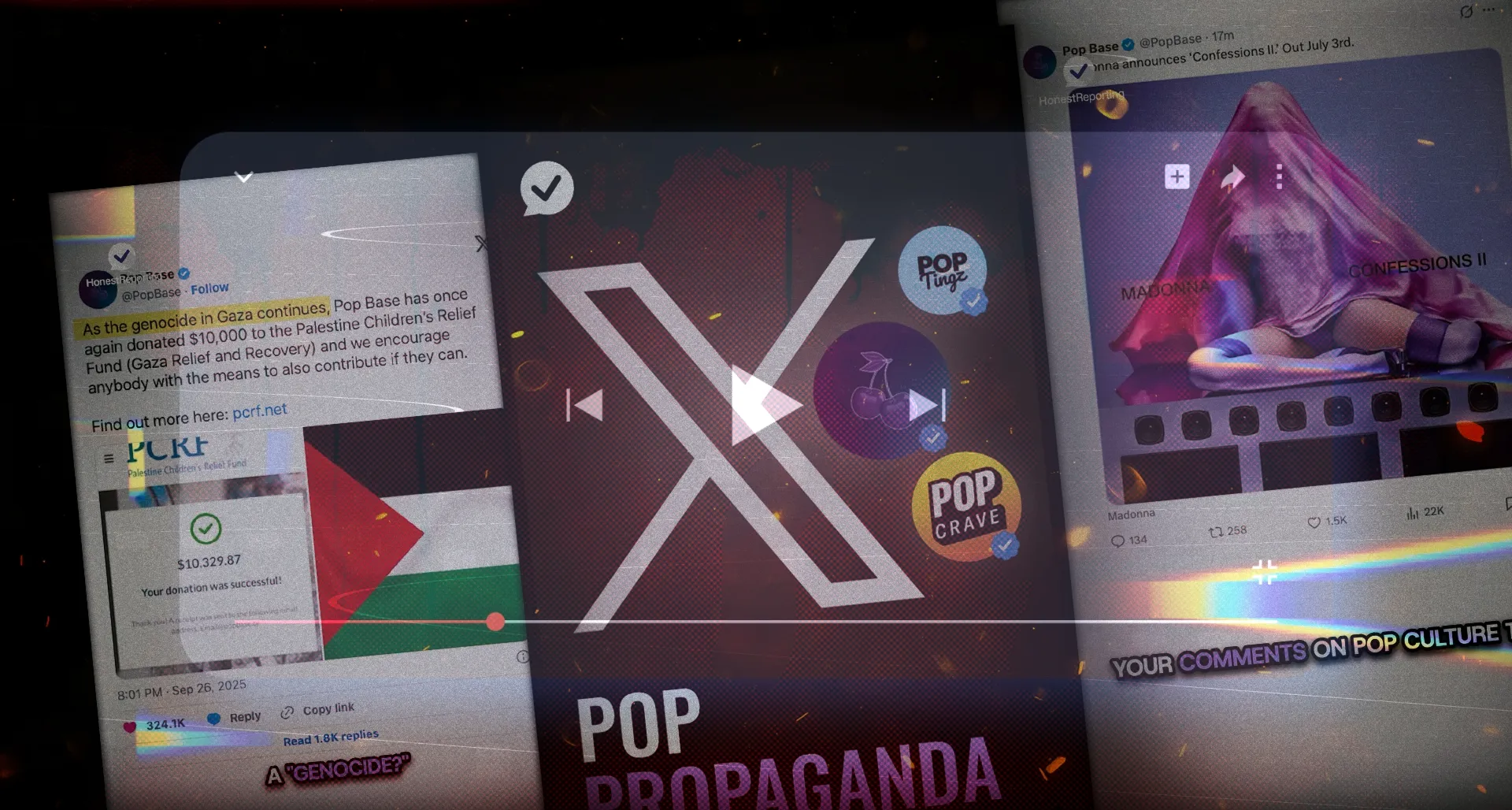
Entertainment-focused social media accounts with millions of followers are increasingly blending celebrity news with political content about the Israel-Gaza conflict, according to media analysts. This trend highlights sophisticated strategies in modern digital influence campaigns.
Accounts like Pop Base, Pop Tingz, and Pop Crave have built substantial audiences by covering music, celebrities, and entertainment news. These accounts serve as digital hubs where fans gather for updates about their favorite artists, concerts, and industry trends. With follower counts in the millions, they have become influential voices in the entertainment landscape.
However, observers have noted a pattern where these accounts regularly insert content about Israel and the war in Gaza alongside their standard entertainment coverage. What distinguishes these posts from typical news reporting is their presentation – the geopolitical content often appears without context, explanation, or clear connection to the entertainment topics that form their primary focus.
“This is how modern influence campaigns operate,” notes one analysis of the phenomenon. The strategy involves building trust with audiences through non-controversial content before gradually introducing more politically charged material.
Media experts point out that this approach is particularly effective because it targets users who are not actively seeking political information. Followers who initially subscribed for concert announcements or celebrity gossip begin receiving carefully framed perspectives on complex geopolitical issues without necessarily questioning the source’s authority or intent.
In some instances, these accounts have been observed amplifying or seemingly endorsing individuals connected to violent attacks, or presenting highly one-sided narratives about the ongoing conflict. The transition from entertainment news to geopolitical commentary typically occurs without acknowledgment of the shift in content focus.
This pattern reflects a sophisticated understanding of audience psychology. When followers develop trust in a source based on one type of content, that trust often transfers to other topics covered by the same source. The accounts effectively leverage their entertainment credibility to shape perceptions about unrelated political issues.
Digital media researchers emphasize that this phenomenon isn’t limited to any particular political perspective or issue. Rather, it represents a broader trend in online influence operations, where large platforms with seemingly apolitical foundations are strategically utilized to distribute targeted narratives to wide audiences who may not be critically evaluating the content.
“The key is not just what is being said, but how it is being delivered,” notes one analysis. “When political messaging is embedded within entertainment content, it becomes easier to absorb and harder to challenge.”
Media literacy advocates recommend that social media users maintain awareness of these tactics. Recognizing when accounts shift from their stated focus to political messaging is essential for understanding how digital influence operates in today’s fragmented information landscape.
The phenomenon raises broader questions about transparency in digital media. While traditional news organizations typically maintain clear distinctions between entertainment and political coverage, these boundaries become blurred on social platforms where a single account can seamlessly transition between celebrity gossip and geopolitical commentary.
As social media continues to serve as a primary news source for many users, particularly younger demographics, the ability to recognize and evaluate these content shifts becomes increasingly important for informed digital citizenship. Understanding these techniques represents a crucial step in navigating today’s complex information environment.
Fact Checker
Verify the accuracy of this article using The Disinformation Commission analysis and real-time sources.

15 Comments
This is a complex issue that speaks to the evolving nature of digital influence and the importance of media literacy. While entertainment accounts can be valuable sources of pop culture news, the blending of politics and propaganda is deeply concerning and deserves closer examination.
This trend highlights the sophisticated strategies being employed in modern influence campaigns. It’s concerning to see entertainment platforms being leveraged to push political agendas, often without proper context or journalistic integrity.
Agreed. Audiences need to be discerning and critical when consuming content from these types of accounts, as the lines between entertainment and propaganda can become blurred.
The use of entertainment platforms to push political narratives is a disturbing development. It underscores the need for greater scrutiny and regulation around digital influence campaigns, to ensure audiences are not being manipulated under the guise of celebrity and pop culture.
This issue speaks to the complex challenges of the modern media landscape, where the lines between entertainment, news, and propaganda can become blurred. Addressing this problem will require a multi-faceted approach focused on media literacy, platform regulation, and journalistic integrity.
The blending of pop culture and political messaging is a concerning development that deserves close examination. Audiences must be discerning and critically engage with the content they consume, to avoid being manipulated by sophisticated digital influence campaigns.
The use of popular entertainment accounts to spread political messaging is quite troubling. It reflects a broader issue of disinformation and the weaponization of social media. Transparency and accountability are needed to address this problem.
This trend raises important questions about the integrity of digital media and the responsibilities of influential accounts. Audiences should be wary of entertainment-focused platforms that stray into political messaging without proper context or journalistic rigor.
The blurring of entertainment and propaganda is a troubling phenomenon that deserves close attention. It speaks to the sophistication of modern influence campaigns and the vulnerability of audiences to manipulation through familiar pop culture platforms.
Interesting to see how entertainment accounts are being used to spread political narratives. I wonder what the motivations are behind this blending of pop culture and propaganda. Definitely raises questions about digital influence and manipulation.
This is a concerning trend that speaks to the complex challenges of the modern media landscape. Blending celebrity news with political content is a sophisticated tactic to influence public opinion, often without adequate scrutiny or context.
Absolutely. Audiences need to be vigilant and discerning when consuming content from these types of accounts. Critical thinking and fact-checking are essential to navigate these murky waters.
It’s alarming to see entertainment-focused accounts being used as vehicles for political propaganda. This highlights the need for greater transparency and accountability in the digital sphere, where the line between news and influence can become dangerously blurred.
The use of entertainment accounts to spread political narratives is a worrying trend that erodes the credibility of digital media. Audiences should demand transparency and accountability from these platforms, to ensure they are not being exploited for ulterior motives.
This is a concerning development that highlights the need for greater media literacy and critical thinking skills. Audiences must be vigilant in distinguishing genuine entertainment content from political messaging disguised as pop culture.