


Listen to the article
Fossil Fuel Industry Propaganda Undermines Climate Action in Canada
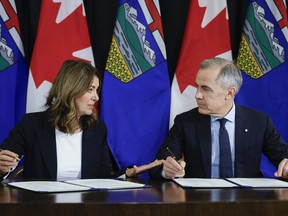
Canada’s climate policy efforts faced significant setbacks in 2025, with a series of decisions that have pushed the country further from meeting its already insufficient climate goals. In November, the federal government and Alberta signed a controversial agreement to weaken climate policies in the province and support construction of a new pipeline from Alberta to northern British Columbia.
This move came alongside other troubling policy shifts, including the cancellation of the federal carbon tax, ending funding for home energy-efficiency programs, and delaying sales mandates for zero-emission vehicles—all steps that undermine Canada’s commitment to the Paris Climate Agreement.
Behind these policy reversals lies a powerful and well-organized opponent: the fossil fuel industry and its extensive propaganda network. For decades, this industry has deployed a global network of foundations, think tanks and lobbyists—collectively known as the climate change counter movement—to systematically block meaningful climate action that might threaten their profits.
A newly published academic study maps how this movement has effectively delayed climate action in Canada. Researchers found that as outright climate change denial became less credible amid increasingly visible climate impacts, the industry shifted tactics. Rather than denying climate science directly, the movement now exploits legitimate policy debates to create confusion, cause political deadlock, and promote industry-friendly solutions that don’t threaten their bottom line.
Three narratives have proven particularly effective in the Canadian context. The first is “fossil fuel solutionism”—the false claim that fossil fuels can somehow be part of the solution to climate change. The second is “whataboutism,” which deflects responsibility by pointing to other problems. The third involves appeals to economic well-being, suggesting that fossil fuels are essential to Canadian prosperity.
These arguments rest on demonstrably false claims. For instance, the narrative that Canadian fossil fuels are “cleaner” than those produced elsewhere ignores the fact that oil from Canadian oil sands is approximately 21 percent more polluting than conventional crude oil. Similarly, claims about economic necessity overstate transition costs while ignoring the massive economic damage that unchecked climate change will cause.
What’s particularly concerning is that these industry-generated narratives are now being repeated by members of the general public. Many Canadians falsely believe that a clean energy future could include fossil fuels—a testament to the effectiveness of this propaganda campaign.
Combating these false narratives requires a multi-faceted approach. First, individuals must recognize how fossil fuel propaganda may have already influenced their thinking. Second, researchers, journalists, and citizen investigators must systematically document the activities of the climate change counter movement to better understand their tactics.
Legal accountability offers another promising avenue. Following models like the “Sue Big Oil” campaign uniting British Columbia municipalities, lawsuits can hold fossil fuel companies financially responsible for climate damage costs. These legal actions not only discourage future industry interference but also redirect funds to affected communities.
Beyond legal remedies, addressing the societal damage caused by years of industry propaganda is essential. The climate change counter movement has left communities polarized, distrustful of government, confused about facts, and often feeling hopeless about climate solutions. Climate assemblies that emphasize public engagement could help heal these divisions by rebuilding trust and community investment.
Governments must also continue advancing climate policies, particularly focusing on measures that remain relatively popular because they haven’t been targeted by the same level of propaganda as high-profile policies like carbon taxes. These less controversial but still effective approaches can drive significant emissions reductions while building public support.
Finally, addressing the structural roots of fossil fuel industry power is critical. This includes redirecting financial flows by eliminating fossil fuel subsidies and implementing strong regulatory policies to align markets with climate goals.
While the climate change counter movement has successfully delayed action for decades, the battle isn’t lost. Recognizing and directly confronting the fossil fuel industry’s role in blocking climate progress represents an essential step toward meaningful climate action in Canada.
Fact Checker
Verify the accuracy of this article using The Disinformation Commission analysis and real-time sources.

9 Comments
This article provides an important look at the fossil fuel industry’s systematic efforts to block meaningful climate action through propaganda. It’s deeply troubling to see how their influence has led to policy reversals in Canada that undermine the country’s climate commitments. Policymakers must prioritize evidence-based solutions over industry interests.
I agree. The fossil fuel industry’s relentless campaign to sow doubt and delay climate action is a major obstacle to progress. Tackling this challenge will require bold, transparent policymaking that puts science and public interest ahead of industry profits.
The fossil fuel industry’s well-organized campaign to block climate action through propaganda is a major obstacle to progress. It’s frustrating to see how their influence has led to policy decisions in Canada that undermine the country’s climate commitments. Policymakers must stand up to these powerful interests and prioritize evidence-based climate solutions.
This article sheds light on a critical issue – the fossil fuel industry’s use of propaganda to undermine climate action. It’s deeply concerning to see how their influence has led to policy reversals in Canada that weaken climate efforts. Tackling this challenge will require public awareness and political will.
It’s disheartening to see how the fossil fuel industry’s disinformation efforts have undermined climate action in Canada. This article highlights the urgent need to counter their propaganda and enact policies that drive the transition to clean energy. Transparency and public awareness will be key to overcoming this challenge.
This article highlights the critical issue of fossil fuel industry propaganda undermining climate progress. It’s troubling to see how these powerful interests have systematically blocked meaningful climate action to protect their profits. Addressing this challenge will require bold, evidence-based policymaking.
The fossil fuel industry’s relentless campaign to sow doubt and delay climate action is a major obstacle to progress. It’s disheartening to see policy reversals in Canada that undermine the country’s climate commitments. Transparency and public awareness are key to countering this concerted disinformation effort.
I agree. Fossil fuel companies have a long history of prioritizing profits over the wellbeing of the planet and people. Policymakers need to stand firm against industry pressure and enact bold, science-based policies to drive the transition to clean energy.
This article shines a light on a critical issue – the fossil fuel industry’s use of propaganda to undermine climate action. It’s deeply concerning to see how their influence has led to policy reversals in Canada that weaken the country’s climate efforts. Addressing this challenge will require public awareness, political will, and a steadfast commitment to evidence-based solutions.