


Listen to the article
Democratic Party Leader Dismisses “January 21” Summons as Political Propaganda
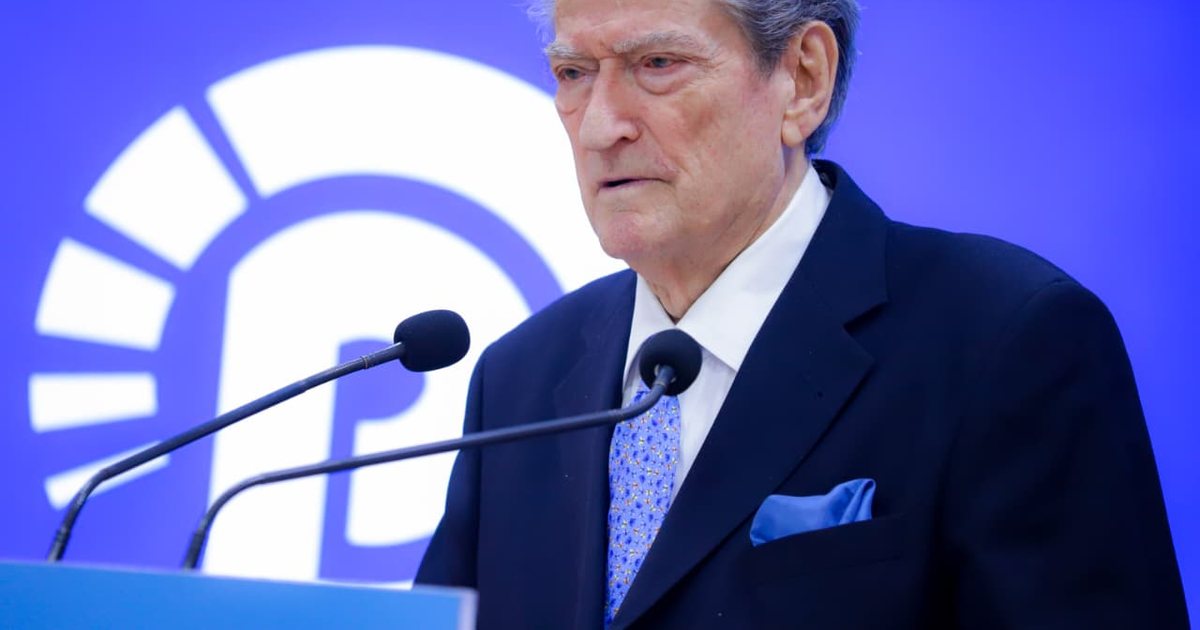
Democratic Party leader Sali Berisha has publicly addressed SPAK’s (Special Anti-Corruption Structure) recent summons regarding the “January 21” file, characterizing it as a propaganda tool wielded by political opponents rather than a legitimate legal proceeding.
Speaking at a media conference, Berisha affirmed that while he has always complied with legal summons throughout his career, this particular case represents what he described as politically motivated persecution. “I have answered every call my whole life. It is normal that I will answer, but there is only one condition that I receive calls,” Berisha stated, suggesting he would comply with proper legal procedures.
The “January 21” case refers to a 2011 anti-government protest in Tirana that turned violent, resulting in the deaths of four demonstrators. The incident has remained a contentious political issue in Albania for over a decade, with opposing political factions offering dramatically different interpretations of responsibility.
Berisha pointed out that the case had previously been investigated by former Chief Prosecutor Ina Rama, whom he characterized as “a fierce enemy of Berisha and the DP,” suggesting that even a prosecutor he considered hostile found no basis for charges against him. Despite acknowledging their adversarial relationship, Berisha expressed “public considerations” for Rama’s professionalism in handling the investigation.
The former prime minister placed blame for the stalled investigation squarely on current Prime Minister Edi Rama, accusing him of obstructing further inquiries for political gain. “It was prevented from being reinvestigated solely because of Edi Rama,” Berisha claimed, adding that “this issue has been used for propaganda for 13 years.”
In his most pointed accusation, Berisha characterized Rama as “the driver who used people as cannon fodder” during what he termed “the most violent protest in the history of mankind.” This rhetoric reflects the deep political divisions that continue to shape Albanian politics, particularly between Berisha’s Democratic Party and Rama’s Socialist Party.
The renewed investigation comes at a politically sensitive time in Albania, where tensions between government and opposition forces remain high. SPAK, established as part of Albania’s judicial reform efforts with support from international partners, has been investigating various high-profile cases involving political figures from across the spectrum.
Political analysts note that the “January 21” events have become a powerful symbol in Albanian political discourse, with each side interpreting the violence through their own partisan lens. For government supporters, the protests represent an attempt to overthrow legitimate authority, while opposition figures frame them as a response to corruption and abuse of power.
The timing of the summons also coincides with increasing pressure on Berisha, who faces other legal challenges including a house arrest order related to a separate corruption investigation. His supporters view these legal actions as politically motivated attempts to neutralize opposition leadership, while government officials maintain they represent legitimate anti-corruption efforts.
Albania’s justice reform, a key condition for the country’s European Union accession process, has led to increased scrutiny of political figures, though questions about selective prosecution and political influence over judicial proceedings remain contentious topics in the Balkan nation.
As the legal process unfolds, the case continues to highlight Albania’s challenging path toward establishing rule of law institutions that can operate free from political influence while addressing historical grievances that still divide the country.
Fact Checker
Verify the accuracy of this article using The Disinformation Commission analysis and real-time sources.

8 Comments
This seems like a politically charged case with both sides accusing the other of propaganda. It would be helpful to have more objective details on the January 21 incident and the investigation process to evaluate the claims made.
I agree, more factual information from credible sources would be needed to assess the merits of Berisha’s claims about political bias in the investigation.
This seems like a complex case with competing narratives. I’m curious to learn more about the specific evidence and timeline of the January 21 investigation to better understand the merits of Berisha’s claims.
Agreed, more details on the investigative process and findings would help provide context to evaluate the validity of the accusations of political bias.
Berisha’s response of complying with legal summons but questioning the political motivations is an interesting stance. The January 21 incident appears to be a longstanding point of contention in Albanian politics.
It will be important to see if Berisha’s claims of bias can be substantiated, or if this is simply political posturing on his part.
The use of propaganda allegations by both sides is concerning. Impartial and transparent investigations into events like the January 21 protests are crucial for public trust in the democratic process.
The characterization of the January 21 case as ‘politically motivated persecution’ by Berisha is quite serious. Thorough, independent review of the investigation would be needed to determine if there is any truth to these allegations.