


Listen to the article
Ghana’s NDC Relaunches Communication Initiative to Counter “Deliberate Misinformation”
The National Democratic Congress (NDC) has accused the opposition New Patriotic Party (NPP) of orchestrating a “deliberate campaign of misinformation” designed to undermine the current government and distort public perception.
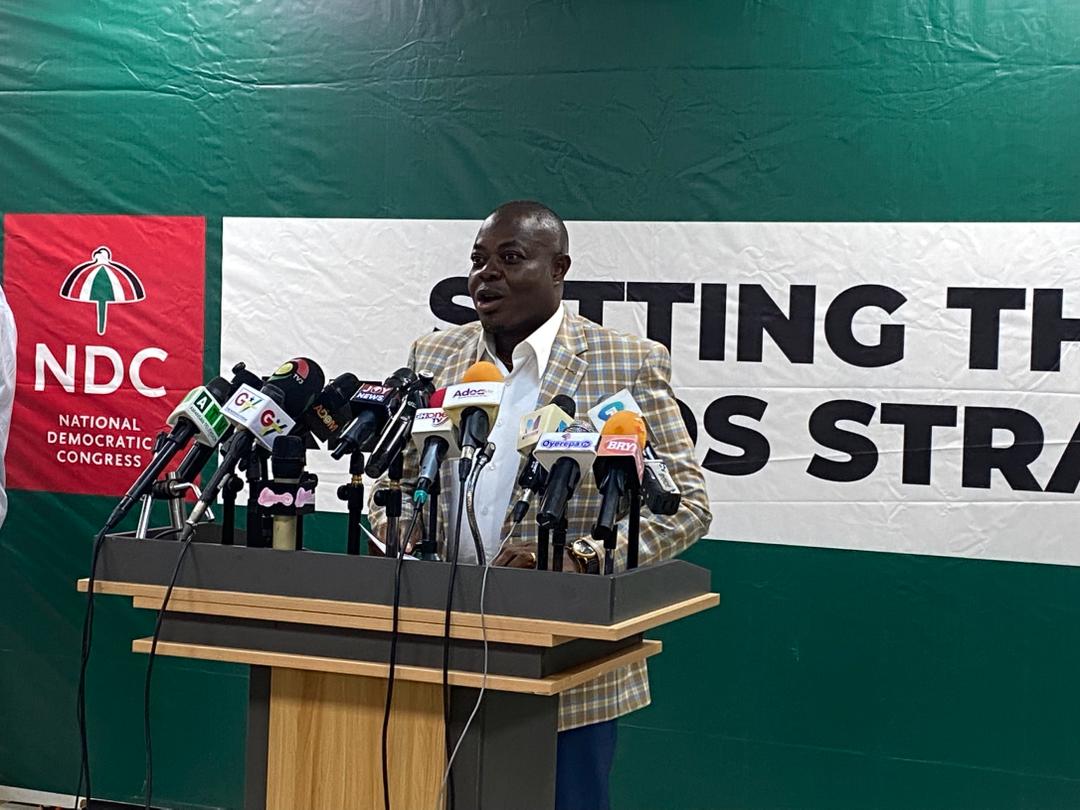
During the relaunch of the “Setting the Record Straight” communication platform, Godwin Ako Gunn, Deputy National Communication Officer of the NDC, stated that the initiative aims to counter what he described as “sustained falsehoods and politically motivated narratives” targeted at his party.
“The NPP has revived its well-known machinery of misinformation, half-truths and calculated propaganda in an attempt to manipulate public opinion and rewrite recent political history,” Gunn told attendees at the relaunch event.
The NDC’s renewed focus on strategic communication comes from lessons learned during the 2016 general elections. Gunn argued that the party’s previous electoral defeat wasn’t due to poor governance but rather a failure to effectively communicate achievements and counter opposition propaganda.
Gunn highlighted several significant infrastructure projects completed under previous NDC administrations that he claims were overshadowed by fabricated scandals. These include the construction and rehabilitation of more than 3,000 kilometers of roads, the development of over 200 community-based senior high schools (E-blocks), and major infrastructure developments such as Terminal 3 at Kotoka International Airport and the expansion of Kumasi International Airport.
Looking back at Ghana’s political history, Gunn alleged that after the administration of former President Jerry John Rawlings, the incoming government of former President John Agyekum Kufuor systematically distorted NDC accomplishments through sustained propaganda campaigns. He credited the original “Setting the Record Straight” initiative, then led by current NDC General Secretary Fifi Fiavi Kwetey, with helping restore public confidence in the party.
Addressing recent economic controversies, Gunn defended the Bank of Ghana’s reported GH¢15 billion intervention in the economy, characterizing it as a strategic investment aimed at stabilizing Ghana’s macroeconomic environment. According to him, the intervention has contributed to reduced inflation, lower debt-to-GDP ratios, eased cost-of-living pressures, and a stronger local currency.
He dismissed as “palpably false” allegations that public funds were used to purchase four aircraft for President John Dramani Mahama. Gunn also rejected NPP claims that the central bank had incurred losses amounting to GH¢44 billion, describing these assertions as “unsubstantiated propaganda intended to erode public trust in state institutions.”
“The Ghanaian voter deserves to be informed, not misled,” Gunn emphasized, while noting that the NDC welcomes constructive criticism but will firmly challenge what he termed deliberate falsehoods and coordinated propaganda campaigns.
The communication initiative comes amid increasing political tensions in Ghana as both major parties position themselves ahead of future electoral contests. Political analysts note that communication strategies have become increasingly important in Ghana’s political landscape, where social media and digital platforms have amplified both legitimate political discourse and potential misinformation.
Gunn commended government appointees and the Ministry of Government Communications for improving public engagement through initiatives such as the “Accounting to the People” series. He urged party executives and members to maintain unity and discipline as the NDC undertakes internal reorganization, adding that the party remains committed to transparency, effective governance, and defending Ghana’s democratic integrity.
The relaunch of this communication platform signals an intensifying political environment in Ghana, where both the NDC and NPP are already sharpening their messaging strategies in preparation for upcoming electoral contests.
Fact Checker
Verify the accuracy of this article using The Disinformation Commission analysis and real-time sources.

8 Comments
Interesting to see the NDC relaunch this communication platform to address perceived misinformation. It will be important to evaluate the claims and counter-claims objectively to get a balanced understanding of the issues.
Political spin and counter-claims are par for the course, but I hope both parties will focus on transparent, fact-based dialogue to inform the public, rather than just attacking each other.
Well said. Constructive debate on the issues, rather than just accusations, would serve the public interest better.
It’s important for all sides to communicate their views, but the public deserves an objective assessment of the facts, not just partisan narratives. I’ll be interested to see how this plays out.
The NDC appears to be trying to regain the political narrative after their 2016 election loss. Improved communication may help, but they’ll need to back up their claims with verifiable facts to sway public opinion.
This seems like a common tactic in politics – accusing the opposition of spreading propaganda. It would be helpful to see concrete evidence of the specific ‘misinformation’ the NDC claims the NPP is spreading.
I agree, more transparency and factual evidence would lend more credibility to the NDC’s allegations. Simply calling something ‘misinformation’ without proof is not very convincing.
I’m curious to learn more about the specific infrastructure projects the NDC says they completed but failed to effectively communicate. Concrete details could help shed light on their governance record.