


Listen to the article
In a small Helsinki classroom, a group of three-year-olds gather around their teacher for an important lesson – though to casual observers, it might look like simple playtime. The children are learning to distinguish between real and pretend, a foundational concept of media literacy that forms part of Finland’s national curriculum from preschool onward.
This early education initiative represents one of Finland’s most effective defenses against disinformation, particularly from neighboring Russia. While Finland shares a 1,340-kilometer border with Russia, its citizens consistently rank among the most resistant to false information in Europe.
“We start media education with children as young as three,” explains Minna Harmanen from Finland’s National Agency for Education. “At that age, we focus on basic concepts – what is real versus what is make-believe – using stories, images, and age-appropriate discussions.”
Finland’s comprehensive approach to media literacy has gained international attention as democracies worldwide grapple with the challenges of disinformation. The small Nordic nation has transformed its educational system to prepare citizens for an increasingly complex media environment, making critical thinking a national priority.
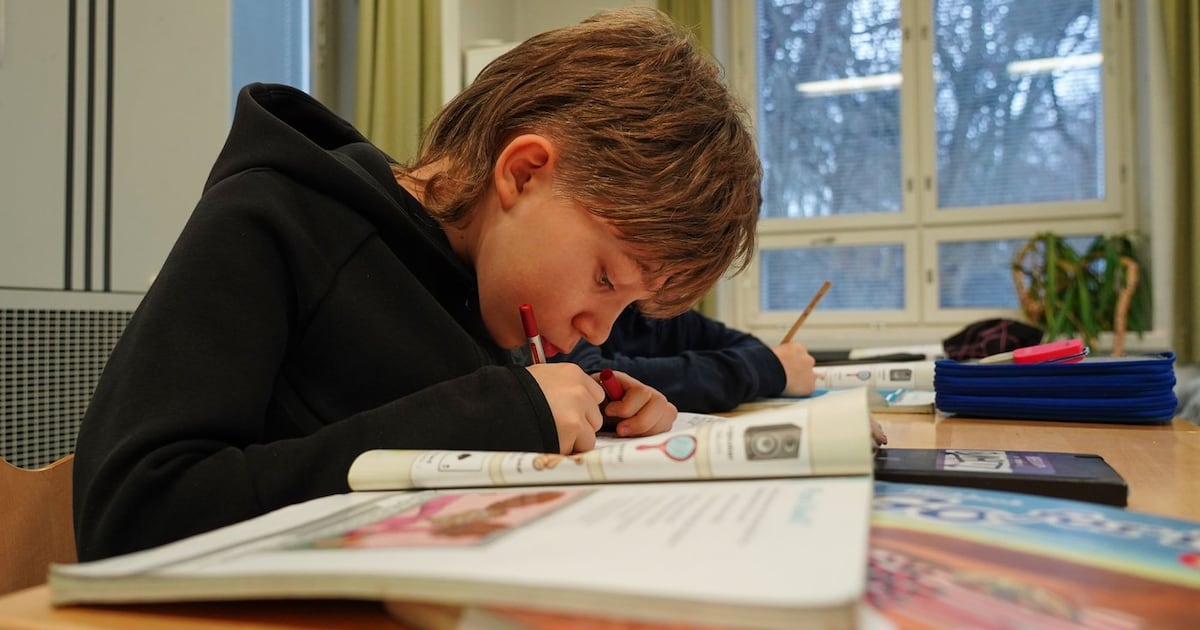
By the time Finnish children reach elementary school, they’re analyzing news sources, identifying sponsored content, and discussing how images can be manipulated. Secondary students tackle more complex topics like algorithm bias and deep fakes. This progressive approach ensures that by adulthood, most Finns possess sophisticated skills to navigate today’s information landscape.
The country’s proactive stance evolved partly from its geopolitical position. Having faced Russian disinformation campaigns for decades, Finland developed institutional resilience long before terms like “fake news” entered the global lexicon. When Russia invaded Ukraine in 2022, Finland was already well-prepared to counter accompanying propaganda efforts.
“What separates Finland from many other countries is that media literacy isn’t treated as an add-on subject,” says Saara Salomaa, senior advisor at the National Audiovisual Institute. “It’s integrated across virtually every subject in our curriculum, from history and science to art and language studies.”
Finland’s approach is multifaceted, extending beyond schools. Government agencies collaborate with media organizations and technology companies on public awareness campaigns. Libraries offer workshops for adults, particularly focusing on elderly populations who may be more vulnerable to online deception.
The Finnish Media Education Authority provides resources for teachers and parents, while public broadcaster Yle produces educational content specifically designed to help citizens identify misleading information. This whole-of-society approach creates multiple reinforcing layers of protection against disinformation.
Results have been impressive. In European Union assessments of resilience to foreign information manipulation, Finland consistently tops the rankings. During recent election cycles, Finland has avoided the level of polarization and information disorder seen in many other democracies.
“Our goal isn’t to tell citizens what to believe,” explains Petri Koikkalainen, a political scientist at the University of Lapland. “Rather, we aim to equip them with tools to make their own informed judgments. Critical thinking skills are ultimately what protect democracy.”
Finland’s success has prompted delegations from dozens of countries to visit and study its approach. The United States, Germany, and Singapore have all launched pilot programs adapting elements of the Finnish model.
However, Finnish experts caution that their success comes from long-term commitment rather than quick fixes. The education system benefits from high public trust, well-trained teachers, and political consensus about the importance of media literacy – factors not easily replicated elsewhere.
“Building societal resilience takes decades,” notes Harmanen. “But every country can start somewhere, even with small steps like incorporating basic critical thinking into early childhood education.”
As disinformation techniques grow increasingly sophisticated, Finland continues to adapt its approach. Recent curriculum updates address emerging challenges like artificial intelligence-generated content and the psychological aspects of online manipulation.
For Finland, media literacy is not merely an educational initiative but a matter of national security and democratic health. In a world where information warfare presents an ever-growing threat, Finland’s investment in its citizens’ critical faculties offers a compelling model for democracies seeking to strengthen their information ecosystems from the ground up.
Fact Checker
Verify the accuracy of this article using The Disinformation Commission analysis and real-time sources.

8 Comments
Impressive that Finland starts media literacy education so early. Helping kids distinguish fact from fiction at a young age is a smart defense against propaganda. Curious to learn more about their curriculum and how it’s adapted for different age groups.
Agreed, this proactive approach is admirable. Developing critical thinking skills from an early age can really benefit children as they navigate the complex media landscape.
Finland’s proactive approach to media literacy education is commendable. Starting at age 3 to teach children the difference between reality and make-believe lays an important groundwork for navigating the modern information environment. This type of early intervention could serve as a model for other countries grappling with the challenges of disinformation.
Kudos to Finland for prioritizing media literacy education for young children. Helping them develop the critical thinking skills to distinguish fact from fiction at such an early age is an impressive and vital initiative, particularly given the country’s proximity to Russia. I wonder how the curriculum evolves as students progress through school.
That’s a great point. It would be interesting to see how Finland’s media literacy program builds upon the foundational concepts taught in preschool, equipping students with increasingly sophisticated tools to navigate the complex information landscape.
It’s fascinating that Finland has integrated media literacy into their national curriculum from preschool onward. This proactive, whole-of-society approach seems like a smart strategy to inoculate citizens against the spread of false information, especially from neighboring Russia. I’d be curious to see if this model could be replicated elsewhere.
Finland’s comprehensive media literacy program is an inspiring model. Equipping citizens with the tools to identify misinformation from a young age seems like an effective way to build societal resilience against propaganda. I wonder if other countries could learn from their example.
You raise a good point. With disinformation becoming an increasing challenge globally, Finland’s early education initiative could offer valuable insights for other nations looking to strengthen their defenses.