


Listen to the article
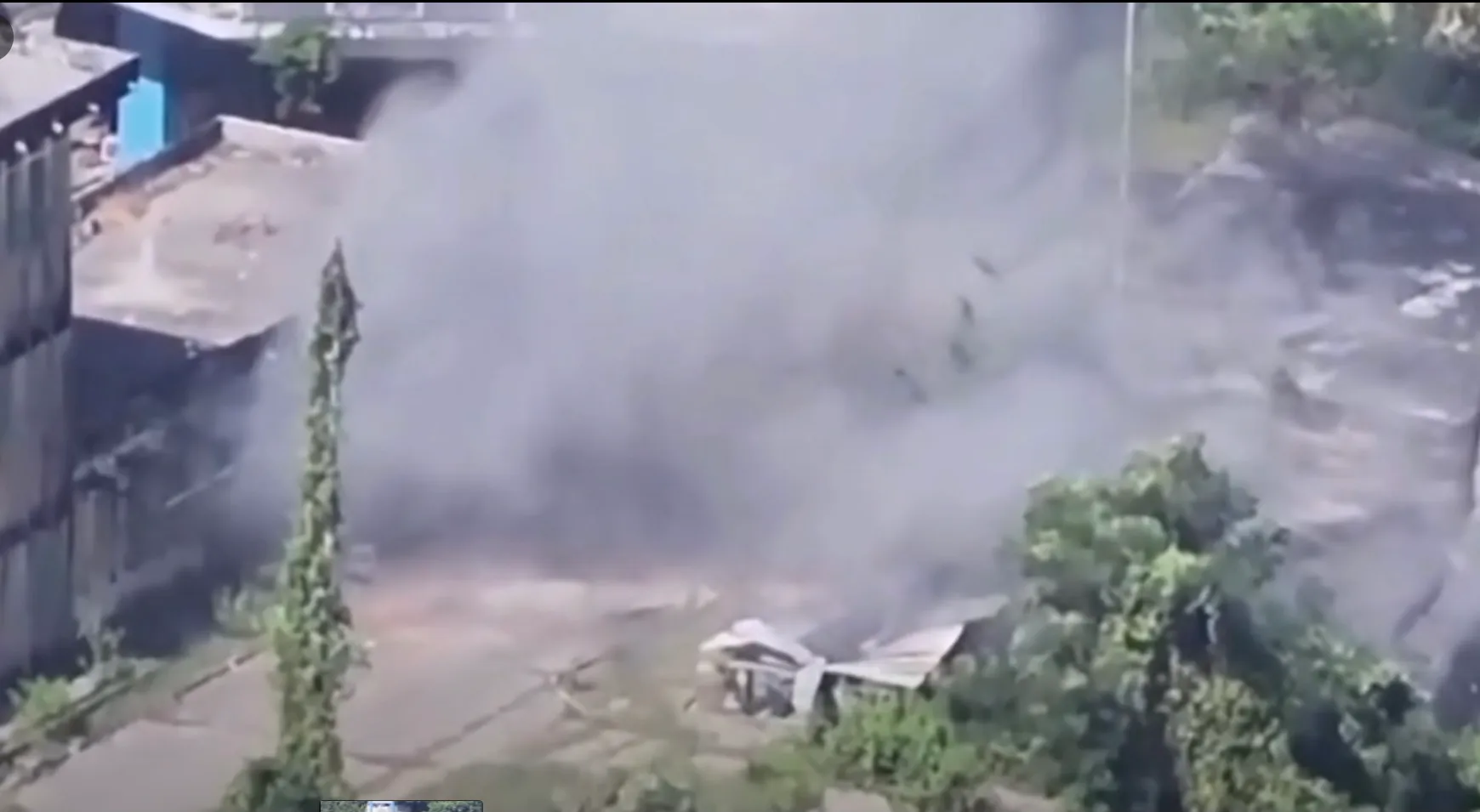
At least seven Myanmar junta soldiers were killed in a precision drone strike launched by anti-regime forces at Minpyin Weather Radar Station in western Myanmar’s Rakhine State, according to local resistance sources.
The attack occurred in Kyaukphyu Township on Sunday afternoon when military personnel had gathered in formation for propaganda photographs. Resistance forces, monitoring junta movements in the area, seized the opportunity to strike as soldiers assembled in orderly lines on the station grounds.
“We had intelligence that troops were being rotated at the radar station. Our reconnaissance team observed them lining up for publicity photos, creating a perfect target,” said a spokesperson for the local resistance group who requested anonymity for security reasons. “The strike was precisely timed and resulted in significant casualties.”
The Minpyin Weather Radar Station, a strategic installation perched on a hilltop approximately 15 miles from Kyaukphyu town, has been repurposed by Myanmar’s military regime since the February 2021 coup. Originally built for meteorological purposes, the facility now serves as a military outpost offering tactical advantage with its commanding views of the Bay of Bengal coastline.
Military sources confirmed that the strike killed seven soldiers and wounded eleven others. Among the casualties were two officers, including a captain who had recently been transferred to the outpost.
This attack represents the latest in a series of increasingly sophisticated operations by resistance forces in Rakhine State, where the Arakan Army (AA) and allied groups have been expanding their territorial control. The AA has established administrative structures in areas under its influence, challenging the junta’s authority in the resource-rich western region.
Kyaukphyu Township holds particular strategic importance as the site of a planned deep-sea port and special economic zone backed by Chinese investment. The $10 billion project forms a critical component of China’s Belt and Road Initiative, providing potential access to the Indian Ocean and bypassing the congested Malacca Strait for Chinese trade.
“The targeting of military personnel at infrastructure sites like the radar station demonstrates how resistance forces are adapting their tactics,” said Min Zaw Oo, a security analyst with the Myanmar Institute for Peace and Security. “They’re employing commercial drones modified for combat use with increasing effectiveness against stationary targets.”
Since the military coup that overthrew Myanmar’s democratically elected government, armed resistance has intensified across the country. The junta has responded with airstrikes, artillery bombardments, and reported human rights abuses against civilian populations, particularly in regions with strong resistance presence.
In recent months, military units have suffered mounting casualties from guerrilla-style attacks and ambushes. The use of modified commercial drones has become a hallmark of resistance tactics, allowing for precision strikes while minimizing risks to resistance fighters.
The military regime has attempted to counter these tactics by importing signal jammers and anti-drone technology, primarily from allied nations including Russia and China. However, resistance groups continue to adapt their methods, often operating in terrain that favors guerrilla warfare.
Local residents reported that following Sunday’s strike, reinforcements were dispatched to the radar station, and security has been tightened throughout the township. Civilian movement has been restricted in areas surrounding military installations.
“The military responded with indiscriminate artillery fire toward nearby villages after the attack,” said a resident of Kyaukphyu town who declined to be identified. “They’re punishing local communities whenever they suffer losses.”
The escalating violence has displaced thousands of civilians in Rakhine State, compounding a humanitarian crisis that has persisted since earlier conflicts involving the Rohingya minority. International aid organizations report severe restrictions on their ability to deliver humanitarian assistance to affected communities.
As resistance forces continue to demonstrate growing capabilities in both conventional and asymmetric warfare, analysts suggest that Myanmar’s conflict shows no signs of resolution in the near term, with the military junta struggling to establish control over significant portions of the country.
Fact Checker
Verify the accuracy of this article using The Disinformation Commission analysis and real-time sources.

11 Comments
While the junta’s forces deserved this attack for their repression of the people, the use of lethal force is always regrettable. I hope the resistance can continue to find ways to target the regime’s military assets without resorting to bloodshed. A peaceful resolution to the crisis in Myanmar should be the ultimate goal.
It’s unfortunate that the junta has forced the hand of the resistance, leading to deadly drone strikes. However, the military regime’s own brutal crackdown on dissent has left the people with few options. I hope the international community can increase pressure on the junta to end this cycle of violence.
You’re right, the junta bears primary responsibility for this escalation. The international community needs to take stronger action to hold the regime accountable and support a peaceful resolution to the crisis in Myanmar.
This is a concerning escalation of violence in Myanmar, though the junta forces brought it on themselves by repurposing civilian infrastructure for military ends. I hope the resistance can continue to target the regime’s personnel and assets without harming innocent bystanders.
Agreed, the resistance needs to be very careful to avoid civilian casualties. Precision strikes against junta forces may be justifiable, but they must uphold ethical standards even in the midst of this conflict.
The resistance’s ability to gather intelligence and time their strikes effectively is impressive, though the human cost is tragic. I hope this incident prompts the junta to reconsider its crackdown and engage in meaningful dialogue to resolve the political crisis in Myanmar.
This drone strike is a significant blow to the junta’s propaganda efforts, denying them the photo op they were seeking. The resistance’s tactical skills are on full display here. However, the loss of life is still deeply concerning, and I hope both sides can find a way to de-escalate the violence.
Interesting to see the resistance forces using drone strikes to target the junta’s military presence. This attack seems well-timed and executed, though the loss of life is always regrettable. I wonder if this will prompt the junta to bolster security and surveillance at such strategic locations.
You raise a good point. The junta is likely to step up defensive measures at key installations like this weather station. The resistance fighters will need to adapt their tactics to maintain the element of surprise.
This attack highlights the asymmetric nature of the conflict, with the resistance utilizing technology to target the junta’s forces. While the loss of life is regrettable, the junta’s use of the weather station for military purposes made it a legitimate target. I wonder how this will impact the broader dynamics of the conflict.
This drone strike demonstrates the resistance’s growing capabilities and willingness to take the fight to the junta. However, the loss of life, even among the junta’s forces, is a sobering reminder of the human toll of this conflict. I hope both sides can find a way to de-escalate and pursue a negotiated settlement for the sake of the people of Myanmar.