


Listen to the article
In a concerning development following the fatal shooting of 37-year-old Renee Nicole Good by Immigration and Customs Enforcement (ICE) officer Jonathan Ross in Minneapolis on Wednesday, Department of Homeland Security (DHS) officials immediately characterized the victim as a “violent rioter” who allegedly attempted to use her vehicle as a weapon against federal officers.
DHS Assistant Secretary Tricia McLaughlin claimed in a statement that ICE officers were “conducting targeted operations when rioters began blocking ICE officers and one of these violent rioters weaponized her vehicle, attempting to run over our law enforcement officers in an attempt to kill them.”
However, video evidence from the scene appears inconsistent with this official characterization, raising questions about the government’s portrayal of events. No criminal charges have been filed against Ross in connection with the shooting.
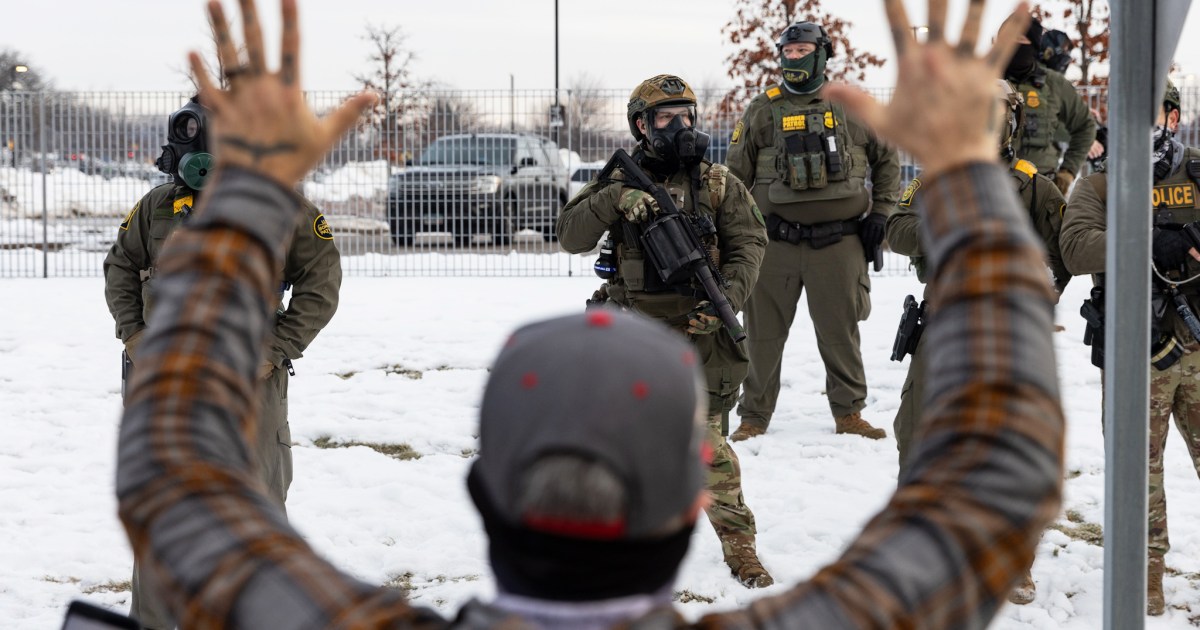
The labeling of Good as a “violent rioter” reflects a broader pattern within the Trump administration’s approach to characterizing protests against its immigration enforcement actions. This terminology has been deployed repeatedly by DHS officials to describe individuals who gather in opposition to ICE operations.
Chicago has been a focal point for this rhetorical strategy during the recent Operation Midway Blitz, when ICE agents conducted extensive operations throughout the fall and winter. On November 14, DHS posted a video on social media platform X describing protesters outside an ICE facility as “violent rioters” attempting to secure the release of “some of the worst human beings on planet earth.”
Jack Jenkins, a journalist with The Christian Century who was present that day, observed the Rev. Michael Woolf, a Baptist minister wearing clerical attire, peacefully protesting before being forcibly removed by officers who “wrenched him from the crowd and tossed him to the ground.”
In another Chicago incident, Marimar Martinez was shot multiple times by a Customs and Border Protection (CBP) agent in October. Officials claimed self-defense after she allegedly assaulted the agent with her vehicle. DHS labeled Martinez a “domestic terrorist” and initially filed charges of assaulting federal officers, only to later drop these charges. Defense attorneys stated that bodycam footage showed an agent actually drove into Martinez’s truck.
The Guardian has reported that despite DHS characterizing protesters as “violent rioters” throughout Operation Midway Blitz and vowing maximum prosecution, charges have been dropped against at least nine of more than two dozen people arrested for protest-related offenses, with none proceeding to trial.
While federal agents undoubtedly face legitimate threats in some circumstances, the government’s sweeping application of the “violent rioter” label appears designed to delegitimize public assembly and expressions of opposition to immigration enforcement actions. In Good’s case, this characterization seems intended to frame her not as an American citizen exercising constitutional rights, but as a dangerous criminal who invited her fate.
This perspective was evident during an October 30 deposition of U.S. Border Patrol Commander Gregory Bovino related to a lawsuit alleging aggressive immigration enforcement in Chicago. When attorney Locke Bowman asked Bovino to acknowledge that some individuals at the Broadview ICE facility were peaceful protesters rather than “violent rioters and assaulters,” Bovino responded, “I don’t know what they are.” When further pressed whether he had ever interacted with anyone who wasn’t a violent rioter, Bovino stated, “I can’t remember.”
Ashley Howard, author of “Midwest Unrest: 1960s Urban Rebellions and the Black Freedom Movement,” noted the troubling implications of this rhetorical strategy. “People who can use force with impunity need to justify the use of that force, and so they must portray these people, regardless of how they’re engaging, as violent, as rioters,” Howard explained.
Howard pointed out that the federal definition of “riot” can be applied broadly to as few as three people acting together, whether high school students tipping over a trash can or people blocking traffic. “They can use that designation of ‘riot’ or ‘riots’ as they see fit. And that’s what makes it so dangerous,” she said.
The Rev. Woolf, who was arrested in October, later told reporters, “It’s just foolish to be called, like, a violent rioter by someone when you’re with a clerical collar, and you’re simply trying to express your First Amendment rights.”
This pattern of language weaponization, particularly the swift dehumanization of Good following her death, signals an increasingly authoritarian approach by government officials toward those who challenge their actions through public protest.
Fact Checker
Verify the accuracy of this article using The Disinformation Commission analysis and real-time sources.

16 Comments
The government’s characterization of the victim as a ‘violent rioter’ is concerning, especially given the apparent contradictions with video evidence. We need a thorough, independent investigation to understand what truly happened and ensure accountability.
Well said. The pattern of such language from DHS is troubling and raises serious questions about their credibility and motives. Impartial scrutiny is essential to uncover the facts and restore public trust.
This is a concerning development. While the facts are still unclear, we should avoid rushing to conclusions and let the investigation play out. Characterizing protesters as ‘violent rioters’ seems like an attempt to discredit legitimate grievances.
I agree. The government’s messaging here raises red flags and warrants close scrutiny. Transparency and accountability are crucial in these situations.
The government’s quick labeling of the victim as a ‘violent rioter’ is troubling. Video evidence appears to contradict their portrayal, suggesting an agenda to discredit protesters. We need the full facts before drawing conclusions.
Absolutely. This seems like an attempt to justify the use of force and deflect criticism. The pattern of such characterizations by DHS is concerning and merits deeper investigation.
This is a highly charged and sensitive situation. While the official narrative is troubling, we should avoid rushing to conclusions without a full understanding of the facts. Transparent and impartial investigation is crucial to determine what truly occurred.
I agree. The government’s quick labeling of the victim as a ‘violent rioter’ appears to fit a broader pattern of discrediting protesters. Given the contradictory video evidence, their portrayal warrants deep skepticism and closer examination.
The DHS’s rapid branding of the victim as a ‘violent rioter’ is deeply concerning, especially in light of the apparent contradictions with video evidence. This seems like an attempt to justify the use of force and deflect criticism rather than a fair assessment.
Absolutely. The government’s messaging here raises serious red flags and erodes public trust. Transparent, independent investigation is crucial to uncover the truth and ensure accountability in this sensitive and complex situation.
This is a complex and sensitive situation. While the official narrative raises questions, we should avoid rushing to judgment without the full picture. Transparent and impartial investigation is crucial to understand what truly happened.
Well said. Given the history of such characterizations, I share your skepticism about the government’s portrayal of events. Thorough, independent scrutiny is needed to uncover the truth.
The DHS’s quick branding of the victim as a ‘violent rioter’ is disturbing and seems to fit a broader pattern of discrediting protesters. Video evidence appears to contradict their claims, warranting closer examination of the facts.
I agree. This looks like an attempt to justify the use of force and deflect criticism, rather than a fair and impartial assessment of the incident. Transparency and accountability must be the priority here.
This is a troubling development that warrants close scrutiny. The government’s quick labeling of the victim as a ‘violent rioter’ seems to fit a pattern of discrediting protesters, and the video evidence appears inconsistent with their portrayal. Impartial investigation is essential to determine what truly happened.
Well said. The DHS’s characterization of events raises grave concerns about their credibility and motives. Transparent, independent examination of the facts is crucial to restore public trust and ensure accountability in this sensitive case.