


Listen to the article
Estonia and allies condemn Russia’s return to Venice Art Biennale amid Ukraine war
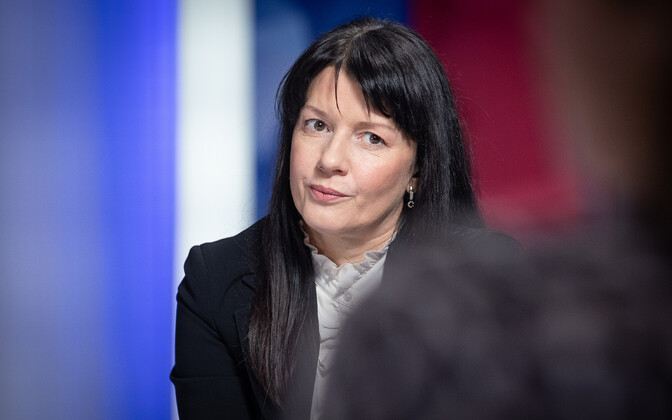
Estonian Minister of Culture Heidy Purga announced Monday that several countries are preparing a joint statement condemning Russia’s participation in the prestigious Venice Art Biennale, marking a diplomatic pushback against what critics see as cultural normalization of an aggressor state.
The controversy erupted last week when organizers revealed that Russia would return to the renowned international art exhibition after being absent since the full-scale invasion of Ukraine began in 2022. The decision has prompted swift diplomatic action from nations supporting Ukraine.
“I discussed this issue with Ukraine’s culture minister on Friday morning, and over the weekend I coordinated closely with Latvia’s culture minister to align the actions of countries that share our values,” Purga told Estonian public broadcaster ERR.
The minister indicated that the joint statement will urge Biennale organizers to reconsider their decision based on agreed European Union principles. “France has now confirmed they will join our effort, and more countries are coming on board,” she added.
Purga emphasized the ongoing devastation of cultural heritage in Ukraine, pointing out that Russia has destroyed over 1,600 cultural sites and killed at least 342 artists since the war began. “Providing Russia with a prestigious platform at such an important global cultural event sends a message that everything is normal—but it is not. We cannot accept Russia using culture as a tool for war propaganda,” she stated.
The minister expressed concern about what appears to be a gradual relaxation of restrictions on Russian participation in international events. She cited the recent Paralympics as another example, noting that while Estonia supported its athletes at the competition, the Ministry of Culture deliberately abstained from attending the opening ceremony in protest.
Despite the controversy, Estonia does not plan to withdraw from the Biennale. “A boycott would only be effective if a critical mass of countries participated, which would force organizers to reconsider. At this stage, withdrawing is neither realistic nor fair to artists from our country and other democracies. Estonia will participate, as will Ukraine,” Purga explained.
Instead, Estonia is working with Ukraine and other allies to leverage their presence at the event. “We are developing strategies to best use our platform to convey our message,” the minister added.
Estonian Foreign Minister Margus Tsahkna reinforced this position on social media, writing: “Russia has not stopped killing civilians in their sleep. So there must be no pause in isolating Russia.” He warned that the Biennale should not offer Russia “a platform to whitewash its actions or hide the brutality of its aggression under the guise of culture.”
The Venice Biennale, established in 1895, is one of the world’s oldest and most prestigious cultural exhibitions. Described by The Guardian as “one of Italy’s most important cultural institutions,” it attracts global attention and participation. This year’s event will run from May 9 to November 22.
The controversy highlights the ongoing tension between cultural exchange and political sanctions in international relations. While arts organizations often advocate for cultural bridges during conflict, many European nations maintain that Russia’s actions in Ukraine demand continued isolation across all spheres, including cultural ones.
Russia’s participation also raises questions about the role and responsibility of international cultural institutions during times of war, particularly when one participating nation stands accused of deliberately targeting the cultural heritage of another.
Fact Checker
Verify the accuracy of this article using The Disinformation Commission analysis and real-time sources.

7 Comments
It’s troubling to see Russia attempting to use culture as a propaganda tool amidst the ongoing conflict in Ukraine. I support the coordinated diplomatic response to pressure the Biennale organizers to reconsider their decision.
Agreed. Culture should not be hijacked for political purposes, especially not by an aggressor state. Kudos to the ministers for aligning their countries’ positions on this.
This is a concerning development. Russia’s participation in the Venice Biennale risks normalizing their unprovoked invasion of Ukraine. I’m glad to see the joint statement being prepared to push back against this.
While cultural exchanges are important, the current context makes Russia’s involvement in the Venice Biennale highly problematic. I support the diplomatic efforts to urge the organizers to reconsider their decision.
Absolutely. Russia should not be allowed to use prestigious cultural events for propaganda purposes while they continue their brutal assault on Ukraine.
This is a concerning move by the organizers of the Venice Biennale. Allowing Russia to participate risks undermining the integrity of the event and normalizing their aggression. I’m glad to see a coordinated international response.
This is a complex and sensitive issue. While cultural exchanges are important, Russia’s actions in Ukraine make their participation in the Venice Biennale highly controversial. I’m glad to see Estonia and allies taking a firm stance against this.