


Listen to the article
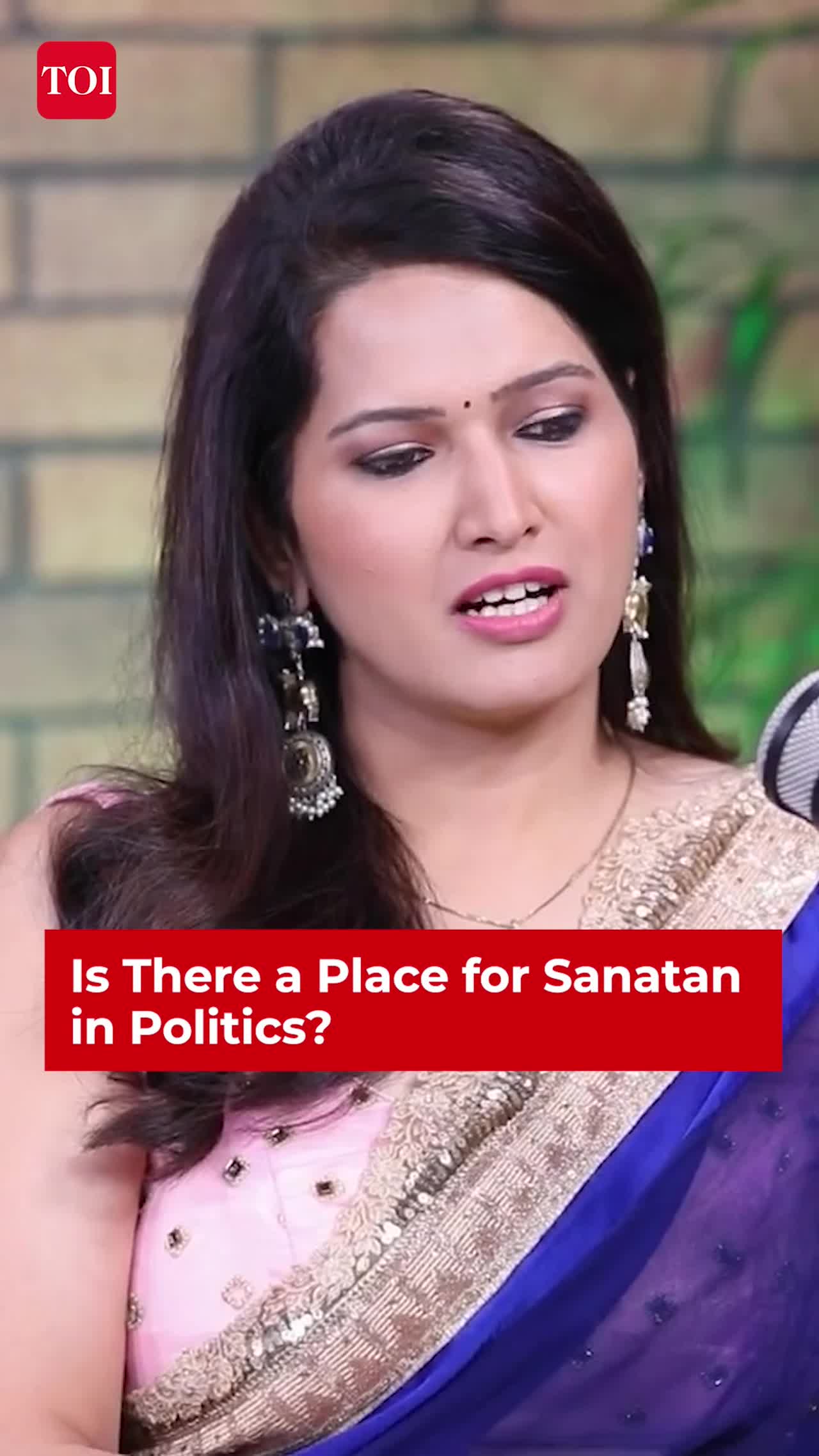
The debate over Sanatan Dharma’s role in contemporary society has intensified in recent months, raising important questions about the intersection of ancient spirituality and modern political discourse.
Sanatan Dharma, often described as the eternal way of life that forms the foundation of Hinduism, has become increasingly prominent in political rhetoric across India. Political leaders from various parties have invoked its principles, history and symbolism in campaigns and policy discussions, prompting scholars and citizens alike to question where religious preservation ends and political exploitation begins.
The tradition itself dates back thousands of years, encompassing philosophical concepts, rituals, ethics and cultural practices that have evolved over millennia. Historians note that Sanatan Dharma has historically been characterized by its adaptability and inclusiveness, absorbing various regional practices while maintaining certain core philosophical tenets.
“What we’re seeing today is not unprecedented in Indian history,” explains Dr. Meenakshi Jain, a historian specializing in religious studies. “Religious narratives have long been intertwined with governance across the subcontinent. The difference now is the modern democratic context and mass media amplification.”
Recent political developments have brought this tension to the forefront. Several state and national elections have featured campaigns heavily invoking Sanatan traditions, with politicians positioning themselves as protectors of ancient values. Meanwhile, opposition figures have accused ruling parties of weaponizing religion to distract from economic and social challenges.
The controversy reached new heights last year when Tamil Nadu minister Udhayanidhi Stalin likened Sanatan Dharma to diseases like malaria and dengue that should be eradicated, prompting nationwide protests and counterprotests. The incident revealed deep divisions in how the tradition is perceived across different regions and political affiliations.
Political analysts point out that this phenomenon extends beyond simple vote-bank politics. “The invocation of Sanatan Dharma serves multiple purposes,” notes political scientist Pratap Bhanu Mehta. “It creates a sense of continuity with the past, establishes cultural authenticity, and defines community boundaries in ways that can be politically advantageous.”
For many practitioners, however, the political appropriation of their tradition feels reductive. Swami Avimukteshwaranand of Jyotirmath expresses concern that “politicians often cherry-pick elements of Sanatan Dharma that serve their immediate goals while ignoring its emphasis on universal values and philosophical inquiry.”
The phenomenon isn’t unique to India. Across the world, religious traditions are frequently invoked in political contexts, from Christianity in American politics to Islam in various Middle Eastern nations. What distinguishes the current Indian context is the specific historical moment—a rapidly modernizing society grappling with questions of identity in a globalized world.
Media coverage has further complicated matters. Television debates often reduce nuanced theological concepts to simplistic talking points, while social media algorithms amplify the most polarizing viewpoints. Religious leaders themselves are divided, with some embracing political partnerships and others advocating for keeping spiritual practices separate from electoral politics.
The economic implications of this phenomenon are significant as well. Religious tourism, temple construction, and cultural festivals have become major economic drivers in many regions, blurring the lines between spiritual heritage preservation and commercial development.
Constitutional experts remind that India’s founding documents established a unique approach to secularism—not as an absence of religion from public life, but as equal respect for all faiths. This framework has been tested repeatedly as politicians invoke religious symbols and narratives in governance.
For ordinary citizens, navigating this complex landscape means developing critical thinking skills to distinguish between authentic spiritual discourse and political messaging designed to evoke emotional responses. Educational institutions and civil society organizations have begun offering programs specifically focused on media literacy in religious contexts.
As India continues to evolve as both an ancient civilization and a modern republic, the conversation around Sanatan Dharma reflects broader questions about national identity, cultural heritage, and democratic values. The challenge remains finding a balance that honors spiritual traditions while preventing their reduction to mere political instruments.
Fact Checker
Verify the accuracy of this article using The Disinformation Commission analysis and real-time sources.

12 Comments
This is a thought-provoking piece that highlights the delicate balance between preserving religious identity and maintaining secular governance. It will be important to follow this debate closely as it continues to unfold.
Absolutely. The evolving relationship between cultural nationalism and religious identity in political discourse is a complex and multifaceted issue that deserves close attention.
This is a sensitive topic that touches on deeply held beliefs and identities. I’m curious to hear more about how political leaders are invoking Sanatan Dharma principles in their rhetoric and policies.
That’s a good point. The line between preserving religious tradition and political exploitation is often blurred. It will be important to examine those dynamics closely.
As an observer of Indian politics, I find this debate on secularism and the role of Sanatan Dharma quite fascinating. It reflects broader global trends of religious nationalism and identity politics.
You’re right, this issue has broader implications beyond just India. The intersection of religion and governance is a complex and often contentious topic worldwide.
The article provides a helpful overview of the historical context and current dynamics surrounding this debate. I’m curious to learn more about the specific philosophical concepts and cultural practices within Sanatan Dharma that are being invoked.
That’s a great point. Understanding the nuances of Sanatan Dharma’s traditions and how they are being interpreted in modern political discourse is key to analyzing this issue.
This is a complex and nuanced issue. Religious identity and political discourse have long been intertwined in India’s history. It will be interesting to see how this evolving debate on secularism plays out.
You make a good point. The adaptability and inclusiveness of Sanatan Dharma over millennia is an important factor to consider in this discussion.
I appreciate the historical context provided in this article. Exploring the intersection of ancient spirituality and modern politics is crucial for understanding contemporary debates around secularism.
Agreed. The scholar’s perspective on the non-unprecedented nature of these dynamics is insightful. It highlights the need for nuanced analysis.