


Listen to the article
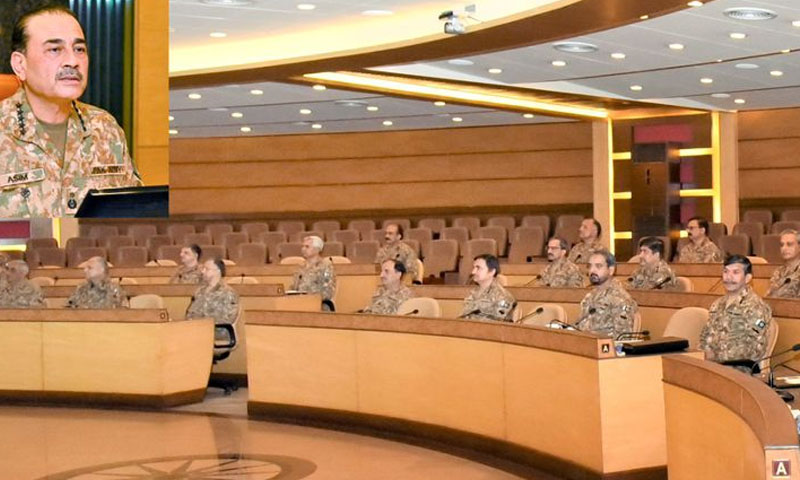
Pakistani military leaders convened on Tuesday at General Headquarters in Rawalpindi for the 275th Corps Commanders’ Conference, where they conducted a comprehensive review of the nation’s security landscape and ongoing counter-terrorism efforts.
The high-level meeting, chaired by Field Marshal Syed Asim Munir, began with a solemn tribute to fallen members of Pakistan’s armed forces, law enforcement agencies, and civilians who lost their lives defending the country. Military leadership emphasized that these sacrifices remain fundamental to Pakistan’s national security framework.
During the conference, Gen. Munir expressed satisfaction with the operational readiness and combat capabilities of Pakistan’s armed forces. He specifically commended commanders and formations for maintaining vigilance and effectively executing intelligence-based counter-terrorism operations across multiple regions.
The military leadership conducted an extensive assessment of the current security environment and reaffirmed their commitment to sustaining operational momentum. Their stated objective is to dismantle terrorist networks, degrade support infrastructure, and deny militant groups operational space within Pakistani territory.
The forum noted progress in disrupting terrorist networks under Operation Ghazab lil-Haq, Pakistan’s ongoing counter-terrorism campaign. However, military leaders expressed concern over what they described as the Afghan Taliban regime’s policy of providing safe havens to militant groups, including those referred to as “Khawarij.” Pakistan’s military establishment views these arrangements as destabilizing to regional security architecture and contrary to Afghanistan’s own national interests.
Military commanders also addressed what they characterized as coordinated disinformation campaigns falsely accusing Pakistan of targeting civilians in Afghanistan. The forum rejected these allegations, insisting that Pakistan’s defensive actions remain precise, targeted, and focused exclusively on terrorist hideouts and support systems. They described these narratives as attempts to deflect attention from governance challenges within Afghanistan.
The conference included analysis of evolving geopolitical dynamics affecting stability in South and West Asia. While emphasizing the importance of restraint and de-escalation, the military leadership reiterated Pakistan’s commitment to supporting diplomatic efforts aimed at preventing further deterioration of regional security.
Participants also marked the first anniversary of “Marka-e-Haq,” described as a defining moment in Pakistan’s national resilience. The military leadership characterized the event as a demonstration of national unity and unwavering commitment to sovereignty, using the term “Bunyanum Marsoos” (standing firm) to emphasize Pakistan’s resolve against internal and external challenges.
The forum strongly condemned what it described as human rights violations, extrajudicial killings, and demographic changes in Indian-administered Kashmir, referred to in Pakistani terminology as “Indian Illegally Occupied Jammu and Kashmir” (IIOJK). Military leaders reaffirmed Pakistan’s diplomatic, political, and moral support for Kashmiri people.
In concluding the conference, Gen. Munir directed commanders to maintain high vigilance, operational adaptability, and readiness across all domains. He emphasized the importance of strengthening integrated response mechanisms and professional excellence to address both conventional and emerging security challenges.
This high-level military conference comes amid ongoing security challenges for Pakistan, which continues to face threats from various militant groups along its western border with Afghanistan and tensions along its eastern border with India. The Pakistani military’s focus on counter-terrorism operations reflects the persistent nature of these security concerns despite years of military campaigns against militant organizations.
Fact Checker
Verify the accuracy of this article using The Disinformation Commission analysis and real-time sources.

6 Comments
Paying tribute to the sacrifices of fallen security personnel and civilians is a solemn reminder of the high price paid in the fight against terrorism. The military’s resolve to continue this battle is commendable.
It’s good to see Pakistani military leadership taking a firm stance against terrorist propaganda and vowing to dismantle terror networks. Maintaining vigilance and executing effective counter-terrorism operations is critical for national security.
The military’s commitment to sustaining operational momentum against militant groups is encouraging. Dismantling terrorist networks and denying them operational space is an important step in ensuring stability and security in the region.
Agreed. Proactive measures to degrade terrorist support infrastructure will be crucial in disrupting their activities.
Assessing the current security environment and reaffirming commitment to counter-terrorism efforts is a prudent move by the Pakistani military leadership. Maintaining operational readiness and capabilities is key to combating persistent threats.
The military’s commendation of commanders and formations for their vigilance and execution of counter-terrorism operations suggests a coordinated and effective approach. This is crucial for dismantling terrorist networks in the region.