


Listen to the article
Congress Spokesperson Defends ‘Dhurandhar’ Film Against Propaganda Claims
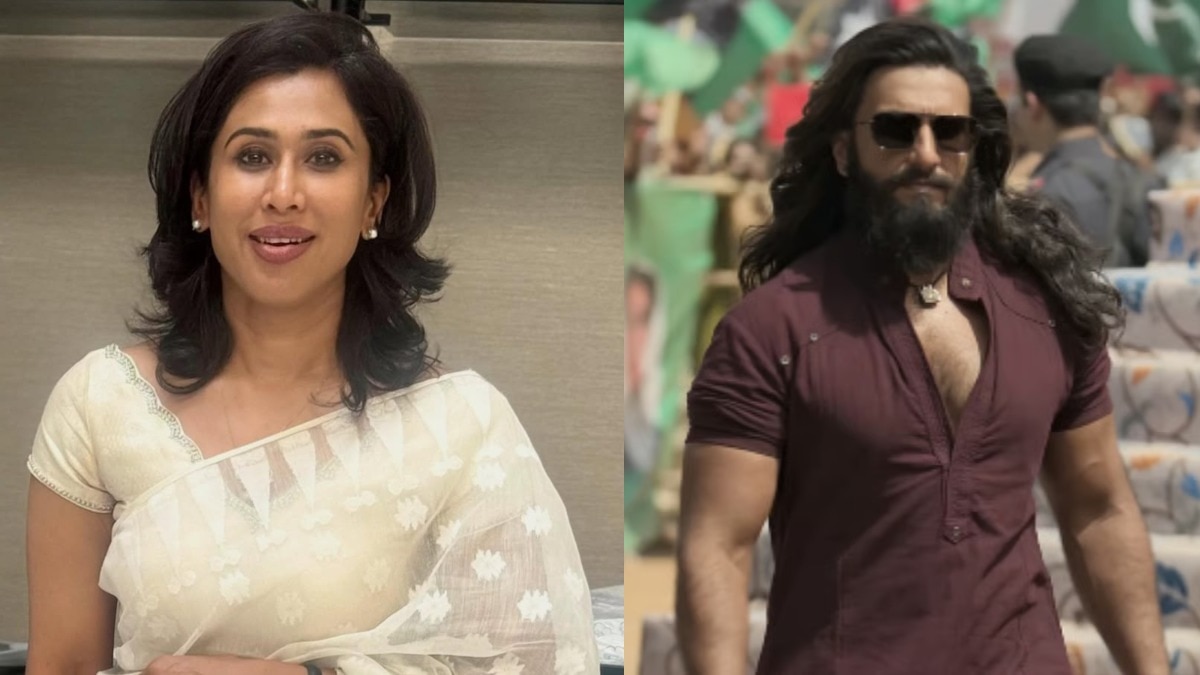
A heated exchange erupted on social media platform X when Congress spokesperson Shama Mohamed defended the blockbuster film “Dhurandhar Part 1” against accusations that it portrayed Muslims negatively.
The controversy began Thursday when Mohamed shared her positive review of the Aditya Dhar-directed spy thriller, praising its “excellent” direction. Her comments quickly drew criticism from a user named Shoaib Ali Mohammed, who identified himself as an IIT and IIM graduate.
“How can you post this, this propaganda movie showed muslims in bad light. Shame on you,” the user wrote in response to Mohamed’s initial post.
Mohamed forcefully rejected the characterization, making a clear distinction in her reply: “It did not show Muslims in bad light but Pakistanis in bad light! Shame on you for confusing the two.” She added, “People like you spoil the name of Muslims in India.”
As the exchange intensified, Mohamed suggested the critic should “leave India & take the citizenship of Pakistan” if he couldn’t differentiate between Pakistani characters and Muslims in general. This comment further escalated the argument, with the user responding, “Who the hell are you to tell me to move to pakistan. My great father fought for this country and all my great great grandfathers were son of this soil and not like you who have Mughals genes in their DNA.”
When another X user joined the discussion and questioned Mohamed for praising what they called a “propaganda” film, the Congress spokesperson referenced the history of terror attacks in India allegedly carried out by Pakistan and its intelligence agency ISI, stating that such activities “needed to stop.”
The debate highlights the ongoing tensions surrounding the film’s portrayal of cross-border relations. “Dhurandhar” follows the character Hamza Ali Mazari, played by Bollywood star Ranveer Singh, an undercover intelligence agent who infiltrates Pakistan’s underworld to dismantle terror networks.
The film has become a cultural flashpoint, with critics like popular YouTuber Dhruv Rathee labeling it “propaganda” and arguing that it blurs the line between fiction and political messaging. Rathee has suggested that the narrative deliberately mixes fictional storytelling with politically charged themes.
However, many industry voices have come to the film’s defense, emphasizing that “Dhurandhar” should be viewed as a creative work of fiction rather than political commentary. They maintain that filmmakers have the artistic license to explore complex geopolitical themes within the context of entertainment.
The franchise, consisting of “Dhurandhar Part 1 and 2,” features an ensemble cast including Akshay Khanna, Arjun Rampal, Sara Arjun, Sanjay Dutt, and Rakesh Bedi in key roles. The films have achieved remarkable commercial success, collectively grossing over Rs 3,000 crore globally, with the second installment still playing in theaters.
This controversy reflects broader tensions in Indian cinema regarding the portrayal of neighboring countries and religious communities. Films dealing with geopolitical conflicts, particularly those involving India-Pakistan relations, often become subjects of intense debate about representation, nationalism, and the responsibility of filmmakers when addressing sensitive topics.
As “Dhurandhar Part 2” continues its theatrical run, the discussion around its themes and portrayals is likely to remain a topic of public discourse, highlighting the powerful intersection between entertainment, politics, and social identity in contemporary India.
Fact Checker
Verify the accuracy of this article using The Disinformation Commission analysis and real-time sources.

16 Comments
Interesting debate around this film. While artistic portrayals can be sensitive, it’s important to distinguish between nationalities and religions. Reasonable people may have different perspectives on such complex topics.
I appreciate the Congress spokesperson’s effort to clarify the difference between Pakistanis and Muslims in general. These nuances are important to get right.
Debates around sensitive topics like this often generate more heat than light. I’d encourage all participants to approach the discussion with nuance, empathy and a commitment to understanding different perspectives, even if they disagree.
The spokesperson’s point about not conflating Pakistanis and Muslims is well taken. Maintaining these distinctions is crucial, even in the midst of passionate arguments.
This exchange highlights the complexity and emotion around issues of identity and representation in media. While reasonable people may disagree, I hope all sides can engage constructively and avoid personal attacks.
The spokesperson’s clarification about the film’s focus on Pakistanis rather than Muslims in general seems reasonable. Maintaining these distinctions is important, even in heated debates.
Artistic portrayals of sensitive topics often spark debate, and this exchange is no exception. While reasonable people may disagree, I hope all sides can engage constructively and avoid escalating rhetoric that obscures the real issues at hand.
The spokesperson’s point about distinguishing between nationalities and religions seems like a fair one. Maintaining these distinctions is crucial, even when emotions are running high.
This exchange highlights the need for responsible, fact-based dialogue on complex issues of identity and representation. While emotions may run high, it’s important to avoid personal attacks and focus on the substance of the claims.
The spokesperson’s clarification about the film’s portrayal of Pakistanis rather than Muslims more broadly seems like a reasonable attempt to provide context. Nuance is important, even in the midst of disagreement.
It’s understandable that portrayals of sensitive topics can be controversial. However, jumping to accusations of ‘propaganda’ without careful analysis seems premature. I’d encourage a more measured, fact-based approach from all sides.
The Congress spokesperson makes a fair point about distinguishing between nationalities and religions. Hopefully the debate can continue in a spirit of mutual understanding rather than escalating rhetoric.
This seems like a heated exchange with both sides making strong claims. I’d encourage looking at the film’s content objectively before rushing to conclusions about its portrayal of any group. Responsible dialogue is needed on sensitive issues.
Reasonable people can disagree, but resorting to personal attacks is unproductive. I hope the discussion can move in a more constructive direction focused on the merits of the film itself.
This debate highlights the complexities and sensitivities around media portrayals of identity and politics. While the exchange is heated, I encourage all parties to approach the discussion with nuance, empathy and a commitment to understanding different perspectives.
The spokesperson’s clarification about the film’s focus on Pakistanis rather than Muslims more broadly is a reasonable attempt to provide context. Maintaining these distinctions is important, even in the midst of passionate disagreement.