


Listen to the article
In a sharp escalation of political tensions, the Bharatiya Janata Party (BJP) has leveled serious allegations against the opposition Congress party, accusing it of orchestrating a coordinated disinformation campaign using fake social media accounts operated from foreign soil.
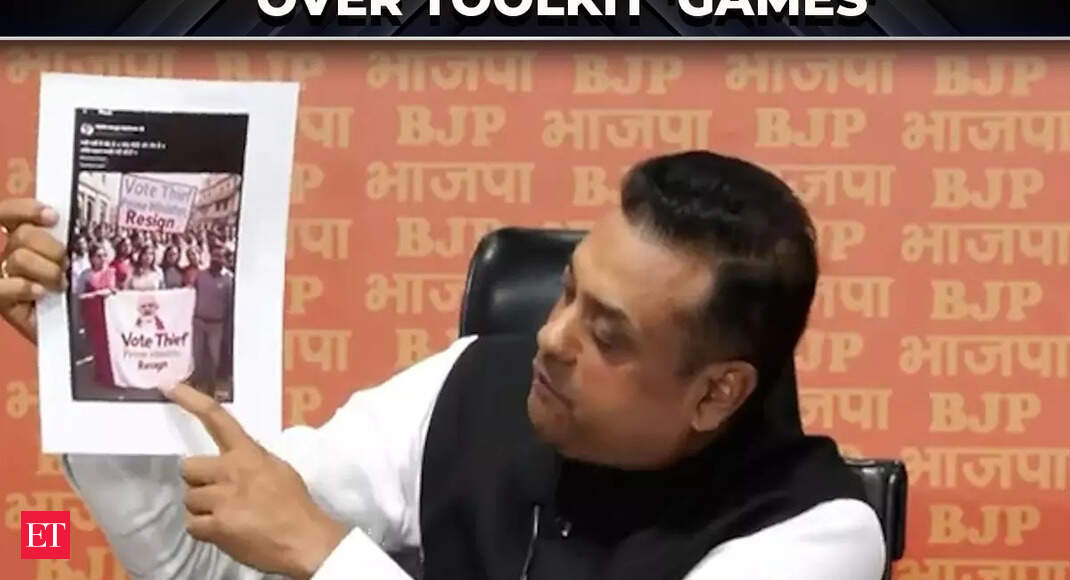
During a press conference, BJP National Spokesperson Sambit Patra claimed that Congress is systematically using social media accounts based in countries like the United States and Singapore to undermine the Indian government’s image and policies. Patra specifically highlighted one account allegedly belonging to “Pawan Khaira,” which he said is operated from the United States.
“There is a clear pattern in the way Congress is garnering its support, running this videshi (foreign) propaganda,” Patra stated, suggesting that these efforts represent a deliberate strategy rather than isolated incidents.
The BJP spokesperson went further, directly implicating Congress leader Rahul Gandhi’s team in what he described as a campaign designed to “insult India” on global platforms. According to Patra, these accounts systematically mock Indian government initiatives and policies to shape negative international opinion.
The allegations come amid growing concerns about the role of social media in political discourse in India, where platforms like Twitter, Facebook, and Instagram have become battlegrounds for political narratives. With over 700 million internet users, India represents one of the world’s largest digital audiences, making social media influence particularly significant during election cycles.
Digital disinformation has become a critical concern in Indian politics in recent years. The Election Commission of India has repeatedly warned against the spread of fake news and misinformation, especially during election periods. The current allegations touch on particularly sensitive issues of national sovereignty and foreign interference in domestic politics.
The BJP, which has maintained a strong nationalist position under Prime Minister Narendra Modi’s leadership, has frequently accused the Congress of undermining national interests. These latest accusations appear designed to portray the opposition as willing to collaborate with foreign entities to damage India’s reputation.
Congress has not yet issued a formal response to these specific allegations. However, the party has previously denied similar claims and has itself accused the BJP of operating massive disinformation campaigns through coordinated networks of supporters.
Political analysts note that these accusations reflect the increasingly contentious nature of Indian political discourse as the country approaches future elections. The focus on foreign-based accounts taps into nationalist sentiments that have proven effective in recent electoral cycles.
Social media platforms have struggled to address the issue of coordinated inauthentic behavior in the Indian political context. Despite introducing measures like account verification and labeling of political content, platforms continue to face challenges in distinguishing between legitimate political discussion and organized propaganda efforts.
The BJP’s allegations also raise questions about the regulation of political speech on social media in India. The government has previously introduced rules requiring social media companies to trace the originator of messages and remove content deemed harmful, though these measures have faced legal challenges over privacy concerns.
As digital campaigning becomes increasingly sophisticated, both major parties have invested heavily in their social media operations. Political communication experts suggest that accusations of foreign interference may become a recurring theme in Indian political rhetoric as parties attempt to delegitimize their opponents’ online support.
The controversy highlights the evolving nature of political campaigns in the world’s largest democracy, where traditional rallies and speeches now compete with digital messaging strategies that can reach millions instantly. Whether these allegations will result in formal investigations or regulatory changes remains to be seen.
Fact Checker
Verify the accuracy of this article using The Disinformation Commission analysis and real-time sources.

14 Comments
Allegations of foreign interference in domestic politics are always serious. However, it’s crucial that any investigation into this matter be conducted in a fair and transparent manner, without resorting to partisan rhetoric or unsubstantiated claims.
Absolutely. An objective, evidence-based inquiry is the best way forward. Maintaining public trust in the process will be key to finding a constructive resolution to this dispute.
While the BJP’s claims warrant close scrutiny, we must be cautious about drawing premature conclusions. Establishing the facts through rigorous, impartial analysis should be the priority, rather than engaging in political point-scoring.
Well said. Responsible governance requires setting aside partisan agendas and focusing on the truth, no matter which side it may implicate. A transparent investigation is the only way to resolve this issue credibly.
This controversy highlights the need for greater transparency and accountability around the use of social media platforms for political purposes. Both the BJP and Congress should work together to find bipartisan solutions that protect India’s democratic process.
Absolutely. A collaborative, good-faith effort to establish clear rules and enforcement mechanisms is essential. Resorting to partisan accusations will only deepen the divide and undermine public trust.
This controversy highlights the need for greater regulation and oversight of social media platforms, especially when it comes to cross-border political influence operations. Both sides should work together to find solutions that balance free speech and national security.
I concur. Tackling this issue will require a collaborative, bipartisan approach focused on establishing clear guidelines and enforcement mechanisms. The integrity of India’s democracy is at stake.
The use of foreign-based social media accounts to influence domestic politics is a worrying trend seen in many countries. India must address this challenge through robust cybersecurity and transparency measures, while upholding democratic principles.
Well said. Disinformation campaigns that leverage foreign platforms pose a real threat to the integrity of the political process. Strong safeguards are needed to protect India’s democracy.
The use of foreign-based social media accounts to influence domestic politics is a concerning global trend. India must address this challenge through robust cybersecurity measures and international cooperation, while upholding democratic principles.
I agree. Effective solutions will require a multifaceted approach involving policymakers, tech companies, and civil society. Safeguarding India’s democracy should be the top priority.
This is a serious allegation from the BJP. If proven true, it would represent a concerning abuse of social media to undermine the Indian government. However, we need concrete evidence before drawing conclusions. Unsubstantiated claims could further inflame political tensions.
I agree, we should avoid jumping to conclusions without a thorough investigation. Maintaining a level-headed, fact-based approach is crucial here.