


Listen to the article
European lawmakers and experts gathered yesterday for a panel discussion focused on the increasing threat of foreign influence in Europe, highlighting concerns over media manipulation, religious extremism, and the need for decisive action to protect European institutions.
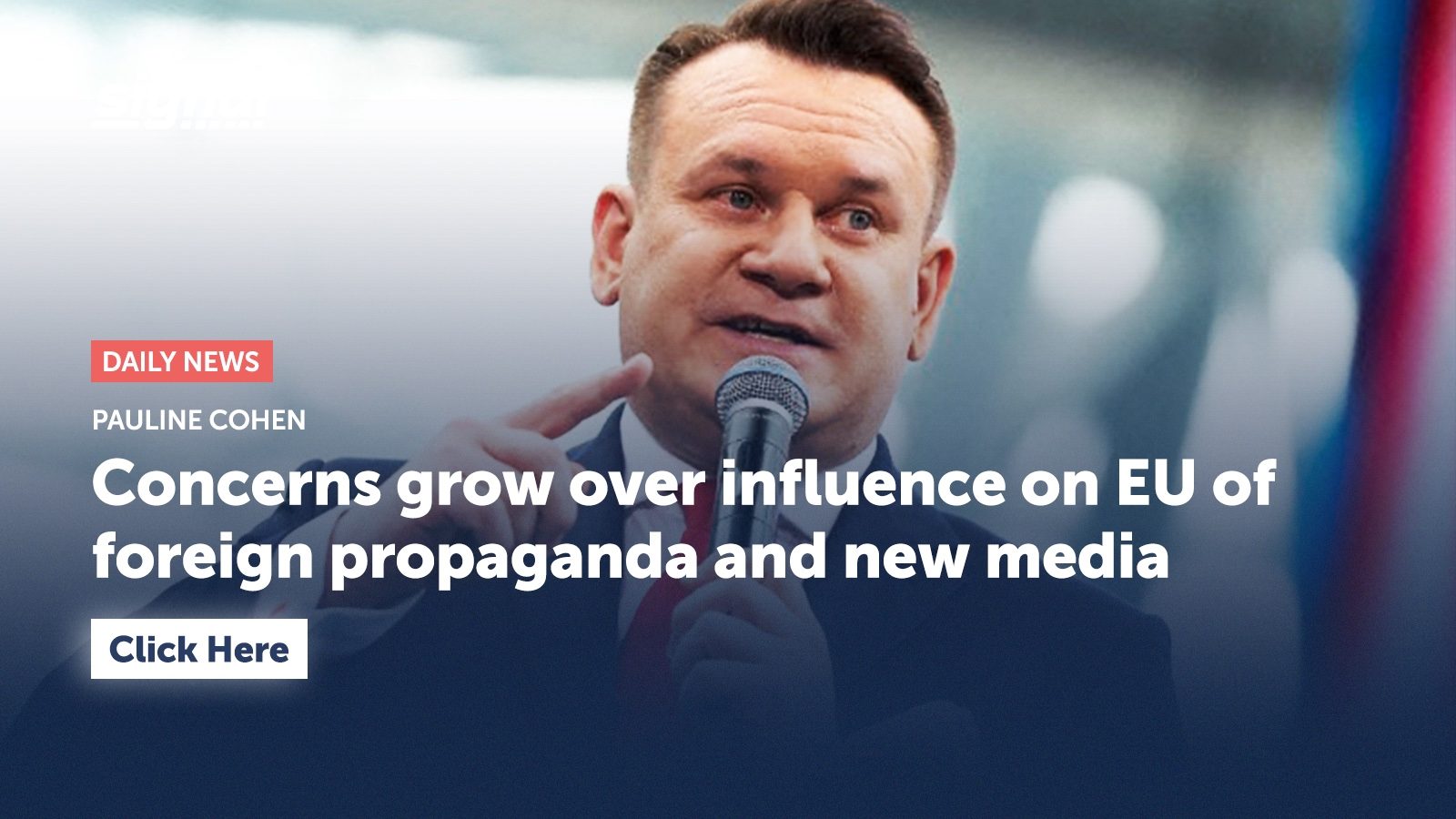
The event, “Stopping subversive foreign influence in Europe,” was hosted by MEP Dominik Tarczyński, who played a key role in uncovering the Qatargate scandal of 2022. Tarczyński set the tone by warning that European institutions have become targets for external interference through financial means, lobbying efforts, and media campaigns.
“We need to be brave, be open for the discussion, to fight for freedom and not to let another regime take over our mind and body. Be free!” Tarczyński told Brussels Signal on the sidelines of the event.
One of the most contentious topics during the discussion was Qatar-funded broadcaster Al Jazeera’s role in shaping European narratives. Several MEPs in attendance signed a letter calling for the network to be banned within the EU, arguing it should face restrictions similar to those imposed on Russian state broadcaster RT following Moscow’s invasion of Ukraine.
Religious leaders at the panel raised alarms about the spread of extremist ideologies across Europe. Two imams specifically warned about the influence of groups affiliated with the Muslim Brotherhood operating through certain mosques, educational institutions, and media platforms.
Imam Mohammad Tawhidi emphasized that signs of radicalization are increasingly visible across Europe. “We need tolerance, tolerance to criticism is also crucial. Dialogue is needed, differences are normal and don’t mean animosity,” he told Brussels Signal. Tawhidi added, “The EU needs to stand alongside Gulf states that are actively fighting Islamist attacks.”
In a particularly striking observation, Tawhidi noted that some Western expatriates are now relocating to the United Arab Emirates because they perceive it as safer than certain European cities – a sobering assessment of the security situation in parts of Europe.
Imam Hassen Chalghoumi echoed these concerns, stating: “The radicalisation is everywhere, that’s on the ground but also on social networks with influencers who influence only hate and division. This is a danger.” He further characterized Islamism as “a poison,” criticizing what he described as complicity from some political factions, particularly on the extreme left, with Islamist groups that “spread hate, antisemitism, and import conflicts from outside, notably Iran.”
The discussion also touched on Europe’s political future, with speakers suggesting that the 2027 French presidential election could significantly influence the continent’s direction. Throughout the event, participants emphasized that Europe must move beyond rhetoric to concrete action, with one speaker bluntly stating that “wishful thinking will not solve these problems.”
Panelists advocated for a balanced approach that prioritizes national security and citizen safety while preserving democratic values like freedom of speech. They also noted the evolving media landscape, where traditional political control over information is diminishing as independent journalists and digital content creators gain prominence.
British journalist and podcaster Andrew Gold, who participated in the panel, valued the opportunity to speak at the European Parliament. “Sometimes it feels like a closed shop, so this was a very good opportunity,” Gold told Brussels Signal, explaining that his podcast “provides a space without being concerned that we say the wrong thing, while being respectful…but inquisitive.”
Against a backdrop of increasing geopolitical tensions, including ongoing issues with Iran, participants stressed that foreign interference threatens not just EU institutions but impacts all European citizens. The consensus among speakers was that Europe faces a critical juncture requiring vigilance, coordination, and decisive action to protect its democratic foundations from external manipulation.
Fact Checker
Verify the accuracy of this article using The Disinformation Commission analysis and real-time sources.

14 Comments
This is a concerning development. It’s critical that European institutions remain free from foreign influence and manipulation. Protecting the integrity of the media landscape is essential for safeguarding democracy.
I agree, the threat of foreign interference through media channels is worrying. Decisive action is needed to ensure European values and institutions are not undermined.
This is a timely and important discussion. The influence of foreign-backed media outlets on European narratives is a serious issue that deserves careful scrutiny. Maintaining an independent, free, and fact-based media environment is crucial for a healthy democracy.
This is a complex issue that requires a balanced approach. While protecting against foreign interference is vital, we must also uphold the principles of free speech and press freedom. Careful consideration of the facts and potential consequences is needed.
The increasing threat of foreign influence through media manipulation is a complex and concerning issue. Lawmakers must strike a careful balance between protecting democratic institutions and upholding the principles of free speech and a free press. Rigorous, fact-based analysis is needed to develop an appropriate response.
While freedom of the press is a fundamental right, the potential for foreign actors to abuse media channels for propaganda and manipulation is deeply concerning. The panel’s call for action to protect European institutions is understandable and warrants serious consideration.
I agree, the integrity of the media landscape is essential for safeguarding democratic processes. Measures to address foreign interference through media channels should be pursued cautiously, while upholding core principles of press freedom.
While freedom of the press is crucial, we must be vigilant against foreign actors using media as a tool for manipulation and interference. The panel’s call for action to protect European institutions is understandable and deserves careful consideration.
The growing threat of foreign influence through media manipulation is deeply concerning. European lawmakers must act decisively to safeguard the democratic process and ensure citizens have access to reliable, unbiased information.
I share your concerns. Protecting the integrity of the media landscape should be a top priority for European institutions. A robust response is necessary to counter foreign efforts to undermine democratic values.
The role of Qatar-funded Al Jazeera in shaping European narratives is troubling. If the network is found to be engaging in propaganda, restrictions similar to those on RT seem warranted to protect the integrity of the information landscape.
Agreed, the potential for foreign-backed media outlets to sow disinformation and undermine democratic processes is a serious concern that requires a firm response.
The Qatargate scandal has rightly raised alarms about the need to safeguard European institutions from external influence. Increased scrutiny of foreign-backed media outlets and their potential role in shaping narratives is a prudent step.
Agreed, the integrity of the media landscape is essential for a healthy democracy. Rigorous oversight and transparency measures are necessary to ensure foreign powers cannot subvert the democratic process through information warfare.