


Listen to the article
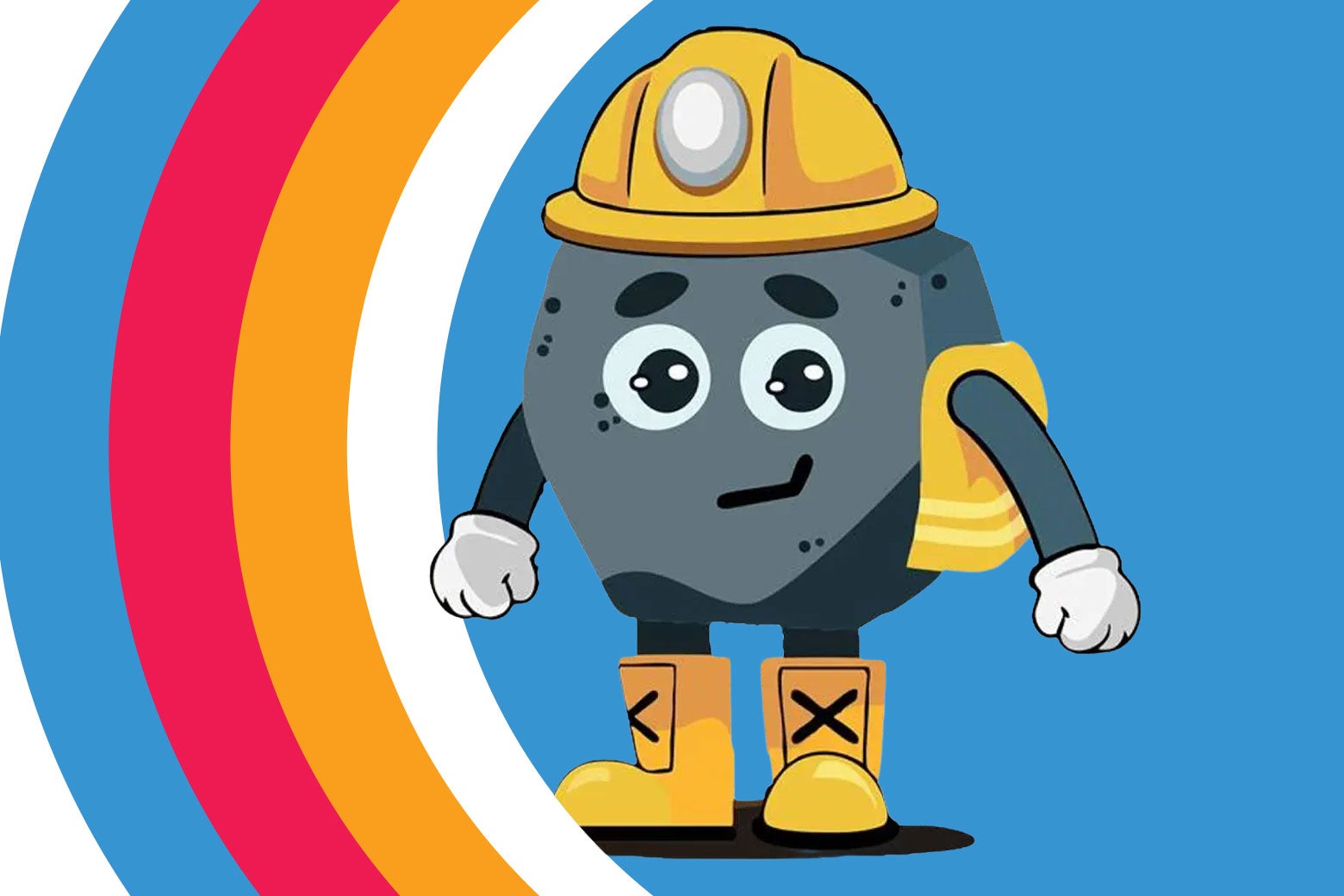
In a surprising turn of events, U.S. Secretary of the Interior Doug Burgum sparked widespread online reaction three weeks ago after sharing a social media post featuring himself posing with “Coalie” – a cartoon lump of coal with googly eyes, wearing a safety vest and hard hat. The anthropomorphized fossil fuel character quickly went viral, becoming the subject of ridicule across social media platforms, newsletters, and even late-night television.
Critics immediately branded Coalie as coal industry propaganda, designed to soften the image of a sector increasingly under scrutiny for its environmental impact. However, recent investigations reveal that the story behind this cartoonish mascot is considerably more nuanced, reflecting the complex reality federal employees face while navigating the current administration’s energy agenda.
According to Simone Randolph, Director of Communications for the Office of Surface Mining Reclamation and Enforcement (OSMRE), Coalie’s creation was not initially intended as a pro-coal mining mascot. This revelation offers a glimpse into the challenges government employees encounter as they attempt to fulfill their agency’s mission while adhering to shifting political priorities.
“The original intent behind Coalie was quite different from how it’s been perceived,” explained Sara Eckert, a former OSMRE employee familiar with the character’s development. “There’s a significant disconnect between the public reaction and the internal discussions that led to its creation.”
The timing of Coalie’s appearance is particularly notable as it coincides with significant policy shifts. A report from E&E News indicates that the mascot’s unveiling occurred alongside announcements of staff reductions and regulatory rollbacks affecting the coal industry’s oversight – creating what critics describe as a jarring juxtaposition between a friendly cartoon character and substantive policy changes with real-world implications.
Energy policy experts have expressed concern about the messaging strategy. “Using cartoonish characters to represent serious environmental and energy issues risks trivializing the complex challenges we face,” noted Leah Stokes, who researches climate and energy policy at the University of California, Santa Barbara and co-hosts the podcast “A Matter of Degrees.”
The controversy surrounding Coalie echoes similar debates about mascots in other contexts. In Japan, government and corporate entities have long employed cute characters like Kumamon to promote everything from tourism to nuclear power, sometimes raising questions about whether such approaches appropriately address serious topics.
For communities in coal country, the symbolism carries particular weight. The Appalachian region, for instance, has a complex relationship with coal mining – an industry that has provided economic livelihoods while also bringing environmental challenges and safety concerns, exemplified by historical tragedies like the Buffalo Creek disaster.
A document titled “10 Things to Know About How OSMRE Supports America’s Energy Legacy and Communities,” published by the agency itself, suggests an attempt to balance recognition of coal’s historical significance with the agency’s regulatory responsibilities – a balance that some observers feel Coalie’s cartoonish presentation undermines.
Industry analysts note that the mascot appears at a pivotal moment for coal in America. Despite the current administration’s supportive stance, market forces continue to challenge coal’s economic viability as cheaper natural gas and renewable energy alternatives gain ground. This makes the messaging strategy around coal particularly consequential for regions dependent on the industry.
“What might seem like a harmless mascot actually represents much larger questions about energy transition, economic development in coal communities, and the role of government in managing that process,” commented Daniel Raimi, an energy policy specialist consulted for this story.
As public discourse around Coalie continues, the mascot has become an unexpected focal point for broader discussions about energy policy communication, government transparency, and the challenges of public service during politically charged times.
For the employees of agencies like OSMRE, navigating these waters remains a daily challenge – balancing professional responsibilities with political realities, all while under the watchful googly eyes of an unexpectedly controversial cartoon coal mascot.
Fact Checker
Verify the accuracy of this article using The Disinformation Commission analysis and real-time sources.

8 Comments
Coalie seems like an odd choice for a mascot, given the coal industry’s troubled reputation. It will be interesting to see how this plays out and whether the public perceives it as an earnest attempt at transparency or simply a PR maneuver.
While I appreciate the government’s perspective on Coalie, I can’t help but wonder if this is still part of a larger effort to prop up the coal industry in the face of increasing pressure to transition to cleaner energy sources.
This ‘Coalie’ character seems like a rather strange attempt to humanize the coal industry. I’m curious to learn more about the nuances behind its creation and whether it’s truly just an innocent mascot or part of a broader propaganda effort.
While the coal industry certainly faces challenges, I’m not sure a cutesy cartoon mascot is the best way to address its environmental impact. It could come across as an attempt to gloss over the industry’s significant environmental footprint.
The coal industry’s environmental impact is well documented, so I’m a bit skeptical of this attempt to soften its image. However, I’m curious to learn more about the nuances and intent behind Coalie’s creation.
Interesting to see the government agency’s perspective on how Coalie was developed. It highlights the delicate balance federal employees must navigate between mission and politics. I wonder how effective this mascot will ultimately be in shaping public perceptions.
Mascots can be a double-edged sword – they can humanize an industry but also risk trivializing serious issues. It will be important to see if Coalie is used responsibly to educate rather than simply as a PR stunt for the coal sector.
The coal industry faces significant challenges, both environmental and economic. I’m curious to see if Coalie can effectively address these issues or if it will be viewed as little more than a clumsy attempt at image rehabilitation.