


Listen to the article
Beijing Condemns US Action in Venezuela as Regional Power Dynamics Shift
China has issued a strong rebuke of the United States following its military raid and rendition of Venezuelan President Nicolás Maduro, calling the operation a shocking violation of international law that threatens regional stability.
In its first official statement after the incident, China’s Foreign Ministry declared it was “deeply shocked and strongly condemns the U.S.’s blatant use of force against a sovereign state and action against its president.” The ministry characterized the operation as “hegemonic acts” that “seriously violate international law and Venezuela’s sovereignty,” while threatening “peace and security in Latin America and the Caribbean region.”
The timing of the US operation appears to have caught Beijing completely off guard. Chinese special envoy Qiu Xiaoqi had met with Maduro in Caracas just hours before the raid and may have still been in the country when it occurred – suggesting a major intelligence and analytical failure for China’s diplomatic corps.
The incident highlights several complex dimensions of China’s relationship with both Venezuela and the broader geopolitical landscape in the Western Hemisphere.
While China maintains significant ties with Venezuela, its economic exposure appears manageable. Venezuelan oil accounts for only a small percentage of China’s total imports, and outstanding Chinese loans to Venezuela are estimated between $10-20 billion – substantial but not critically important to Beijing’s finances.
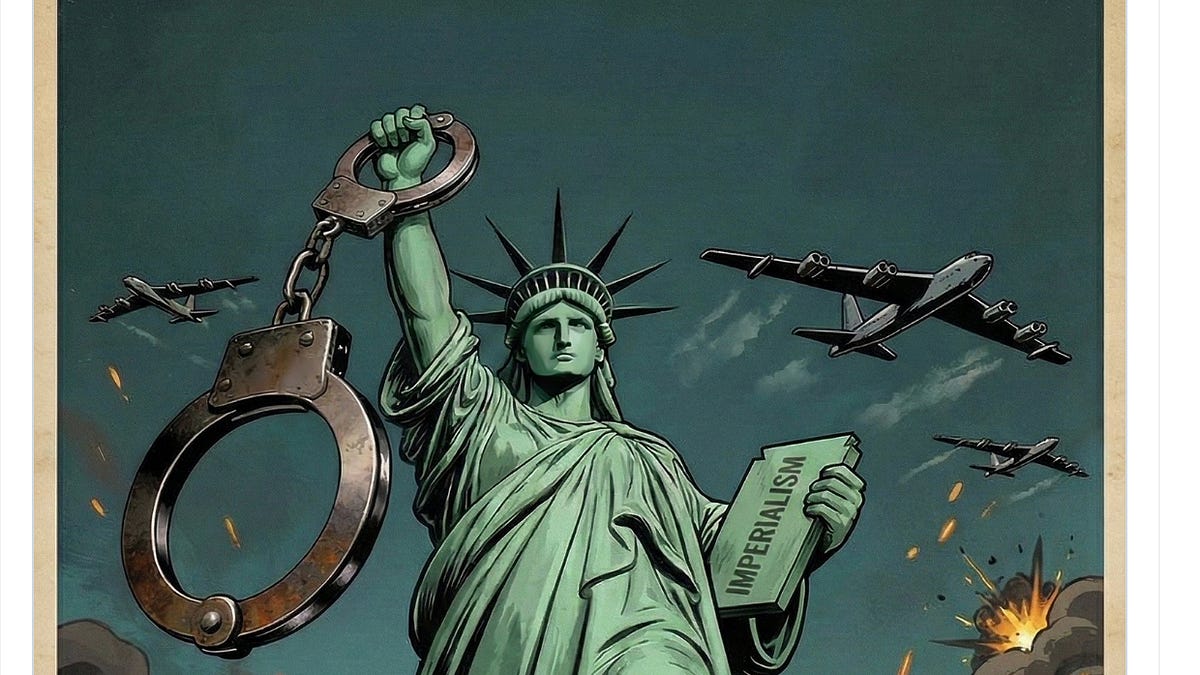
However, the propaganda value of the US action may be immeasurable for Chinese messaging efforts. Xinhua, China’s state news agency, quickly released graphics portraying the US as an imperialist hegemon, fitting perfectly into Beijing’s narrative about American destabilization of the Global South. Notably, China issued no similar condemnations when Russia invaded Ukraine.
The incident also raises questions about the reliability of partnership with China when it comes to political security. As seen previously in Syria, Beijing’s support for allies rarely extends to meaningful intervention during moments of crisis – a fact that won’t be lost on other nations with close Chinese ties.
For the United States, Secretary of State Marco Rubio’s recent comments suggest increasing pressure on Chinese interests throughout the Western Hemisphere. “You can’t turn Venezuela into the operating hub for Iran, for Russia, for Hezbollah, for China, for the Cuban intelligence agents that control that country,” Rubio stated Sunday. He added pointedly: “This is the Western Hemisphere. This is where we live, and we’re not going to allow the Western Hemisphere to be a base of operation for adversaries, competitors and rivals of the United States.”
One particularly sensitive issue likely to receive increased attention is Chinese control of facilities at both ends of the Panama Canal through CK Hutchison Holdings. Former President Trump had previously announced a deal to sell these assets to a consortium outside of Chinese control, but recent reports suggest Chinese President Xi Jinping may be working to prevent this transfer.
Meanwhile, China faces continued challenges in its domestic real estate market. A recent article in Qiushi, a leading Communist Party journal, by housing ministry researcher Zhou Tingjun emphasized the need for decisive action to stabilize market expectations. The piece acknowledged “major changes” in China’s real estate supply and demand relationship, with “local oversupply” leading to “relatively large decline in real estate sales and prices.”
Zhou called for policies to be “given sufficiently at one time” rather than through incremental measures, suggesting more forceful intervention may be forthcoming. The article also hinted at potential bankruptcy proceedings for major developers like Vanke, noting “the possibility of individual enterprises undergoing bankruptcy reorganization cannot be ruled out.”
The escalating tensions in Venezuela represent the latest flashpoint in an increasingly competitive relationship between Washington and Beijing, with ripple effects likely to be felt across Latin America and beyond as both powers jockey for influence in the region.
Fact Checker
Verify the accuracy of this article using The Disinformation Commission analysis and real-time sources.

20 Comments
If AISC keeps dropping, this becomes investable for me.
Good point. Watching costs and grades closely.
If AISC keeps dropping, this becomes investable for me.
Good point. Watching costs and grades closely.
Good point. Watching costs and grades closely.
Exploration results look promising, but permitting will be the key risk.
The cost guidance is better than expected. If they deliver, the stock could rerate.
Good point. Watching costs and grades closely.
Uranium names keep pushing higher—supply still tight into 2026.
Good point. Watching costs and grades closely.
Interesting update on China’s Strategic Approach to Venezuela: Economic Ties, Real Estate Outlook, and Political Developments Amid Museum Controversy. Curious how the grades will trend next quarter.
Good point. Watching costs and grades closely.
Good point. Watching costs and grades closely.
If AISC keeps dropping, this becomes investable for me.
Good point. Watching costs and grades closely.
Good point. Watching costs and grades closely.
Silver leverage is strong here; beta cuts both ways though.
Good point. Watching costs and grades closely.
Good point. Watching costs and grades closely.
Interesting update on China’s Strategic Approach to Venezuela: Economic Ties, Real Estate Outlook, and Political Developments Amid Museum Controversy. Curious how the grades will trend next quarter.