


Listen to the article
China Expands State Media Presence in Tibet as Independent Broadcasters Falter
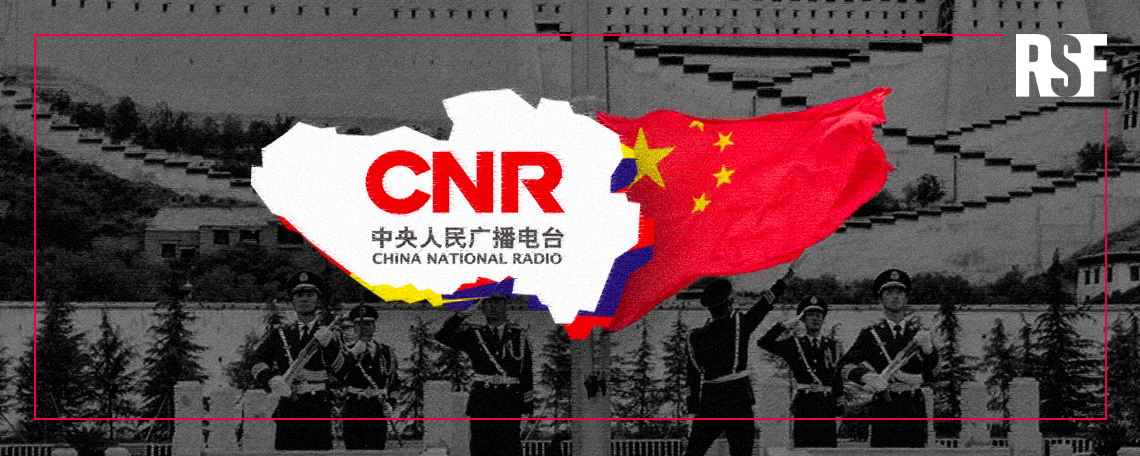
Chinese state media has significantly increased its Tibetan-language programming as part of a broader strategy to strengthen the government’s information control in the Tibet Autonomous Region, according to statements from high-ranking Chinese officials.
Shen Haixiong, Deputy Head of the Publicity Department of the Chinese Communist Party and Head of the China Media Group, framed this expansion as an effort to ensure “the leader’s [Xi Jinping’s] thoughts penetrate the hearts of people of different ethnicities like a shower of honey.” Shen made these remarks during the 75th-anniversary celebration of state-run Chinese Tibetan Radio in May 2025.
The timing of this media expansion coincides with the suspension of Tibetan-language services from Radio Free Asia (RFA) and Voice of America (VOA), which have long served as critical alternative information sources for Tibetans. These U.S.-funded broadcasters have historically provided coverage of human rights issues and cultural affairs not available in Chinese state media.
“With the current suspension of VOA and RFA Tibetan services, and the expansion of Chinese state-media coverage, Tibetans inside Tibet say they are ‘missing their morning breakfast,'” said Kalsang Jigme, founder of the independent Tibet Radio and a former VOA Tibetan reporter.
Tibet has long been described by press freedom advocates as an “information black hole” within China, with authorities maintaining particularly tight controls over news and communication. Foreign journalists are routinely denied access to the region, and local sources risk severe punishment for sharing information with outside media organizations.
The information vacuum has worsened as Chinese authorities implement additional measures to restrict access to non-state media. In Tibet’s Ngari prefecture, private satellite reception equipment has been banned outright. According to official statements, the government has already installed over 3,500 state-controlled satellite television sets across 17 villages in Coqên County alone.
These installations are part of a larger plan to place government-controlled satellite receivers in all 74 county-level administrative divisions across Tibet by the end of 2025. This infrastructure ensures that rural and nomadic households can only access state-approved broadcasts.
Palden Gyal, former deputy director of RFA’s Tibetan services, explained the strategic implications to Reporters Without Borders (RSF): “The recent suspension of these services has allowed the Chinese Government, through the expansion of its own media outlets, to intensify efforts to promote its policies and ideology to win the hearts of Tibetans — something it has been unable to achieve in the past. In any information war, if one side is not present, the other side has free rein.”
The media situation in Tibet reflects China’s broader approach to journalism under President Xi Jinping’s leadership, which began in early 2012. During the past decade, the Chinese government has drastically tightened control over domestic media while simultaneously investing heavily in expanding its international media footprint.
The state-owned television network China Global Television Network (CGTN) now broadcasts in more than 160 countries, with online news services available in 43 languages. This expansion continues unabated amid legal and political uncertainty surrounding the future of U.S. Agency for Global Media (USAGM)-funded broadcasters like RFA and VOA.
China currently ranks 178th out of 180 countries and territories in the 2025 RSF World Press Freedom Index, reflecting its highly restrictive media environment. According to RSF, China remains the world’s largest jailer of journalists, with 123 currently detained for their work.
The ongoing media transformation in Tibet highlights the Chinese government’s determination to control information flows in sensitive regions while shaping domestic and international narratives through its expanding state media apparatus.
Fact Checker
Verify the accuracy of this article using The Disinformation Commission analysis and real-time sources.
