


Listen to the article
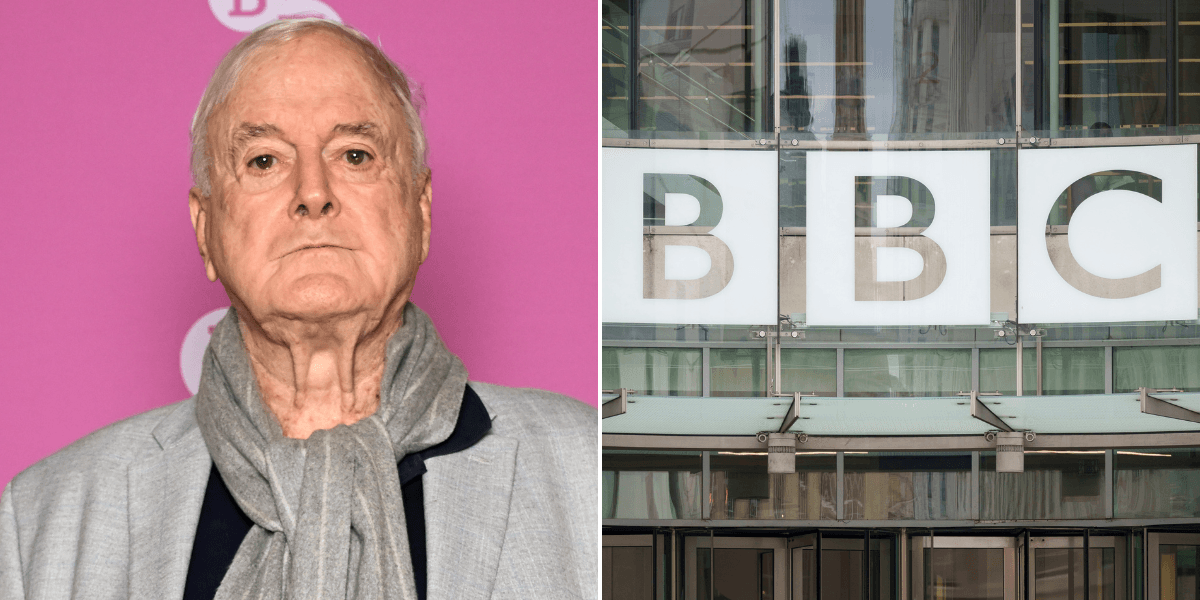
John Cleese has launched a scathing attack on the BBC, calling for a complete leadership overhaul at the British broadcasting institution where he once found fame. The former Monty Python star and Fawlty Towers creator has intensified his criticism of the corporation’s editorial decisions and news coverage priorities.
Cleese’s latest outburst came in response to what he perceived as inadequate reporting of a Russian drone strike on a Ukrainian passenger train. According to Ukrainian President Volodymyr Zelensky, at least five people were killed in the attack, which he described as an “act of terrorism.”
The veteran comedian took to social media platform X after a user commented: “If Ukraine hit a train full of Russian civilians, it would be all over world news this morning. But when Russia hits a train full of Ukrainian civilians, it’s just another Wednesday. We have a sick world because our media is sick.”
Cleese sarcastically responded: “True, but the BBC has a very good item on migraines, and another on a gay romcom TV show,” implying the broadcaster was focusing on trivial matters while neglecting significant international news.
His criticism extended to the BBC’s coverage of protests in Iran. Responding to a user who questioned why the BBC was ignoring the situation in Iran, and another who branded the omission of Iranian protests from Monday’s BBC News at Six as “an absolute disgrace,” Cleese made his position clear.
“I think we need a BBC, but a fresh one with most of the senior executives cleared out,” he wrote. “And a clear statement that the BBC’s primary duty is to inform and entertain the British public, not to engage in subversive social engineering and political propaganda.”
The protests in Iran, which began last month over the country’s deteriorating economic situation, have grown into a significant movement challenging the government. Critics argue that such major international developments deserve prominent coverage from an institution like the BBC, which has a global reputation for news reporting.
Cleese’s comments quickly resonated with many of his followers on social media. One supporter wrote: “God bless you for this remark. The BBC is what’s happened to nearly all of our media in the US. Entertainment ended with Monty Python. I dearly miss it!” Another added: “The rot is too deep, John, and it isn’t just the BBC.”
Some users went further, questioning the very existence of the public broadcaster. “I do not believe that we need a state broadcaster financed from a compulsory licence fee. The BBC was ideologically captured decades ago,” one person commented. Another simply suggested: “Defund it and if they don’t do their jobs, they will go broke.”
However, not everyone agreed with the comedian’s assessment. A self-identified Texan defended the institution: “I have so much love for the BBC. I hope they get through these days and find their mission again.”
Cleese’s relationship with the BBC has a complex history. The corporation was instrumental in launching his career, first with Monty Python’s Flying Circus in the late 1960s and then with the beloved sitcom Fawlty Towers in the 1970s. Both programs are considered classics of British comedy and cemented Cleese’s status as one of the UK’s most celebrated comedians.
Yet in recent years, he has become increasingly vocal about what he perceives as the broadcaster’s editorial bias and programming decisions. His latest comments represent one of his most direct calls for structural change at the organization.
The BBC has not yet responded publicly to Cleese’s remarks. GB News, which reported on the comedian’s comments, has contacted the BBC for comment.
Fact Checker
Verify the accuracy of this article using The Disinformation Commission analysis and real-time sources.

8 Comments
While the BBC has faced criticism before, Cleese’s scathing attack highlights the urgency for the broadcaster to re-evaluate its priorities and renew its commitment to quality, impactful journalism.
While the BBC has a storied history, Cleese’s criticism highlights the need for the institution to adapt and renew its approach to news reporting. Maintaining public trust requires balanced, timely coverage of major events.
Absolutely. The BBC must evolve to remain a credible, relevant source of information in today’s media landscape.
Cleese’s comments raise valid questions about the BBC’s editorial priorities and the potential impact of its news coverage decisions. As a public broadcaster, the BBC has a responsibility to inform citizens, not distract them.
The BBC’s perceived bias and failure to prioritize major world events like the Russian drone attack on a Ukrainian train is concerning. Cleese raises a fair point about the broadcaster’s focus on trivial matters over substantial international news.
I agree. The BBC should strive for impartial, comprehensive coverage of critical global issues, not just ‘migraines and gay romcoms’.
The BBC’s role as a respected global news source is being challenged. Cleese’s critique suggests the broadcaster may need a leadership overhaul to regain its reputation for impartial, comprehensive reporting.
I’m curious to see if the BBC will address these concerns and implement changes to better serve its audience with substantive, unbiased news coverage.