


Listen to the article
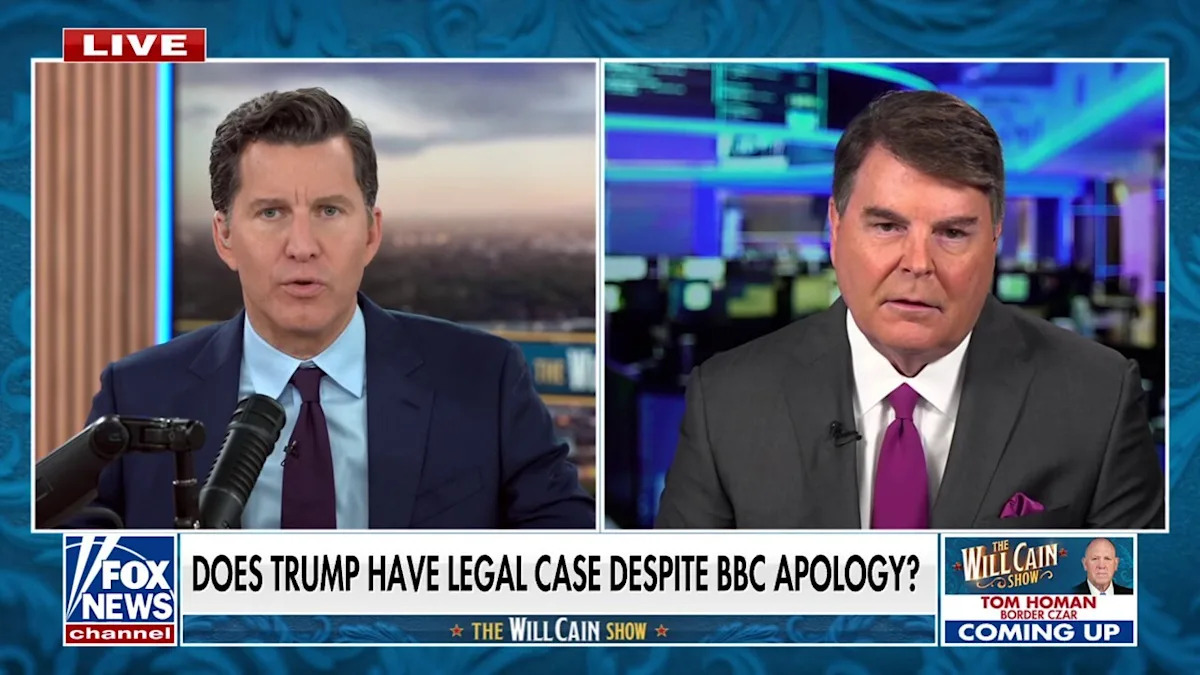
In a scathing rebuke that has intensified the ongoing media ethics debate, legal analyst Gregg Jarrett has characterized a defamation claim against the British Broadcasting Corporation (BBC) as “dishonest propaganda journalism at its worst,” marking the latest chapter in growing scrutiny of journalistic standards at the public broadcaster.
Jarrett, known for his commentary on legal affairs, delivered his assessment amid rising tensions between media watchdogs and the BBC, which has faced mounting criticism over its reporting practices in recent months. The defamation claim, which remains under legal review, has become a lightning rod for broader discussions about media accountability and editorial responsibility.
“What we’re witnessing here isn’t just a one-off incident but potentially indicative of systemic issues in how some major news organizations approach controversial stories,” said Jarrett during an extended interview. He argued that the case exemplifies a troubling pattern of what he describes as selective reporting designed to shape rather than inform public opinion.
The BBC, founded in 1922 and funded primarily through license fees paid by British households, has long positioned itself as a global standard-bearer for impartial journalism. With operations in over 200 countries and territories worldwide, its international reputation has historically been built on principles of accuracy and fairness.
Media experts suggest this case could have far-reaching implications beyond the immediate legal dispute. Professor Eleanor Harwood of the Columbia School of Journalism notes, “When an institution with the BBC’s global reach faces allegations of this nature, it inevitably prompts questions about trust in media more broadly. These controversies don’t exist in isolation.”
The specific content of the alleged defamation involves reporting on a politically sensitive issue, though both parties have limited public discussion of details while legal proceedings continue. Court documents indicate the complaint centers on a documentary segment aired last year that allegedly contained factual inaccuracies about a public figure.
Industry analysts point out that defamation cases against major media organizations have increased substantially over the past decade. According to the Media Law Resource Center, such lawsuits have risen by approximately 35% since 2015, reflecting both growing public skepticism toward traditional news sources and an increasingly polarized information environment.
“The standards for proving defamation vary significantly between countries,” explains media law attorney Jonathan Rafferty. “In the UK, the burden of proof typically falls more heavily on publishers than in the United States, making these cases particularly consequential for organizations like the BBC.”
The BBC has responded to the allegations with a statement defending its journalistic practices: “We stand by our reporting and maintain that our coverage adheres to the highest standards of accuracy and impartiality. We take any allegations to the contrary with the utmost seriousness and have robust editorial processes in place.”
This controversy emerges against a backdrop of transformative change in the media landscape. Traditional broadcasters like the BBC face unprecedented challenges from digital platforms, declining public trust, and financial pressures that some critics argue may influence editorial decisions.
Media ethics researcher Dr. Sophia Martinez suggests this case reflects broader tensions: “We’re seeing increasing friction between traditional journalistic values and the demands of a media environment that rewards engagement above all else. Even venerable institutions aren’t immune to these pressures.”
The case has drawn attention from press freedom advocates who caution against using individual controversies to undermine the essential role of independent journalism. “Scrutiny of media is healthy and necessary,” says International Press Institute spokesperson Thomas Reynolds. “However, we must distinguish between legitimate criticism and opportunistic attempts to delegitimize journalism as an institution.”
As the legal process unfolds, both media observers and the public will be watching closely for implications regarding journalistic standards, accountability mechanisms, and the future of public service broadcasting in an era of diminishing trust in institutions.
The BBC has confirmed it will continue to cooperate with all legal proceedings while maintaining its regular broadcasting operations across its domestic and international services.
Fact Checker
Verify the accuracy of this article using The Disinformation Commission analysis and real-time sources.

20 Comments
The cost guidance is better than expected. If they deliver, the stock could rerate.
Exploration results look promising, but permitting will be the key risk.
Good point. Watching costs and grades closely.
Good point. Watching costs and grades closely.
Exploration results look promising, but permitting will be the key risk.
Good point. Watching costs and grades closely.
I like the balance sheet here—less leverage than peers.
Good point. Watching costs and grades closely.
I like the balance sheet here—less leverage than peers.
Good point. Watching costs and grades closely.
The cost guidance is better than expected. If they deliver, the stock could rerate.
Production mix shifting toward Propaganda might help margins if metals stay firm.
Good point. Watching costs and grades closely.
If AISC keeps dropping, this becomes investable for me.
Uranium names keep pushing higher—supply still tight into 2026.
Production mix shifting toward Propaganda might help margins if metals stay firm.
Good point. Watching costs and grades closely.
Good point. Watching costs and grades closely.
Nice to see insider buying—usually a good signal in this space.
Good point. Watching costs and grades closely.