


Listen to the article
Pakistani military propaganda campaign against BNM leadership sparks backlash amid EU trade status controversy
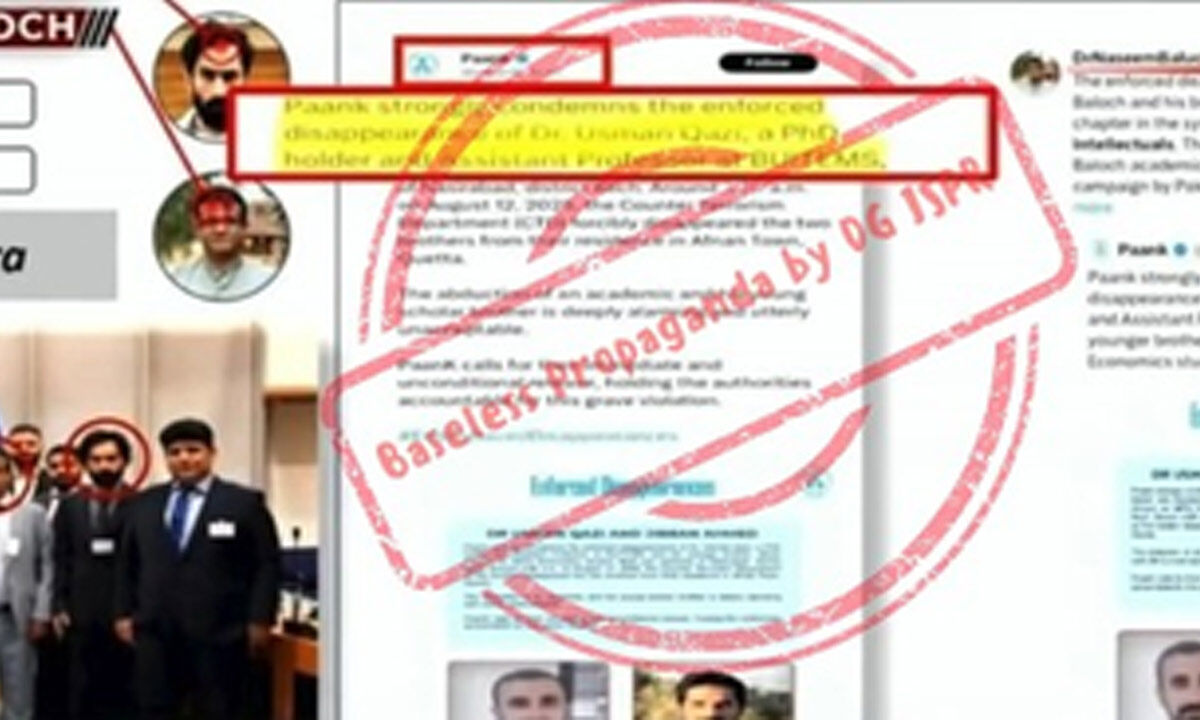
The Baloch National Movement (BNM) has issued a forceful condemnation of what it describes as a “baseless propaganda campaign” orchestrated by the Pakistani military against its leadership. The controversy unfolds as the BNM actively campaigns against Pakistan’s preferential trade status under the European Union’s Generalised Scheme of Preferences Plus (GSP+) program.
According to the BNM, the Pakistani Army is employing both traditional oppressive tactics and sophisticated disinformation strategies against the Baloch independence movement. The rights organization alleges that beyond the direct human rights violations occurring in Balochistan, Pakistani authorities are conducting media trials and implementing “fifth-generation warfare doctrine” to spread false narratives about BNM leaders.
“The objective of this propaganda is not only to generate negative opinion on social media regarding the Baloch movement, but also to create serious and tangible difficulties for peaceful political activists both inside the country and abroad,” the BNM stated in its official response. The organization emphasized that Pakistan’s military has a documented history of targeting political opponents beyond its borders, including attempted assassinations of BNM members in neighboring and Western countries.
The BNM took particular issue with allegations made by Major General Ahmed Sharif, Director General of the Inter-Services Public Relations (ISPR), the official media wing of Pakistan’s Armed Forces. According to the BNM, Major General Sharif falsely accused the movement’s leader, Naseem Baloch, of involvement in armed activities, when in reality, Baloch advocates for freedom through peaceful political channels.
“We categorically reject this false and malicious propaganda against him,” the BNM declared.
The escalating tension comes amid the BNM’s intensified campaign across Europe to highlight what they characterize as the incompatibility of Pakistan’s GSP+ trade privileges with its ongoing human rights violations in Balochistan. The GSP+ program provides developing nations with preferential access to EU markets, contingent upon implementation of international conventions on human and labor rights.
The BNM claims that as their advocacy gained momentum in European political circles, Pakistani authorities ramped up propaganda efforts specifically targeting the organization. “Pakistan has a long-standing practice of portraying victims as criminals and the oppressed as oppressors,” the BNM stated, urging European institutions to recognize these tactics as part of a larger pattern of state repression.
The situation in Balochistan has long been a contentious issue, with international human rights organizations documenting cases of enforced disappearances, extrajudicial killings, and military operations affecting civilian populations. The resource-rich western province has been the site of a low-intensity insurgency for decades, with separatist groups demanding independence or greater autonomy from Islamabad.
For Pakistan, maintaining GSP+ status is economically crucial, particularly for its textile sector, which accounts for a significant portion of the country’s exports to European markets. The EU’s periodic reviews of Pakistan’s eligibility for the program have increasingly highlighted human rights concerns, creating leverage for advocacy groups like the BNM.
Despite the intensifying pressure campaign from Pakistani authorities, the BNM declared it would not be intimidated into silence. “The Baloch people will not be deceived by such tactics,” the organization stated, framing the Pakistani military’s information operations as harassment and vowing to continue confronting the government “at every level.”
The dispute highlights the growing importance of information warfare in geopolitical conflicts and the increasing scrutiny that preferential trade agreements face when linked to human rights conditions in beneficiary countries.
Fact Checker
Verify the accuracy of this article using The Disinformation Commission analysis and real-time sources.

12 Comments
The Baloch National Movement’s accusations against the Pakistani military’s propaganda campaign are troubling. If true, the use of sophisticated disinformation tactics to undermine legitimate political activists is a concerning abuse of power.
I agree. The Baloch people’s right to self-determination and freedom of expression should be respected, not suppressed through state-sponsored propaganda. This situation deserves close international scrutiny.
This news highlights the complex geopolitics and ethnic tensions in the region. While I can’t verify the specifics, the alleged propaganda campaign by the Pakistani military is concerning. Transparency and accountability are crucial here.
Absolutely. The Baloch people have long faced challenges, and their movement for autonomy deserves to be heard without state-sponsored misinformation campaigns.
The BNM’s accusations against the Pakistani military raise serious questions about the treatment of the Baloch people and their right to self-determination. Alleged human rights abuses and media trials are disturbing, if true.
Agreed. The Baloch situation deserves closer international attention, especially with the EU trade status in play. Suppressing political activists through disinformation is unacceptable.
The Baloch National Movement’s condemnation of the Pakistani military’s tactics raises alarm bells. If true, the use of disinformation to undermine political activists is a troubling abuse of power that warrants close scrutiny.
I agree. Suppressing dissent through propaganda rather than addressing the substantive grievances of the Baloch people is an unacceptable approach for any government.
This is concerning to hear about the alleged propaganda campaign against the Baloch National Movement. Spreading disinformation to undermine legitimate political activists is a troubling tactic. I hope the international community scrutinizes these claims closely.
I agree, the use of ‘fifth-generation warfare’ tactics is very worrying. Governments should not be employing sophisticated propaganda to suppress dissent and independence movements.
This news highlights the ongoing tensions and human rights concerns in the Balochistan region. The BNM’s allegations of a coordinated propaganda campaign by the Pakistani military are serious and deserve a thorough, impartial investigation.
Absolutely. The Baloch people have long faced oppression, and the use of disinformation tactics to silence their political movement is deeply concerning. Transparency and accountability are crucial in this case.