


Listen to the article
Beyond Politics: Bad Bunny’s Super Bowl Performance Blends Cultural Pride and Musical Power
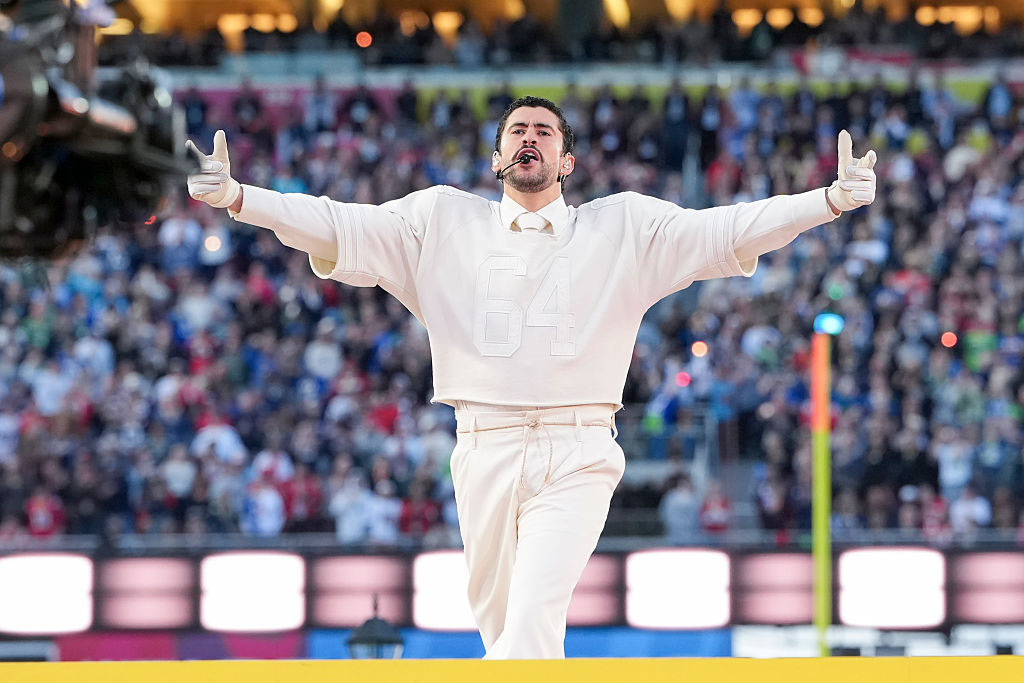
There are two distinct lenses through which to view Bad Bunny’s Super Bowl halftime show, where the Puerto Rican superstar performed almost entirely in Spanish before millions of viewers worldwide.
Some critics, like Commentary’s Abe Greenwald, interpreted the performance as overtly political, describing it as “a mini musical about labor exploitation, American colonialism, social inequity, Latin American pride, and Puerto Rican independence.” According to Greenwald, the performance was designed to “troll MAGA and own the right.”
Yet for many viewers, including those without Spanish language skills, the experience transcended politics entirely. At a private Super Bowl party in Beverly Hills, guests responded to the performance with spontaneous dancing and celebration, connecting with the music despite language barriers.
This disconnect highlights the unique power of music to communicate across cultural and linguistic divides. The performance featured rich cultural imagery—sugar cane fields, rural farmers in straw hats, men playing dominoes, a shaved ice stand, and an impromptu wedding scene—all representing authentic aspects of Puerto Rican life and tradition.
The timing of Bad Bunny’s performance was particularly significant, coming amid heightened tensions surrounding immigration policies and ICE raids. However, rather than delivering a strident political message, Bad Bunny (born Benito Antonio Martínez Ocasio) chose to showcase Latin joy and cultural pride through his artistry.
Music industry analysts note that Bad Bunny’s approach represents a sophisticated evolution in how artists blend entertainment with social commentary. His ability to express deeply held political convictions through jubilant performance stands in stark contrast to more confrontational forms of protest.
Toward the end of his performance, Bad Bunny did include some English, saying “God bless America” while holding a football emblazoned with “Together We Are America”—a subtle but powerful statement about inclusivity and national identity.
The overwhelming response to the halftime show also reflects the growing influence of Latin music in American popular culture. Bad Bunny is among the most-streamed artists globally, with billions of plays across platforms. His selection as a Super Bowl performer acknowledges both his commercial power and the expanding multicultural landscape of American entertainment.
Cultural commentators have noted that Bad Bunny’s performance accomplished something remarkable: presenting authentic Puerto Rican identity and concerns on America’s biggest media stage while creating a joyful, inclusive experience that resonated with diverse viewers. The presentation balanced cultural specificity with universal appeal.
For many viewers, regardless of their understanding of Spanish or awareness of the political undercurrents, the performance was simply captivating. The music bypassed intellectual analysis and connected on an emotional level, demonstrating how artistic expression can sometimes transcend the boundaries of language and politics.
Bad Bunny’s Super Bowl appearance ultimately embodied a nuanced form of cultural representation—proudly Latin American while simultaneously claiming space within the broader American cultural landscape. When he declared “God bless America,” it wasn’t just a platitude but a statement about belonging and cultural contribution.
As streaming data continues to roll in post-Super Bowl, industry experts expect Bad Bunny’s already substantial audience to expand further, cementing his status as a cultural bridge-builder who can reach audiences far beyond Spanish-speaking communities while maintaining his authentic artistic voice.
Fact Checker
Verify the accuracy of this article using The Disinformation Commission analysis and real-time sources.

18 Comments
While I respect Bad Bunny’s right to express his views, I’m not a fan of artists using major entertainment events as platforms for political messaging. Music should bring people together, not divide them.
I can understand that perspective. There’s a balance to strike between artistic expression and avoiding divisive rhetoric, especially on such a high-profile stage.
The article raises an interesting question about the role of politics in art and entertainment. Should we judge performers solely on their artistic merits, or do their political views also matter?
That’s a tough question. I think it depends on the specific context and how overt the political messaging is. Art can sometimes transcend politics.
While I respect Bad Bunny’s artistic talents, I’m a bit skeptical of using a major platform like the Super Bowl halftime show to make overt political statements. Music should bring people together, not divide them.
I can understand that perspective. There’s a balance to strike between artistic expression and avoiding divisive rhetoric, especially on such a high-profile stage.
I’m curious to learn more about the specific cultural and political symbolism in Bad Bunny’s Super Bowl performance. The article touches on it but I’d be interested in a deeper analysis.
Me too. A more detailed exploration of the performance’s cultural and political undertones could provide valuable context for understanding the range of reactions.
The article raises some thought-provoking points about the intersection of art, culture, and politics. I’m glad to see the diverse reactions to Bad Bunny’s performance, as it highlights the complexity of these issues.
Agreed, it’s a nuanced discussion without easy answers. The article does a good job of exploring the multiple lenses through which the performance can be viewed.
I enjoyed learning about the diverse reactions to Bad Bunny’s performance – from those who saw it as political to those who simply connected with the music and cultural elements. The power of music to bridge divides is remarkable.
Agreed, the article highlights how music can resonate on multiple levels, both political and purely artistic. It’s a thought-provoking discussion.
The article raises an interesting point about how language barriers didn’t prevent some viewers from connecting with Bad Bunny’s performance on a cultural level. Music’s universal power is quite remarkable.
That’s a great observation. Even without understanding the lyrics, the vibrant cultural imagery and celebratory energy seemed to resonate with many.
Fascinating to see Bad Bunny use his platform to celebrate Puerto Rican culture and identity. Music can transcend politics and bring people together across divides.
I agree, his performance seemed to connect with viewers on a cultural level beyond any partisan messaging.
I’m curious to hear more perspectives on whether Bad Bunny’s performance was overtly political or simply a celebration of his Latin American heritage. The article highlights this debate.
Good point. It’s a nuanced discussion – music can have both artistic and political dimensions, and reasonable people may interpret it differently.