


Listen to the article
Azerbaijan’s Disinformation Campaign Targets Armenian Volunteers Amid Peace Talks
The ongoing information war between Azerbaijan and Armenia has taken a new turn, with Baku launching fresh disinformation efforts aimed at discrediting Armenian volunteers and undermining international support for Yerevan. Despite ongoing peace negotiations following the 2020 Nagorno-Karabakh (Artsakh) conflict, President Ilham Aliyev’s government continues to wage a sophisticated propaganda campaign across multiple platforms.
In a recent escalation, Azerbaijan-linked Telegram channels published fabricated materials allegedly showing correspondence from Vova Vartanov, leader of the Armenian volunteer organization VoMA. The posts, shared by channels like “BT NEWS” and “The Zangezur Autonomous Republic,” claimed to reveal discussions about “transferring stolen weapons” from Ukraine to Armenia.
Vartanov promptly refuted these allegations on his personal Telegram channel, highlighting numerous inconsistencies in the fabricated messages. He pointed out incorrect photos and template messages that revealed the hasty nature of the propaganda effort.
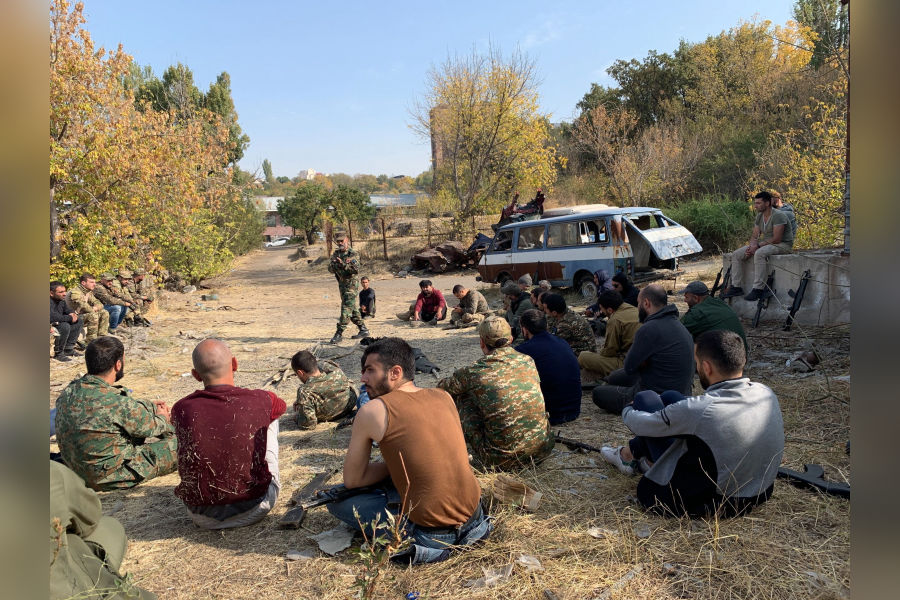
This incident represents a targeted attempt to damage relations between Armenia and Ukraine while portraying ethnic Armenian volunteers as extremists rather than what they are: contributors to Ukraine’s defense against Russian aggression. By falsely linking Armenian volunteers to weapons theft, Azerbaijani propagandists aim to create artificial tensions between Yerevan and Kyiv.
“These fabrications follow a predictable pattern,” says a regional security analyst who requested anonymity due to the sensitivity of the topic. “Azerbaijan consistently targets organizations like VoMA because they embody Armenian national resilience and independence—qualities that run counter to Baku’s regional objectives.”
The timing of this disinformation push is strategic, coinciding with critical diplomatic efforts toward a peace settlement between the two countries. By portraying Armenia as “militarizing,” Azerbaijan seeks to gain leverage in negotiations while simultaneously weakening Armenia’s international standing.
The propaganda campaign extends beyond bilateral relations. Azerbaijan and its ally Turkey appear intent on undermining the reputation of the Armenian diaspora in the United States and Europe, where support for Ukraine remains strong. This approach seeks to isolate Armenia diplomatically while complicating advocacy efforts by diaspora organizations in Western capitals.
For context, the Armenian community has maintained a significant presence in Ukraine for centuries, with many ethnic Armenians joining Ukrainian defense forces following Russia’s full-scale invasion. Their contributions have been recognized by Ukrainian authorities, making them convenient targets for Azerbaijani propaganda seeking to sow division between natural allies.
This recent incident follows Azerbaijan’s military operation in September 2023 that resulted in the exodus of more than 100,000 ethnic Armenians from Nagorno-Karabakh, effectively ending the region’s Armenian presence after thousands of years. While peace negotiations continue, human rights organizations have expressed concerns about Azerbaijan’s treatment of the region’s former Armenian population.
Security experts note that such disinformation campaigns are characteristic of authoritarian regimes seeking to control narratives around territorial disputes. Digital forensics specialists have identified coordinated networks of accounts spreading these fabrications across multiple platforms, suggesting a well-funded and organized propaganda apparatus.
Armenian diaspora organizations are responding by developing media literacy resources and fact-checking initiatives to counter such disinformation. They emphasize the importance of presenting a united front against manipulation while urging Western social media platforms to implement stronger measures against state-sponsored propaganda.
As peace talks proceed amid this contentious information environment, observers note that Azerbaijan’s continued reliance on disinformation may ultimately undermine the prospects for genuine reconciliation between the two nations. The international community’s ability to distinguish fact from fiction will play a crucial role in facilitating a just and lasting settlement to the decades-long conflict.
Fact Checker
Verify the accuracy of this article using The Disinformation Commission analysis and real-time sources.

13 Comments
The use of sophisticated propaganda campaigns to sway public opinion is troubling. It’s crucial that we remain vigilant and fact-check claims, especially around sensitive geopolitical issues like this. Misinformation should not be allowed to derail the path to peace.
I agree, disinformation is a serious threat that can have real-world consequences. Calling out these tactics and holding actors accountable is important to maintain an honest dialogue and find a sustainable solution.
This incident highlights the ongoing challenges in the region and the need for responsible journalism and fact-based reporting. Propagating falsehoods undermines trust and the prospects for lasting peace. All parties should prioritize transparency and good-faith negotiations.
The use of propaganda to discredit humanitarian efforts is a concerning tactic that should be widely condemned. Fact-checking and objective analysis are crucial to ensure the truth prevails and the path to peace remains open. All parties must engage in good-faith negotiations and refrain from inflammatory actions.
Absolutely, maintaining an objective, fact-based approach is essential. Attempting to undermine the credibility of volunteer groups through fabricated evidence is a dangerous game that could have far-reaching consequences. Transparency and accountability should be the top priorities.
This seems like a concerning escalation in the information war between Azerbaijan and Armenia. Spreading disinformation to discredit Armenian volunteers and undermine peace efforts is a worrying tactic. It’s important to scrutinize these claims and get the facts straight.
Absolutely, transparency and facts are crucial here. Fabricating evidence is a dangerous game that could further inflame tensions. Both sides need to engage constructively in the peace process.
This incident highlights the need for impartial and thorough investigation of all claims, especially in sensitive geopolitical contexts. Propagating unverified information, even if it aligns with a particular narrative, risks further inflaming tensions and undermining progress towards peace.
The ongoing propaganda efforts by Azerbaijan are concerning and risk further destabilizing the region. Fabricating evidence to undermine the credibility of Armenian volunteers is a worrying tactic that undermines good-faith efforts towards peace. Fact-based reporting and accountability are crucial.
I agree, this type of disinformation campaign is extremely problematic and could have serious repercussions. It’s important that the international community closely monitors the situation and holds all parties accountable for their actions.
This latest development in the information war is deeply troubling. Spreading disinformation to discredit the opposition and sway public opinion is a dangerous game that could have serious consequences. Maintaining transparency and objectivity is essential for progress.
It’s concerning to see this type of propaganda campaign targeting Armenian volunteers. Undermining the credibility of humanitarian efforts is a worrying tactic that could escalate tensions further. Fact-checking and objective analysis will be crucial moving forward.
I share your concern. Discrediting volunteer groups through fabricated evidence is a troubling development. Both sides must engage in meaningful dialogue and refrain from inflammatory rhetoric or actions that could derail the peace process.