


Listen to the article
Western nations have voiced strong opposition to Kazakhstan’s recent legislation prohibiting what authorities term as “propaganda of non-traditional sexual relations,” raising concerns about human rights implications and the country’s international standing.
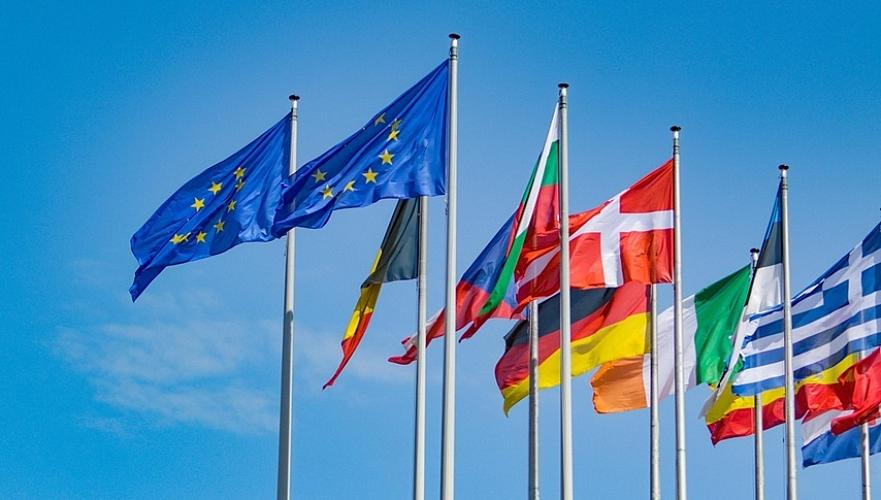
In a joint statement released by the German Embassy in Kazakhstan, 20 diplomatic missions including Australia, the United Kingdom, and the European Union expressed “deep concern” over the newly adopted law, which critics say targets LGBTQ+ communities.
“In our view, these changes do not comply with Kazakhstan’s international human rights obligations and create room for arbitrary interpretation that may affect fundamental freedoms, in particular freedom from discrimination,” the statement declared.
The diplomatic missions took particular issue with language in the legislation that appears to draw parallels between sexual orientation and pedophilia. “We strongly disagree with the analogy drawn between sexual orientation and pedophilia, the latter of which is universally regarded as a serious criminal offense,” the statement emphasized.
The statement was signed by a broad coalition of Western nations including Australia, Austria, Belgium, the Czech Republic, Denmark, Estonia, Finland, France, Germany, Ireland, Latvia, Lithuania, the Netherlands, Norway, Portugal, Spain, Sweden, Switzerland, the United Kingdom, and the European Union delegation.
Kazakhstan’s new legislation follows similar laws enacted in Russia and other post-Soviet states in recent years. These laws typically prohibit what authorities characterize as “propaganda” of LGBTQ+ relationships, particularly to minors, but human rights organizations have consistently criticized them as tools for broader discrimination and suppression of LGBTQ+ communities.
The diplomatic outcry comes at a sensitive time for Kazakhstan, which has been working to expand international partnerships beyond its traditional allies and attract foreign investment. The country, Central Asia’s largest economy and a major oil producer, has positioned itself as a modernizing nation open to global cooperation.
Human rights advocates have noted that Kazakhstan’s President Kassym-Jomart Tokayev has promised reforms and greater liberalization since taking office, making this legislation appear contradictory to those stated ambitions.
The diplomatic missions warned that these legislative changes “may negatively affect Kazakhstan’s international reputation,” suggesting potential implications for economic and political relationships. However, the statement also offered an olive branch, noting that the signatories “reaffirm our readiness to engage in constructive dialogue with the Kazakh authorities on this issue.”
Kazakhstan, with a population of nearly 19 million, has traditionally maintained close ties with Russia while also cultivating relationships with Western nations and China. The government has not immediately responded to the international criticism.
Human rights organizations operating in the region have documented increasing challenges for LGBTQ+ people in Kazakhstan in recent years, with reports of discrimination, intimidation, and violence. Many activists fear the new legislation will further marginalize vulnerable communities and provide legal cover for discrimination.
The law’s adoption comes amid a wider trend of conservative social policies in parts of the former Soviet Union, which some analysts view as part of a pushback against Western liberal values and an effort to assert traditional cultural identities.
The diplomatic missions’ statement notably did not outline any specific consequences for Kazakhstan should the legislation remain in place, focusing instead on expressing concern and offering dialogue.
Fact Checker
Verify the accuracy of this article using The Disinformation Commission analysis and real-time sources.

9 Comments
The diplomatic outcry over Kazakhstan’s LGBTQ propaganda ban is understandable. Restricting free expression and drawing false equivalencies is a worrying infringement on fundamental rights. I hope Kazakhstan can find a more inclusive path that upholds its international obligations.
This law seems to be a concerning step backwards for human rights in Kazakhstan. Equating LGBTQ+ identities with criminal acts like pedophilia is simply wrong and creates an environment ripe for discrimination. I hope Kazakhstan will reconsider this legislation.
While I understand the cultural sensitivities, this law seems to overstep and infringe on basic human rights. Equating sexual orientation with pedophilia is simply wrong and dangerous rhetoric. I hope Kazakhstan will engage in constructive dialogue to find a more inclusive path forward.
This raises serious concerns about human rights and discrimination. Equating LGBTQ+ with pedophilia is deeply troubling and factually incorrect. I hope Kazakhstan will reconsider this legislation and uphold its international obligations on fundamental freedoms.
This is a disappointing development that runs counter to principles of equality and non-discrimination. I’m concerned the vague language of the law could lead to targeting and persecution of LGBTQ+ individuals. Kazakhstan should reconsider this legislation.
Agreed, the conflation of sexual orientation with pedophilia is highly problematic and scientifically unfounded. This law risks doing serious harm to vulnerable communities.
The Western nations are right to voice strong opposition to this new law in Kazakhstan. Restricting free expression and creating room for arbitrary discrimination is a concerning step backward. Kazakhstan should heed the international calls to protect LGBTQ+ rights.
While I recognize the cultural complexities at play, this new law in Kazakhstan is highly problematic. Restricting free expression and drawing false parallels to pedophilia is a clear violation of human rights. I hope Kazakhstan engages in constructive dialogue to find a better path forward.
Agreed, the language of this law is extremely troubling and could enable serious harm to LGBTQ+ Kazakhstanis. Kazakhstan must uphold its international commitments to equality and non-discrimination.