


Listen to the article
National Park Service Directed to Revise Historical Displays Under Executive Order
The National Park Service (NPS) has begun implementing changes to visitor information displays following President Donald Trump’s Executive Order 14253, signed on March 27, 2025. Titled “Restoring Truth and Sanity to American History,” the directive instructs the agency to remove signage or exhibits that portray the United States in what the administration deems a negative light.
The scope of this undertaking is substantial. More than two-thirds of the country’s 433 national park sites are specifically dedicated to preserving and interpreting American history and culture. The NPS currently manages over 26,000 historic structures and houses nearly 185 million artifacts across these locations.
University of Arkansas History Professor Matthew Stanley has voiced concerns about the order’s implications, suggesting it contradicts the fundamental purpose of national parks as educational institutions.
“People don’t come to National Parks or museums to encounter a simple, sanitized, glorious, triumphalist, uncomplicated, mythologized version of the past that a first grader might comprehend,” Stanley told Little Rock Public Radio and KUAF. “That’s not what they come for. Most people come because they’re curious.”
Public opinion appears to align with Stanley’s assessment. A recent poll conducted by YouGov for the National Parks Conservation Association (NPCA) found that 78% of Americans across the political spectrum believe national parks should not remove materials that present factual aspects of American history, even when uncomfortable.
The representative survey of 3,000 adults was conducted between October 27 and November 2, 2025, with a margin of error of +/-2.14%. These findings directly challenge the administration’s approach to historical presentation at federally managed sites.
In Arkansas, specific changes have already begun. At the Fort Smith National Historic Site, maps are being altered to replace “Gulf of Mexico” with “Gulf of America.” Stanley warns that such revisions to historical narratives could exacerbate societal inequity.
“We don’t want a version of history that conforms to the interests and prerogatives of the super-rich and the elite of the ruling class,” Stanley explained. “We want one that includes a variety of sources and perspectives that encompasses all Americans and everyone who’s helped shape the story of this country for better or worse. And that’s just not what the Trump Administration is interested in.”
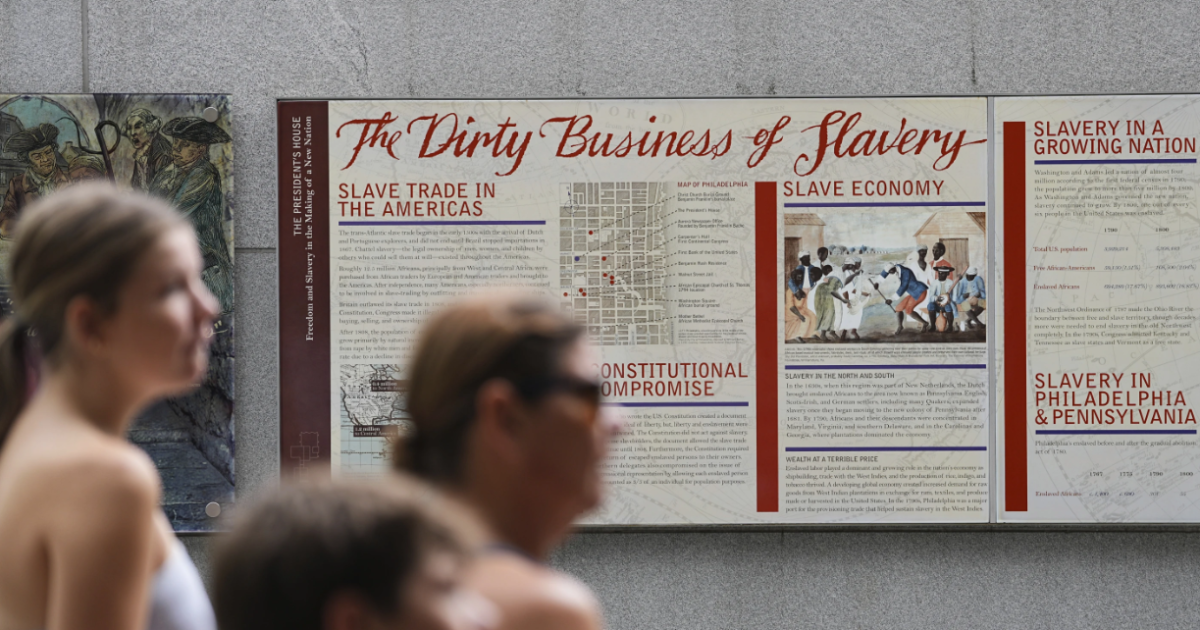
Materials flagged for removal under the executive order’s provisions include exhibits related to slavery, racism, historical discrimination, environmental pollution, climate change, and any references to transgender people. The administration has characterized such content as reflecting “corrosive ideology” that disparages historic American figures.
Stanley offered a stark assessment of the situation: “When uncomfortable facts are called subversion, or woke, or something to be suppressed—there’s a word for that. And it’s state propaganda.”
The changes come at a time when public discourse about how American history should be taught and presented has become increasingly politicized. Critics argue that sanitizing historical narratives undermines educational integrity and historical accuracy, while supporters maintain that national parks should emphasize more positive aspects of American heritage.
As the NPS continues implementing these directives across hundreds of sites nationwide, the debate over who controls historical narratives—and how they shape public understanding of American identity—remains at the forefront of cultural discussion.
Fact Checker
Verify the accuracy of this article using The Disinformation Commission analysis and real-time sources.

8 Comments
Trying to rewrite history to remove unflattering portrayals sounds like classic propaganda tactics. Parks should aim to inform and enlighten visitors, not whitewash the past for political gain.
Exactly. Revising historical displays in national parks to align with a particular administration’s agenda raises serious concerns about academic freedom and integrity.
This is concerning if the park displays are being revised to present a one-sided, sanitized version of history. National parks should provide an educational, balanced perspective on the past, both positive and negative, to help visitors understand our complex heritage.
I agree. Removing exhibits that provide a critical look at the US’s history sets a troubling precedent and undermines the educational mission of these public lands.
This move seems like a concerning attempt to control the narrative and present a skewed, uncritical view of American history. National parks should foster open, honest dialogue about our shared past, not whitewash it to fit a political agenda.
I agree. Rewriting history in our public lands sets a dangerous precedent and undermines the educational mission of these important institutions.
While I can understand the desire to present a positive, patriotic narrative, national parks have a responsibility to provide a comprehensive, fact-based account of our nation’s history, both the good and the bad. Sanitizing the past does a disservice to everyone.
National parks play a vital role in preserving and interpreting our nation’s history. Any effort to revise or censor historical displays in these spaces is deeply troubling and runs counter to their core purpose.