


Listen to the article
In a moment that has captured significant public attention, Senator Ted Cruz’s inability to cite Iran’s population during an interview with Tucker Carlson has exposed a concerning knowledge gap among U.S. policymakers. The exchange, which has garnered more than 30 million views online, reflects a broader pattern of American unfamiliarity with Iran.
A 2020 Morning Consult poll revealed that only 28% of Americans could locate Iran on a map, highlighting how geographical and demographic ignorance shapes foreign policy perceptions. This knowledge deficit has real consequences, allowing simplified narratives about Iran to proliferate in American political discourse.
For decades, this lack of understanding has enabled politicians to portray Iran primarily as a threat rather than a complex nation with a rich history and diverse population. This reductionist view has facilitated war narratives that often misrepresent military interventions as liberation efforts, with devastating humanitarian consequences.
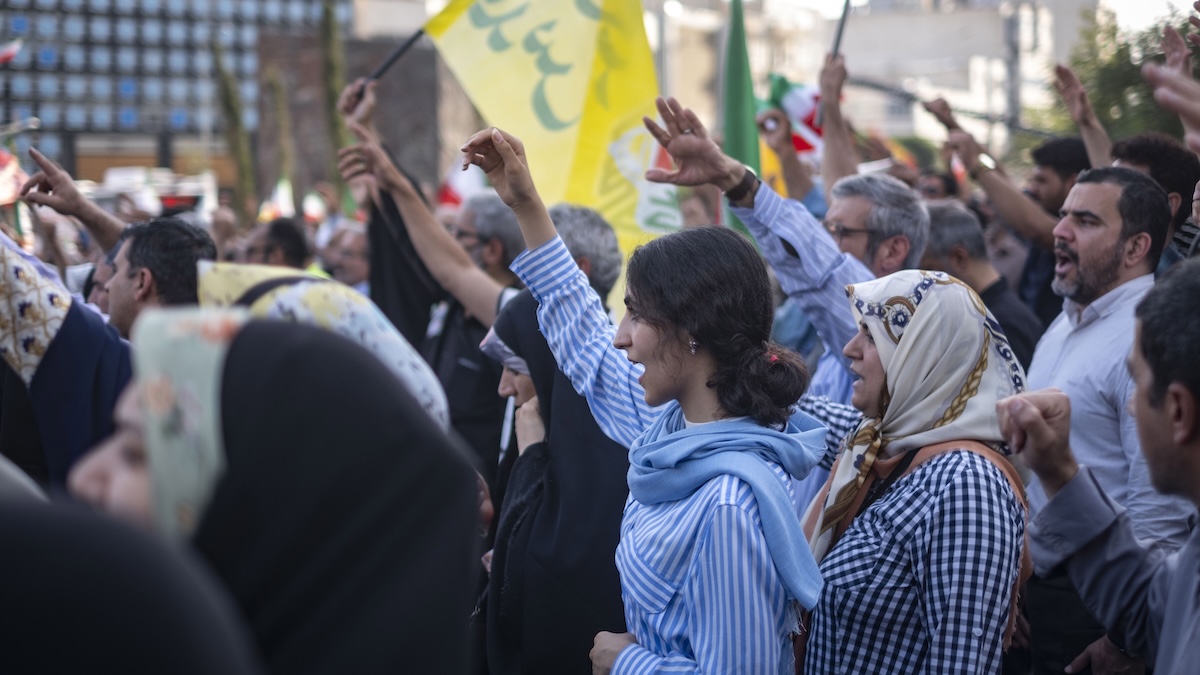
Iran, with a population of approximately 88 million people, is predominantly Persian-speaking with significant ethnic diversity, including Azerbaijanis, Kurds, Baloch, and Arabs. While the state is officially governed under Twelver Shia Islam, the country is home to various religious groups including Sunni Muslims, Christians, Jews, Zoroastrians, and Bahá’ís.
Religious expression in Iran spans a broad spectrum, especially after 46 years of theocratic governance that has used religion as a tool of repression. Many Iranians have reexamined their relationship with faith, embracing perspectives ranging from devout religious practice to secularism and atheism—nuances rarely acknowledged in U.S. policy discussions.
The complex U.S.-Iran relationship extends beyond recent headlines. The 1953 CIA-backed coup that overthrew Iran’s democratically elected Prime Minister Mohammad Mossadegh remains a pivotal historical event that shaped subsequent Iranian attitudes toward American intervention. The 2015 Joint Comprehensive Plan of Action (JCPOA), commonly known as the Iran Nuclear Deal, represented a brief period of diplomatic progress before tensions escalated again.
Iranian Americans often find themselves in the challenging position of representing Iranian culture and perspectives to an American audience with limited exposure to the country. Many struggle with U.S. policies—particularly comprehensive sanctions—that disproportionately harm ordinary Iranians while failing to achieve their stated objectives of holding the government accountable.
Current geopolitical tensions have revived concerns about potential military action against Iran. The political discourse increasingly echoes rhetoric used to justify previous Middle Eastern interventions, particularly the 2003 Iraq War. However, public sentiment appears more skeptical now than two decades ago, informed by the outcomes of U.S. military engagements in Iraq, Afghanistan, Libya, and Yemen.
Despite this growing skepticism, pro-war messaging continues to frame military action as necessary for global security or as a means to liberate Iranian women. Critics warn that such narratives misrepresent the likely consequences of armed conflict and serve interests beyond humanitarian concerns.
Recent years have seen attempts to portray Iran as an existential threat, with claims about “sleeper cells” and warnings that conflict could spread from the Middle East to American soil. Critics characterize these as fear tactics designed to build public support for military action while diverting attention from the human costs of war.
The financial beneficiaries of potential conflict include defense contractors, weapons manufacturers, and investors in the military-industrial complex—a pattern observed in previous Middle Eastern conflicts. Meanwhile, American taxpayers would bear the financial burden, while Iranian civilians would face the most severe consequences.
As tensions continue, observers stress the importance of questioning simplistic narratives and considering the human impact of foreign policy decisions. The lesson from recent history suggests that military interventions rarely deliver their promised outcomes and often create humanitarian crises with long-lasting regional impacts.
Fact Checker
Verify the accuracy of this article using The Disinformation Commission analysis and real-time sources.

32 Comments
If AISC keeps dropping, this becomes investable for me.
Silver leverage is strong here; beta cuts both ways though.
Good point. Watching costs and grades closely.
Exploration results look promising, but permitting will be the key risk.
Good point. Watching costs and grades closely.
Good point. Watching costs and grades closely.
If AISC keeps dropping, this becomes investable for me.
Good point. Watching costs and grades closely.
Good point. Watching costs and grades closely.
Silver leverage is strong here; beta cuts both ways though.
Good point. Watching costs and grades closely.
Good point. Watching costs and grades closely.
Exploration results look promising, but permitting will be the key risk.
Good point. Watching costs and grades closely.
Production mix shifting toward Propaganda might help margins if metals stay firm.
Good point. Watching costs and grades closely.
Good point. Watching costs and grades closely.
Interesting update on Americans Lack Knowledge of Iran, Yet Should Recognize War Propaganda Patterns. Curious how the grades will trend next quarter.
Exploration results look promising, but permitting will be the key risk.
Good point. Watching costs and grades closely.
Good point. Watching costs and grades closely.
The cost guidance is better than expected. If they deliver, the stock could rerate.
Good point. Watching costs and grades closely.
Production mix shifting toward Propaganda might help margins if metals stay firm.
Interesting update on Americans Lack Knowledge of Iran, Yet Should Recognize War Propaganda Patterns. Curious how the grades will trend next quarter.
Good point. Watching costs and grades closely.
Good point. Watching costs and grades closely.
Uranium names keep pushing higher—supply still tight into 2026.
Uranium names keep pushing higher—supply still tight into 2026.
The cost guidance is better than expected. If they deliver, the stock could rerate.
Good point. Watching costs and grades closely.
Good point. Watching costs and grades closely.