


Listen to the article
In an era where media consumption is at an all-time high, the lines between entertainment, news, and propaganda continue to blur. A concerning pattern has emerged as billionaire influence over major media platforms creates unprecedented opportunities for ideological messaging to reach unsuspecting viewers.
The financial dynamics behind this trend are striking. Amazon MGM recently invested approximately $35 million promoting “Melania,” while The Washington Post cut over 300 journalist positions. The connection? Both entities fall under the ownership of Jeff Bezos, raising questions about the concentration of media power in the hands of a few ultra-wealthy individuals.
Across streaming platforms, social media, and traditional broadcasts, propaganda techniques have evolved into three distinct strategies. The first leverages unskippable ad slots on streaming services and live broadcasts, ensuring captive audiences. The second employs shock and absurdity to generate viral sharing. The third presents a facade of neutrality while subtly advancing partisan agendas.
Disney+’s introduction of advertisements for “basic” plan subscribers in 2022 exemplifies how even paying customers are now subject to whatever messaging advertisers choose to deliver. Among these ads, South Dakota Governor Kristi Noem’s controversial campaign for the CBP Home app—effectively encouraging self-deportation among immigrants—highlights how government-funded messaging increasingly appears in spaces where viewers cannot opt out.
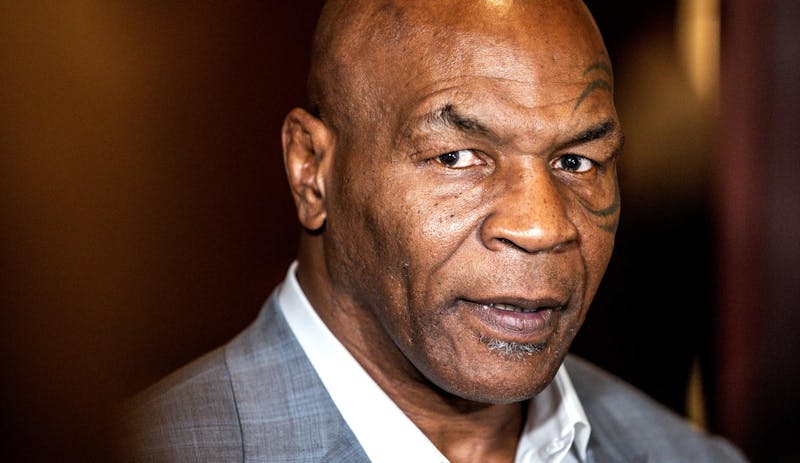
For short-form content where viewers can simply scroll past unwanted messages, advertisers have adopted different tactics. The recent Super Bowl Sunday advertisement featuring Mike Tyson represents this approach. Sponsored by MAHA Center Inc., a non-profit aligned with Robert F. Kennedy Jr.’s health policies and the “Make America Healthy Again” movement, the ad featured Tyson referring to Americans as “the most obese, fudgy people” while loudly consuming produce.
The ad’s effectiveness lies not in its persuasiveness but in its absurdity. No reasonable marketing team would expect Mike Tyson to deliver a serious public health message. Instead, the shocking nature of the content guarantees shares, parodies, and discussion—extending its reach far beyond the initial broadcast.
Perhaps most concerning are advertisements that pose as politically neutral while advancing specific ideologies. A PSA titled “The Girl in the Middle” exemplifies this approach. The ad depicts a pregnant woman caught between opposing abortion rights factions, presenting adoption as a reasonable middle ground. However, investigation reveals the sponsor, “Adoption is an Option,” was founded by Republican donor John Knox Jr., whose financial contributions support numerous conservative politicians including Greg Abbott, Sarah Huckabee Sanders, and Marco Rubio.
The growing presence of artificial intelligence in advertising represents another subtle form of political messaging. Approximately one-quarter of this year’s Super Bowl ads featured AI in some capacity, from vodka advertisements to promotions for companies like OpenAI. This trend aligns with the current administration’s pro-AI stance, unsurprising given that tech CEOs constitute some of Trump’s largest donors, including OpenAI’s Greg Brockman who contributed $12.5 million last September.
The White House has actively promoted AI technology, releasing a report in January suggesting economic benefits comparable to the Industrial Revolution. The embrace of AI by both advertisers and government officials creates a feedback loop of technological promotion with significant political and social implications.
What makes these advertising strategies particularly effective is the information overload facing modern consumers. When bombarded with content across multiple platforms, viewers lack the capacity to thoroughly investigate every commercial they encounter. Platforms like Instagram and TikTok create perfect conditions for propaganda to flourish, as users multitask while consuming vast amounts of content.
Without heightened media literacy, subtle messaging can easily penetrate viewers’ consciousness without critical evaluation. As one media observer noted, “We aren’t going to do a deep dive into the financial endeavors of every CEO whose advertisements grace our screens.” This reality, coupled with the inability to skip certain ads or escape their viral influence, makes it increasingly difficult for audiences to maintain critical distance from the messaging that shapes public discourse.
Fact Checker
Verify the accuracy of this article using The Disinformation Commission analysis and real-time sources.

18 Comments
The concentration of media ownership by ultra-wealthy individuals is a concerning trend that deserves more public scrutiny. We need to ensure that our media landscape remains diverse, independent, and accountable, rather than becoming a tool for the promotion of narrow interests.
I agree, the lack of transparency around media ownership and funding sources is a major issue. Greater regulation and public oversight are needed to safeguard the integrity of our information ecosystem and prevent the abuse of power by a few.
Interesting how the line between advertising, entertainment, and propaganda is blurring. It’s concerning to see ultra-wealthy individuals consolidating media power and using it to push ideological messaging. We should be vigilant about media bias and concentration of influence.
I agree, the strategies used to inject propaganda into our media consumption are quite sophisticated and concerning. We need more transparency and accountability around media ownership and funding sources.
This is a really thought-provoking piece. The evolution of propaganda techniques, from captive ad slots to viral shock tactics, is quite alarming. We need to be extra discerning consumers of media in this climate of increasing misinformation and manipulation.
I agree, it’s a concerning development. As citizens, we have a responsibility to seek out reliable, fact-based information and to question the motives behind the media we consume. Maintaining a healthy skepticism is key.
The growing concentration of media ownership by a few ultra-wealthy individuals is a major red flag. It raises serious concerns about how this could be used to further ideological and financial agendas at the expense of factual, balanced reporting.
You’re right, this trend undermines the important role of a free and independent press in a democracy. We need stronger safeguards and transparency to prevent a small number of people from controlling the narrative.
The concentration of media power in the hands of a few ultra-wealthy individuals is a concerning trend that deserves closer examination. We need to ensure that our information ecosystem remains diverse, independent, and accountable, rather than becoming a tool for the promotion of narrow interests and ideological agendas.
I agree, this is a worrying development that undermines the role of a free and independent press in a healthy democracy. Robust safeguards and greater transparency around media ownership and funding sources are essential to protect the integrity of our information landscape.
This article highlights the evolving and increasingly sophisticated tactics used to inject propaganda into our media consumption. From captive ad slots to viral shock tactics, the blurring of lines between entertainment, news, and ideological messaging is deeply troubling.
Absolutely. As consumers, we must be vigilant and develop strong critical thinking skills to navigate this complex media landscape. Maintaining a healthy skepticism and seeking out reliable, fact-based sources is essential in an era of growing misinformation and manipulation.
This article highlights the urgent need for media literacy education. As propaganda techniques become more sophisticated, we must empower people to critically evaluate the content they consume and recognize the influence of hidden agendas and biases.
You make a great point. Developing critical thinking skills and the ability to discern fact from fiction is crucial, especially as media channels become increasingly saturated with ideological messaging masquerading as news or entertainment.
This highlights the need for critical media literacy, especially as propaganda techniques become more advanced and ubiquitous. Captive audiences, viral shock tactics, and subtle partisan agendas – it’s a troubling trend we all need to be aware of.
Absolutely. As consumers, we have to be vigilant in questioning the motives and origins of the content we engage with. Media literacy is crucial in an era of increasing misinformation and manipulation.
The consolidation of media power in the hands of a few ultra-wealthy individuals is a disturbing trend that deserves more scrutiny. We need robust safeguards to ensure a diversity of voices and perspectives, rather than allowing propaganda to masquerade as news or entertainment.
Absolutely. The blurring of lines between advertising, entertainment, and propaganda is a worrying development that requires greater public awareness and regulatory oversight. We must vigilantly protect the integrity of our media landscape.