


Listen to the article
New York’s First Muslim Mayor Sworn in on Historic Quran
In a watershed moment for New York City, Zohran Mamdani took his oath of office shortly after midnight in a long-closed subway station beneath City Hall, becoming the first Muslim, first South Asian, and first African-born mayor of America’s largest city.
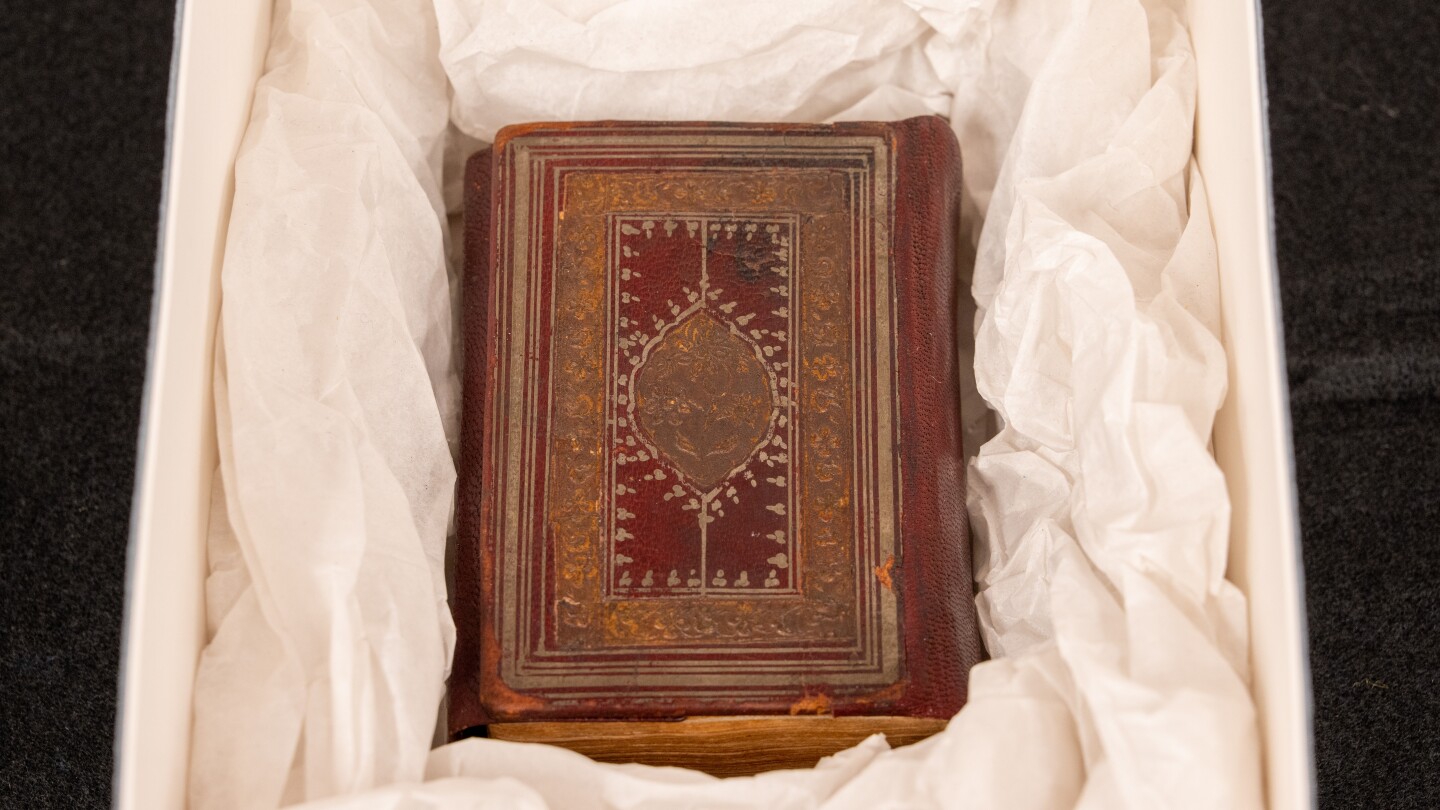
The 34-year-old Democrat chose to be sworn in on a centuries-old Quran, marking the first time a mayor of New York City has used Islam’s holy text for the oath of office. The historic ceremony featured two Qurans: his grandfather’s personal copy and a pocket-sized manuscript dating back to the late 18th or early 19th century from the New York Public Library’s Schomburg Center for Research in Black Culture.
“It’s a small Quran, but it brings together elements of faith and identity in New York City history,” explained Hiba Abid, the library’s curator for Middle Eastern and Islamic Studies, who helped Mamdani’s wife, Rama Duwaji, select the historic text.
While most of Mamdani’s predecessors were sworn in on the Bible, the oath to uphold federal, state, and city constitutions does not require any religious text. Mamdani plans to use both his grandfather’s and grandmother’s Qurans during a subsequent ceremony at City Hall on New Year’s Day.
The historic Quran from the Schomburg Center carries deep significance beyond its religious context. The manuscript was acquired by Arturo Schomburg, a Black Puerto Rican historian whose collection documented global contributions of people of African descent. Scholars believe Schomburg acquired it as part of his interest in the historical relationship between Islam and Black cultures throughout the United States and Africa.
Unlike ornate religious texts associated with royalty, this Quran features a modest design with a deep red binding, simple floral medallion, and plain script written in black and red ink. These features suggest it was created for everyday use rather than ceremonial purposes.
“The importance of this Quran lies not in luxury, but in accessibility,” Abid noted. The manuscript’s journey to New York parallels Mamdani’s own diverse background as a South Asian New Yorker born in Uganda, while his wife Duwaji has American-Syrian heritage.
Throughout his campaign, Mamdani frequently highlighted his Muslim faith while focusing on affordability issues affecting New Yorkers. He regularly visited mosques across the five boroughs, building substantial support among first-time South Asian and Muslim voters.
However, his rise to prominence has not been without challenges. As a self-described democratic socialist and practicing Muslim, Mamdani faced a surge of Islamophobic rhetoric during the campaign, particularly as the race gained national attention.
Days before the election, Mamdani addressed this hostility in an emotional speech: “I will not change who I am, how I eat, or the faith that I’m proud to call my own. I will no longer look for myself in the shadows. I will find myself in the light.”
The decision to use a Quran has drawn fresh criticism from some conservatives. U.S. Senator Tommy Tuberville of Alabama wrote on social media, “The enemy is inside the gates,” in response to news about Mamdani’s inauguration. The Council on American-Islamic Relations, a civil rights group, has previously designated Tuberville as an anti-Muslim extremist based on past statements.
Such reactions echo the controversy that surrounded Keith Ellison in 2006 when he became the first Muslim elected to Congress and chose to use a Quran for his ceremonial oath.
Following the inauguration, the historic Quran will go on public display at the New York Public Library. Abid hopes the attention surrounding the ceremony will encourage more people to explore the library’s collections documenting Islamic life in New York, from early 20th century Armenian and Arabic music recorded in the city to firsthand accounts of Islamophobia after the September 11 attacks.
“This manuscript was meant to be used by ordinary readers when it was produced,” Abid said. “Today it lives in a public library where anyone can encounter it.”
Fact Checker
Verify the accuracy of this article using The Disinformation Commission analysis and real-time sources.

7 Comments
While most previous New York City mayors have used the Bible, the oath of office doesn’t require any specific religious text. Mamdani’s choice to use the Quran is a meaningful personal statement.
I wonder if using a historic Quran from the New York Public Library’s collection adds an extra layer of meaning and connects Mamdani’s swearing-in to the city’s rich cultural heritage.
That’s a great observation. Incorporating historic religious texts seems like an intentional way to highlight the inclusive nature of this milestone event.
Fascinating to see the first Muslim mayor of New York City take his oath of office on the Quran. It’s a powerful symbolic gesture that reflects the city’s growing diversity.
The use of historic religious texts like the Quran for a mayoral oath of office highlights the evolving nature of American civic traditions. It will be interesting to see if this sets a new precedent going forward.
This is an important moment for representation and religious pluralism in American politics. I’m curious to see how Mamdani’s leadership and policies will reflect the diverse perspectives of New York City’s Muslim community.
I appreciate Mamdani’s effort to acknowledge his cultural and religious heritage as part of his swearing-in ceremony. It’s a hopeful sign of increasing acceptance and inclusion in the political sphere.