


Listen to the article
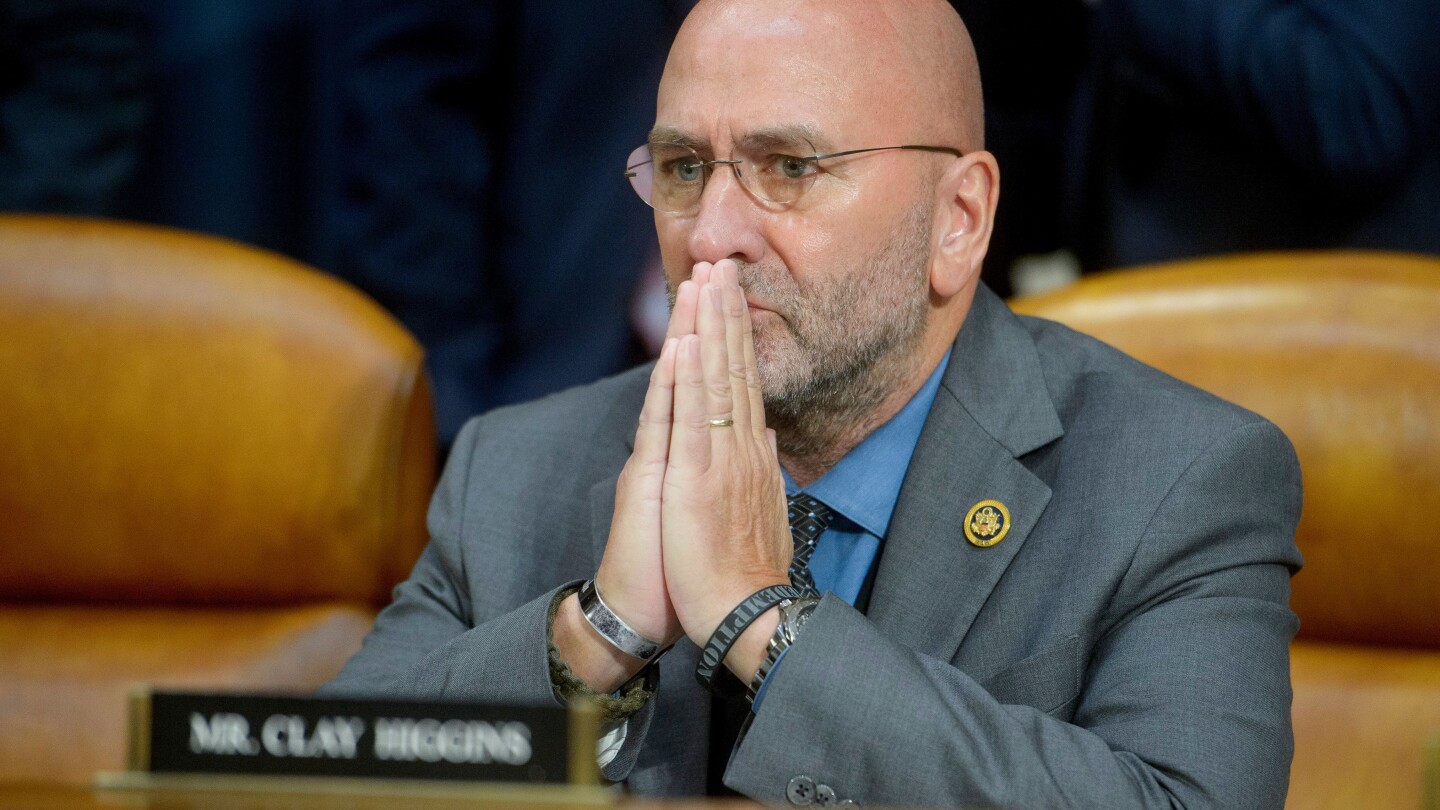
A bipartisan effort to force the release of Jeffrey Epstein’s case files passed through Congress on Tuesday with near-unanimous support, leaving Republican Rep. Clay Higgins of Louisiana as the sole dissenting voice in either chamber.
The legislation, which will now head to President Biden’s desk for signature, aims to make public the full investigative files related to the convicted sex offender whose connections to powerful figures have fueled years of speculation and controversy.
While the measure enjoyed overwhelming support from lawmakers across the political spectrum, Higgins remained steadfast in his opposition, even as fellow Louisiana Republican and House Speaker Mike Johnson reversed his initial reservations about the bill.
“I was a principled ‘NO’ on this bill from the beginning,” Higgins explained in a detailed statement following the vote. His primary objection centered on what he characterized as inadequate privacy protections for uninvolved individuals mentioned in the files.
“If enacted in its current form, this type of broad reveal of criminal investigative files, released to a rabid media, will absolutely result in innocent people being hurt,” Higgins argued. He expressed particular concern for “witnesses, people who provided alibis, family members” and others who may be named in the documents but not implicated in any criminal activity.
The four-term congressman, who represents Louisiana’s 3rd congressional district, suggested he would have supported an amended version with stronger privacy safeguards. However, the Senate quickly passed the bill through unanimous consent, cementing Higgins’ position as the lone congressional opponent to the legislation.
The push for transparency in the Epstein case has gained significant momentum in recent months, fueled by pressure from survivors of Epstein’s abuse and widespread public interest in exposing any high-profile individuals who may have been involved in or aware of his crimes. Both former President Trump and current House leadership ultimately backed the bill despite initial hesitations.
Higgins, a member of the ultra-conservative House Freedom Caucus and a staunch Trump supporter, has built a reputation for controversial statements and an uncompromising political approach since entering Congress in 2017. Before his political career, he worked in law enforcement, gaining viral fame for creating confrontational Crime Stoppers videos that earned him the nickname “Cajun John Wayne” from media outlets.
His tenure in Congress has been marked by several controversies. In 2020, Facebook removed one of his posts for violating policies against inciting violence after he threatened armed protesters. Last year, he faced an unsuccessful censure attempt by Democrats over racist comments about Haitian immigrants, which he partially retracted after being confronted by members of the Congressional Black Caucus.
Ironically, Higgins chairs the House Oversight subcommittee that initially investigated the Epstein case and considered subpoenaing related documents. Yet even within that committee, he opposed issuing subpoenas when other Republicans joined Democrats in supporting them. He also pushed unsuccessfully to have the committee subpoena former President Bill Clinton in relation to the investigation.
“I’ve never handled a subpoena like this. This is some fascinating stuff,” Higgins remarked during the committee’s work on the case. In his statement Tuesday, he pointed to the oversight panel’s investigation as his preferred approach, saying it was being conducted “in a manner that provides all due protections for innocent Americans.”
Speaker Johnson, despite his own previous concerns about the legislation, defended Higgins as “a very frank and outspoken person” and “a very principled man” during past controversies.
The Epstein legislation marks a rare moment of bipartisan agreement in Congress, with advocates arguing that full transparency is essential to understanding how Epstein operated and potentially bringing accountability to others who may have been involved in his crimes. The bill’s passage represents a significant victory for victims’ rights advocates who have long pushed for complete disclosure of information surrounding the case.
Fact Checker
Verify the accuracy of this article using The Disinformation Commission analysis and real-time sources.

10 Comments
I can understand the privacy concerns raised by Rep. Higgins, but the public’s right to know about potential abuse of power by the wealthy and well-connected seems to outweigh that in this case. Epstein’s connections to powerful figures is deeply troubling and deserves thorough scrutiny.
I agree. Transparency is essential, especially when dealing with such a high-profile and controversial figure. The public deserves to see the full investigative files, even if it means some collateral damage to uninvolved parties.
Interesting that Rep. Higgins was the lone dissenting vote on releasing the Epstein files. Seems he has concerns about privacy and potential harm to uninvolved individuals. Though transparency is important, we should balance that with protecting innocent people’s rights.
You raise a fair point. Protecting privacy is crucial, but so is public accountability for high-profile cases like this. It’s a delicate balance that lawmakers have to navigate carefully.
It’s concerning that Rep. Higgins was the sole dissenting voice on this bill. While privacy is important, the public interest in uncovering the full truth about Epstein’s crimes and connections seems to outweigh that in this case. Hopefully the final legislation strikes the right balance.
You make a fair point. Protecting the privacy of uninvolved individuals is crucial, but the public’s right to know about potential abuse of power by the wealthy and well-connected is also vital. It’s a complex issue without easy answers.
I’m curious to hear more about Rep. Higgins’ reasoning for opposing the release of the Epstein files. While privacy concerns are understandable, the public deserves transparency, especially on such a high-profile case with far-reaching implications. Hopefully the final bill addresses those concerns appropriately.
That’s a good question. Rep. Higgins seems to have legitimate concerns about collateral damage to innocent parties, but the public interest in this case is undeniably strong. It will be interesting to see how the final legislation navigates that balance.
It’s noteworthy that Rep. Higgins was the sole dissenting vote on this bill. While privacy is important, the gravity of the Epstein case and the public’s right to know about potential abuse of power by the wealthy and well-connected seems to outweigh that consideration. Hopefully the final legislation strikes the right balance.
You make a fair point. Protecting the privacy of uninvolved individuals is crucial, but the public’s right to know the full truth about such a high-profile case is also essential. It’s a complex issue without easy answers, and the final legislation will need to carefully weigh those competing interests.