


Listen to the article
Murder Rate in Major US Cities Hits Historic Low Amid Federal Crackdown
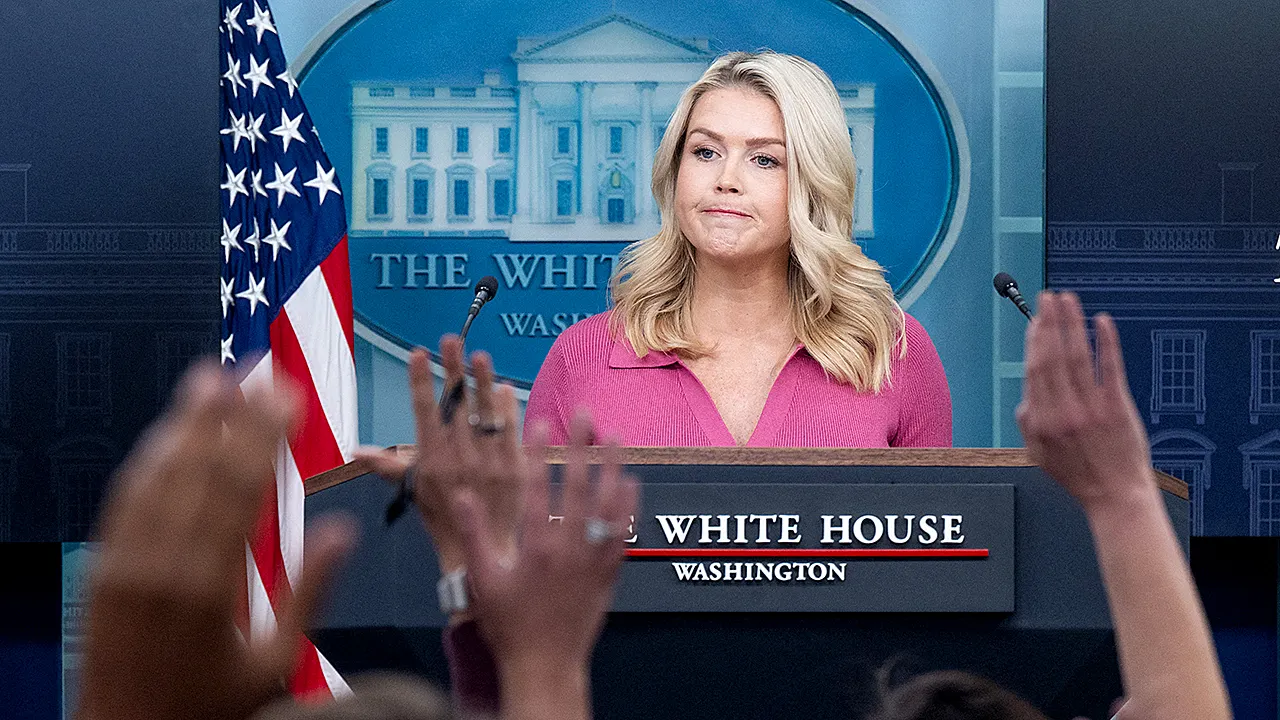
The murder rate across America’s largest cities has plummeted to its lowest level since at least 1900, according to White House Press Secretary Karoline Leavitt, who cited new data from the Council on Criminal Justice (CCJ) during Thursday’s press briefing.
“This marks the largest single-year drop in murders in recorded history,” Leavitt told reporters, attributing the decline to President Donald Trump’s law enforcement initiatives. “This dramatic decline is what happens when a president secures the border, fully mobilizes federal law enforcement to arrest violent criminals and aggressively deports the worst of the worst illegal aliens from our country.”
The CCJ report indicates that homicides fell 21% from 2024 to 2025 in the 35 cities that reported data, representing 922 fewer killings. Thirty-one of these cities experienced declines, with Denver, Washington, D.C., and Omaha, Nebraska leading the way with reductions of approximately 40% each.
According to preliminary data, nationwide homicide figures could show killings in 2025 falling to roughly 4.0 per 100,000 residents—potentially the lowest rate ever recorded in law enforcement or public health data since record-keeping began in 1900.
The downward trend wasn’t limited to homicides. The report documented significant decreases across multiple crime categories: robberies declined by 23%, carjackings dropped 43% in reporting cities, aggravated assaults fell 9%, and motor vehicle theft decreased by 27%.
The White House has directly linked these improvements to enhanced federal law enforcement operations. “Under President Trump in 2025, the FBI increased violent crime arrests by 100% compared to the prior year,” Leavitt said. “The FBI also conducted more than 67,000 arrests from Inauguration Day 2025 to Jan. 20, 2026, which is 197% more arrests than the same period previously.”
Washington, D.C., once notorious for its crime problems, has seen particularly dramatic improvements, with homicides reportedly down 62% and motor vehicle theft reduced by 53% as of last week, according to Leavitt.
The administration has framed these results as validation of Trump’s “law and order” approach, which has focused heavily on border security, increased federal arrests, gang takedowns, and deportations of individuals with criminal records who are in the country illegally.
However, the CCJ has urged caution in interpreting the data. The organization noted that its findings are based on a limited sample of cities and preliminary police data that could be subject to revision. The report documents crime trends rather than establishing causation between any specific policies and the observed declines.
Criminal justice experts often point out that crime rates are influenced by numerous factors beyond law enforcement tactics, including economic conditions, demographic shifts, community interventions, and changes in reporting practices.
During the briefing, Leavitt rejected any skepticism about the administration’s role in the crime reduction, arguing that the previous rise in violence under Democratic leadership was “a choice to put violent criminals ahead of innocent Americans, a choice to force us all to live in fear because of soft on crime, liberal politicians, prosecutors and judges.”
The apparent reversal of crime trends that had spiked during the COVID-19 pandemic represents a significant development in American public safety. If the preliminary data holds when complete national statistics are released later this year, it would mark an extraordinary turnaround in crime rates that had been a major concern for voters in recent election cycles.
As the administration continues to highlight these improvements, the debate over which policies are most effective at reducing crime—and at what social cost—remains a central issue in American politics.
Fact Checker
Verify the accuracy of this article using The Disinformation Commission analysis and real-time sources.

9 Comments
The Trump administration’s policies on law enforcement and immigration have been highly divisive. While the reported drop in murders is notable, we’d need to see rigorous, impartial analysis to evaluate the drivers and implications. Improving public safety is complex and shouldn’t be oversimplified.
While the reported drop in murders is noteworthy, I’d want to dig deeper into the data before accepting the administration’s narrative. Trends in violent crime have many nuanced drivers that deserve careful, impartial examination. Nuance and objectivity are important on this sensitive topic.
While a reduction in murders is welcome news, I’m hesitant to accept the administration’s self-congratulatory rhetoric at face value. Crime data is complex, and independent experts should scrutinize the underlying factors and trends. Simplistic political claims often obscure the nuances of such important issues.
The reported drop in murders is noteworthy, but the White House’s framing raises concerns about cherry-picking data to fit a narrative. I’d want to see rigorous, nonpartisan analysis before drawing firm conclusions. Objective, evidence-based policymaking is critical on issues of public safety.
Interesting if true, though these statistics can be misleading. A deeper dive into the data and methodology would be needed to assess the accuracy of these claims. Reducing violent crime is certainly a laudable goal, but the underlying drivers and solutions require nuanced analysis.
A reduction in murders is certainly good news, but we should be cautious about politically-charged claims without verifying the data. Fluctuations in crime rates have many contributing factors. I’m curious to see what independent experts conclude about the causes and sustainability of this trend.
The reported decline in murders is intriguing, but the White House’s partisan messaging gives me pause. I’d need to see a thorough, impartial assessment of the data and its drivers before drawing any firm conclusions. Objective, evidence-based policymaking should be the priority when it comes to public safety.
A decline in murders is positive, but the White House’s partisan spin raises red flags. I’d need to see the full data and methodology to assess the accuracy and implications of these claims. Sensational political rhetoric often obscures the complexities of public safety issues.
Safer communities are a worthy goal, but I’m skeptical of the White House’s framing here. Crime data can be interpreted in many ways, and I’d want to see rigorous, nonpartisan analysis before drawing conclusions. Oversimplifying complex social issues is unwise.