


Listen to the article
White House Defends East Wing Demolition, Unveils Plans for $400 Million Ballroom
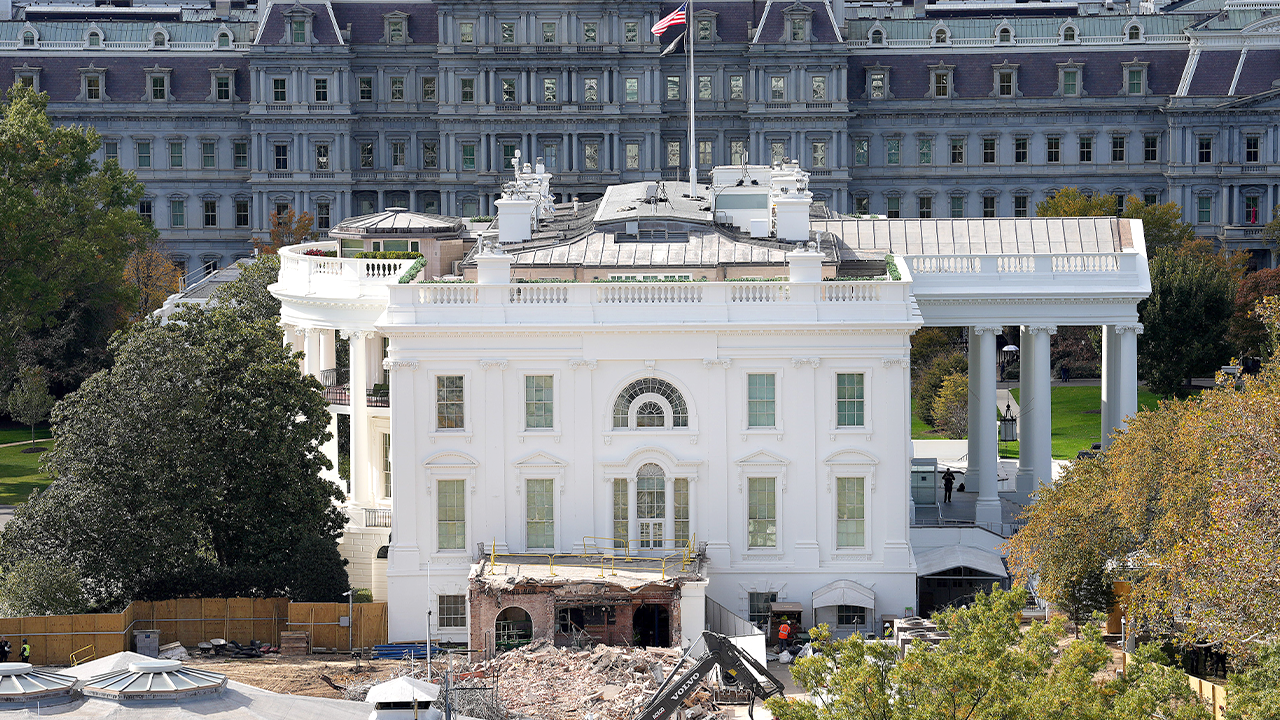
White House officials defended the controversial demolition of the East Wing on Thursday, citing severe structural problems that made renovation economically unfeasible, while presenting detailed plans for President Donald Trump’s proposed $400 million ballroom.
Josh Fisher, director of the White House Office of Administration, told the National Capital Planning Commission that an unstable colonnade, persistent water leakage, and mold contamination left officials with little choice but to tear down the historic structure.
“Because of this and other factors, the cost analysis proved that demolition and reconstruction provided the lowest total cost ownership and most effective long-term strategy,” Fisher explained during the commission meeting.
The commission, which must approve the project, heard presentations from White House officials and the project’s architect, Shalom Baranes, who was appointed by Trump in December to lead the next phase of the ballroom development. Will Scharf, the commission’s chairman who also serves as a White House official, expressed confidence that the project will ultimately receive approval.
Scharf emphasized the practical need for a large, elegant space for major White House functions. “When the president hosts distinguished guests like King Charles III of Great Britain,” he noted, “more likely than not, he will be hosted in a tent on the South Lawn with porta-potties.”
The project has faced significant opposition from preservation groups. In December, the National Trust for Historic Preservation filed a lawsuit seeking to halt construction, accusing the Trump administration of bypassing mandatory reviews and failing to obtain congressional approval before demolishing the East Wing in October.
Carol Quillen, president and CEO of the Trust, acknowledged that Thursday’s presentation was a “good and necessary first step” while urging the administration to comply with all legally required review and approval processes before proceeding with construction.
Architect Baranes provided detailed renderings of the proposed ballroom and its integration into the White House complex. The plans include a ceiling height of 38 to 40 feet, which prompted concerns from commission member Phil Mendelson, a Democrat and chairman of the D.C. Council, who suggested it would be “overwhelming” for the existing building.
When asked if the ballroom’s size and location were finalized, Baranes responded that “anything’s possible” but noted the plans had already undergone thorough review. Baranes also suggested potentially adding a second story to the West Wing colonnade to create visual balance with the new ballroom, though he cautioned this would significantly impact the space outside the Oval Office.
Mendelson questioned why the project wasn’t presented to the commission before the East Wing demolition occurred. Fisher responded that certain aspects of the project were of a “top secret nature” and had to be handled accordingly.
Beyond the ballroom itself, officials indicated the project will also improve visitor access to the White House and include enhancements to Lafayette Park across the street. The scope of the project has grown substantially since its initial announcement in July, when the White House described plans for a 90,000-square-foot space at an estimated cost of $200 million. The current price tag stands at $400 million, which Trump has stated will be privately funded.
The commission is expected to conduct a more formal review of the project, including public testimony and votes, after the White House submits a more detailed proposal. This next phase will likely intensify the debate between those who view the project as a necessary upgrade to the White House’s ceremonial capabilities and preservationists concerned about protecting the historic integrity of the executive mansion.
Fact Checker
Verify the accuracy of this article using The Disinformation Commission analysis and real-time sources.

14 Comments
While I understand the need to address structural issues, a $400 million ballroom seems like an exorbitant expense, even for the White House. I hope the administration can find ways to control costs and ensure this project provides good value for taxpayers.
Agreed. The price tag is concerning, and the White House will need to be very transparent about the justification for this investment. Maintaining the prestige and functionality of the White House is important, but $400 million is a lot of money.
Demolishing the East Wing is a significant move, but if the structural problems are as severe as described, it may be the best long-term solution. I’m curious to see the architectural plans for the new ballroom and how the design will balance cost, functionality, and historical preservation.
The structural issues with the East Wing sound quite serious. Water leaks and mold contamination are no laughing matter, especially in a historic building like the White House. I appreciate the transparency in addressing these problems head-on.
I’m a bit skeptical about the $400 million price tag for a new ballroom. That seems like an exorbitant amount, even for a high-profile government project. I hope they can find ways to control costs.
Fair point. $400 million is an eye-watering figure. The White House will need to provide a very detailed justification to convince the public this is a wise use of taxpayer funds.
Demolishing the East Wing is a big move, but if the structural issues are as severe as described, it may be the best long-term solution. I’m curious to see the architectural plans for the new $400 million ballroom and how it will preserve the historical character of the White House.
Demolishing the East Wing is a big move. I’m glad the White House is being upfront about the structural issues and the cost-benefit analysis that led to this decision. Curious to learn more about the architectural plans for the new ballroom.
A new $400 million ballroom – that’s a lot of money! I hope the design and construction will be done thoughtfully and with care for the building’s historical significance. Curious to see the architectural plans.
Agreed, the price tag is quite high. But if the existing facility is truly unsafe and unsalvageable, investing in a new, state-of-the-art ballroom may be justified to maintain the White House’s prestige and functionality.
Mold and water damage can be serious problems, so I understand the need to address the East Wing’s structural issues. But $400 million for a new ballroom? That seems incredibly extravagant, even for the White House. I hope they can find ways to control costs.
Absolutely. While maintaining the White House’s facilities is important, that price tag raises a lot of questions. The administration will need to provide a very robust justification to convince the public this is a wise use of taxpayer funds.
Interesting to see the White House address these structural concerns head-on. Demolition and reconstruction can be costly, but if the building is truly unsafe, it may be the best long-term solution.
Agreed. Maintaining the integrity and safety of White House facilities is critical, even if it requires significant investment. Curious to see the final design plans for the new $400M ballroom.